
Usamos cookies en nuestro sitio web para darle la mejor experiencia. Al aceptar, aceptas el uso de todas las cookies. Puedes modificar o rechazar el uso de las cookies. Puedes ver la cookie policy.
Usamos cookies en nuestro sitio web para darle la mejor experiencia. Al aceptar, aceptas el uso de todas las cookies. Puedes modificar o rechazar el uso de las cookies. Puedes ver la cookie policy.




3 de marzo de 2026
This article aims to be a guide to distinguishing original German daggers from World War II from reproductions made by Casa Marto of Toledo in the 1970s and 80s.
If you are interested in purchasing an original German dagger from the Third Reich, you can visit our website:
Objects used by the Germans during the Second World War are among the most sought-after items in militaria collecting. Among the countless pieces available, German daggers for officers of the Wehrmacht and other military or political bodies of the Third Reich are especially desirable.
With the growth of WWII collecting during the 1970s, high-quality reproductions and outright fakes began appearing across Europe and the United States. Spain was no exception, and when it comes to edged weapons, the natural center of production was Toledo — a city with centuries of blade-making tradition.
In 1961, Manufacturas y Artes de Toledo, better known as MARTO, was founded in Olías del Rey (Toledo). The company operated independently until 2010, when it entered insolvency proceedings, and in 2013 it was absorbed by Bermejo.
Specialized in knives and edged weapons, MARTO began producing high-quality reproductions of German WWII daggers during the 1970s and 1980s. It is important to emphasize that these were reproductions, not counterfeits, as their purpose was not to deceive collectors or pass items off as originals.
However, over time these pieces have changed hands many times. Because they are often very close in appearance to original examples and made with quality materials, they are sometimes sold today as authentic WWII German daggers — whether due to lack of knowledge or deliberate intent.

A common question among collectors is how to distinguish a MARTO reproduction from a genuine 1933–1945 period dagger.
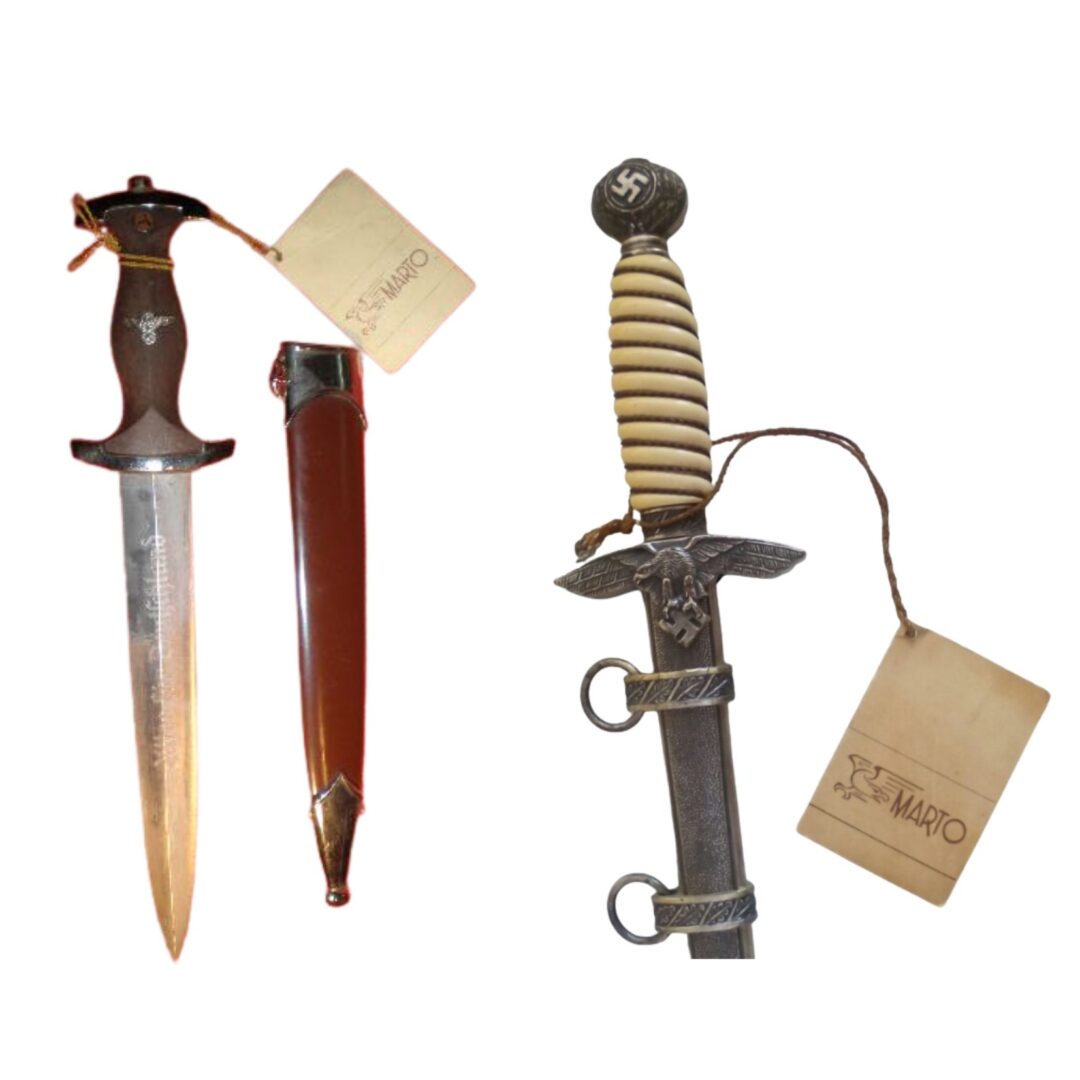
Several dagger models manufactured by MARTO can be identified through their respective logos and maker marks. It is important to understand that:
By identifying the maker marks used by MARTO and studying their technical characteristics, it is possible to determine whether a dagger is one of their reproductions.
Common features found on MARTO daggers may include:
There are many more copies on the market than just those produced by MARTO. The fact that a dagger is not a MARTO reproduction does not automatically make it original.
To properly assess the authenticity of a German dagger from the Second World War, all components must be carefully examined, including:
Only a detailed study and comparison with documented original examples can provide a reliable conclusion.
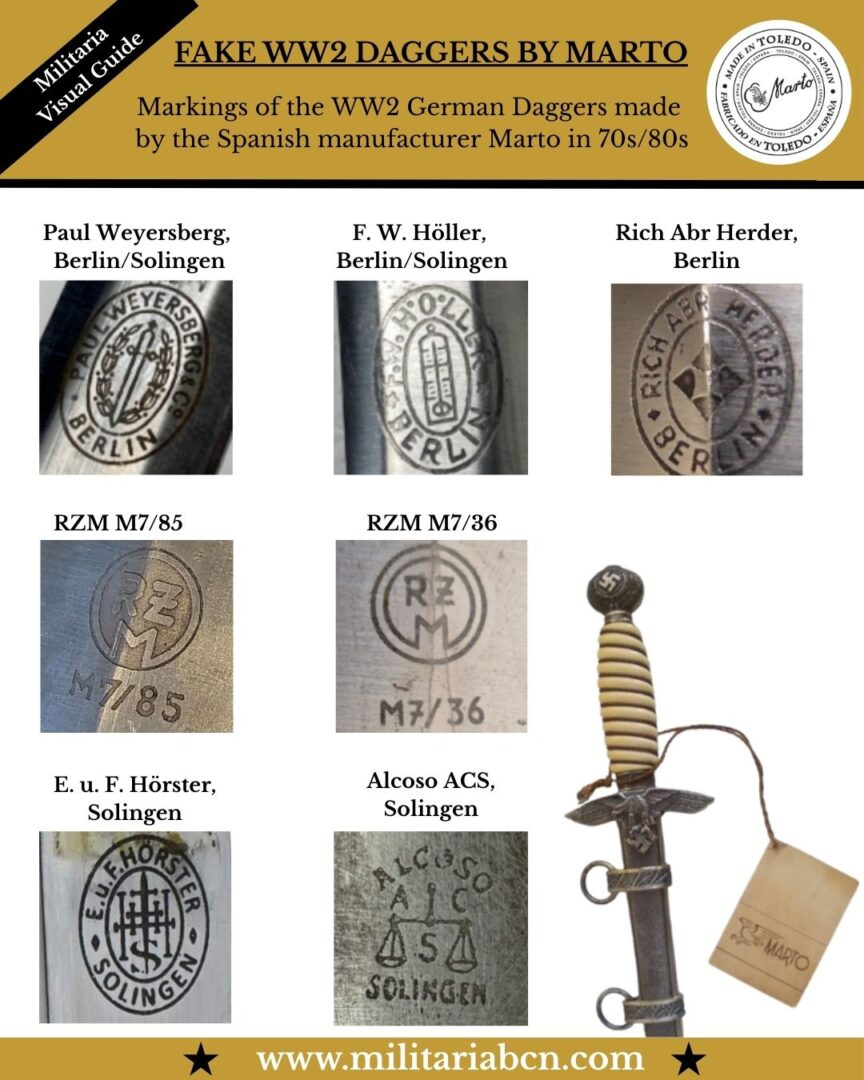
For over 20 years, Casa Marto manufactured reproductions of German daggers from World War II, resulting in a wide variety of models and variations. Below, we showcase some of the main examples with the markings most commonly used by this Toledo-based factory.
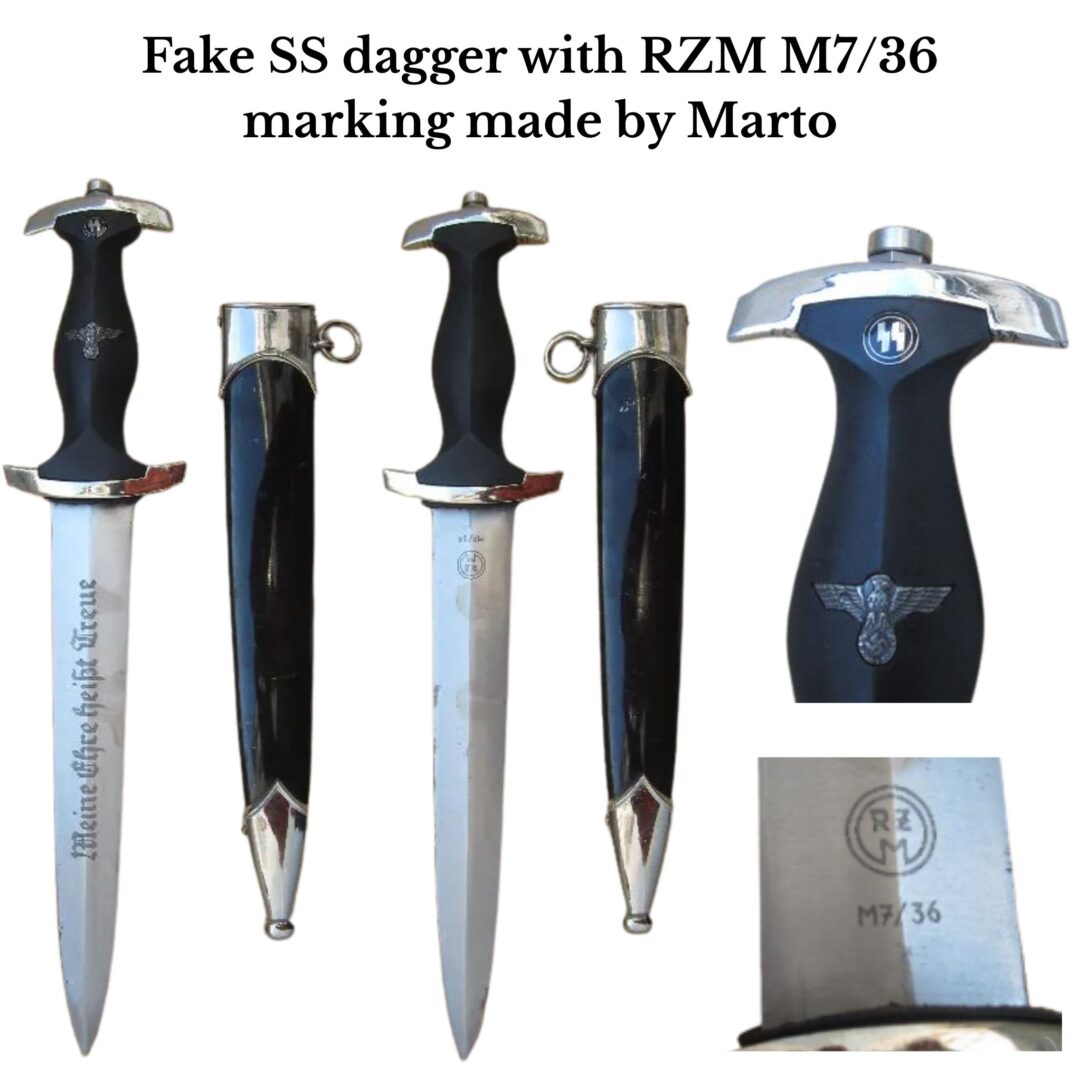
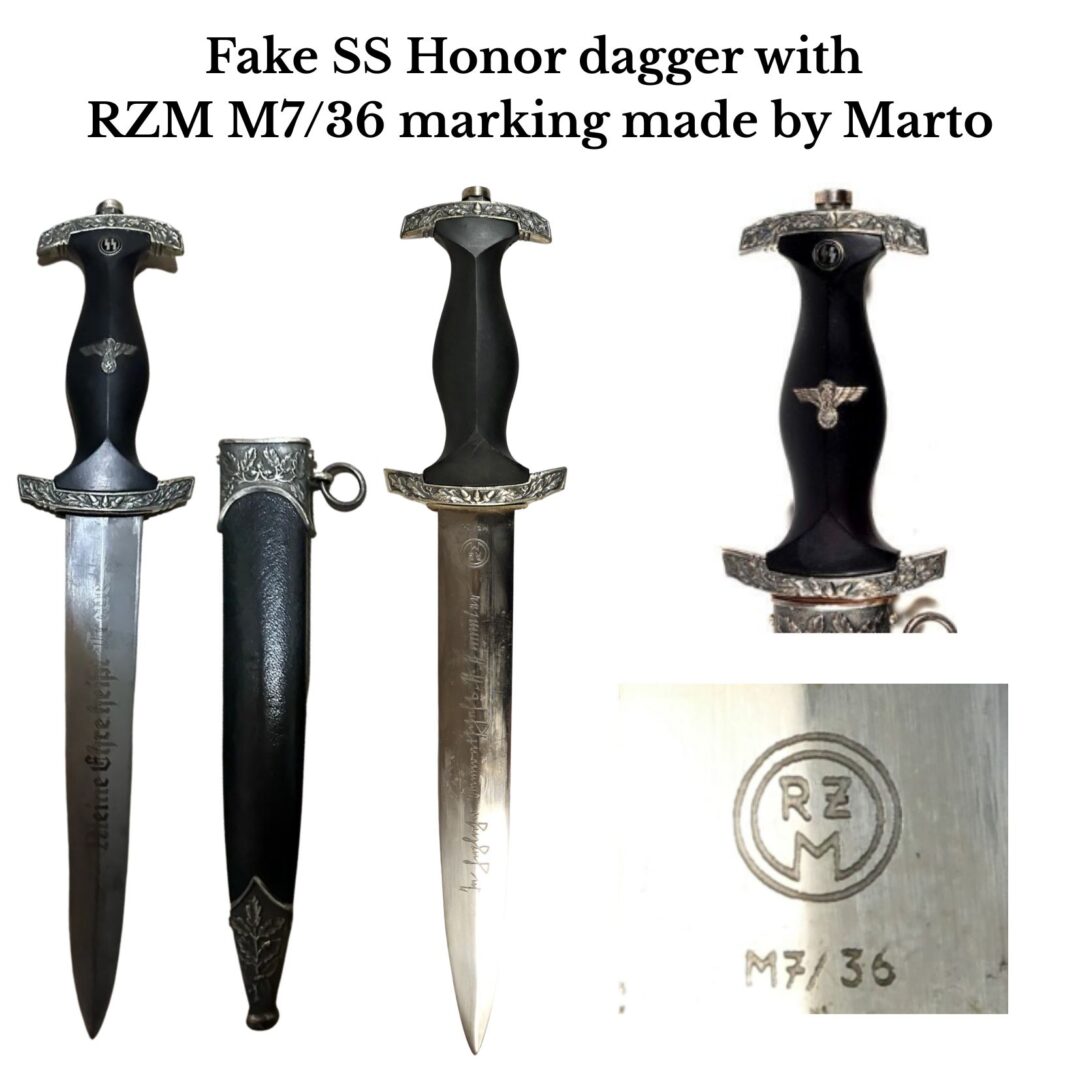
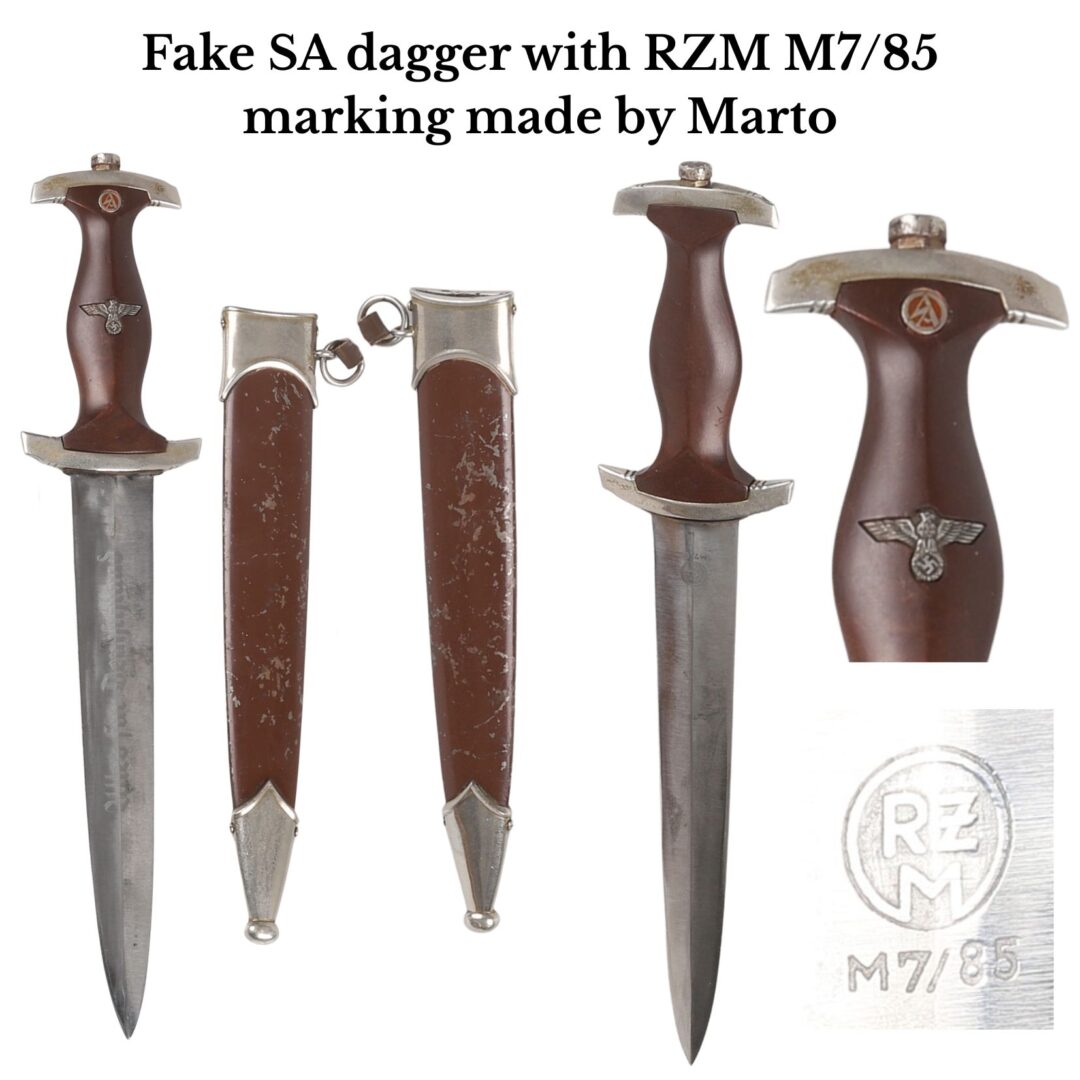
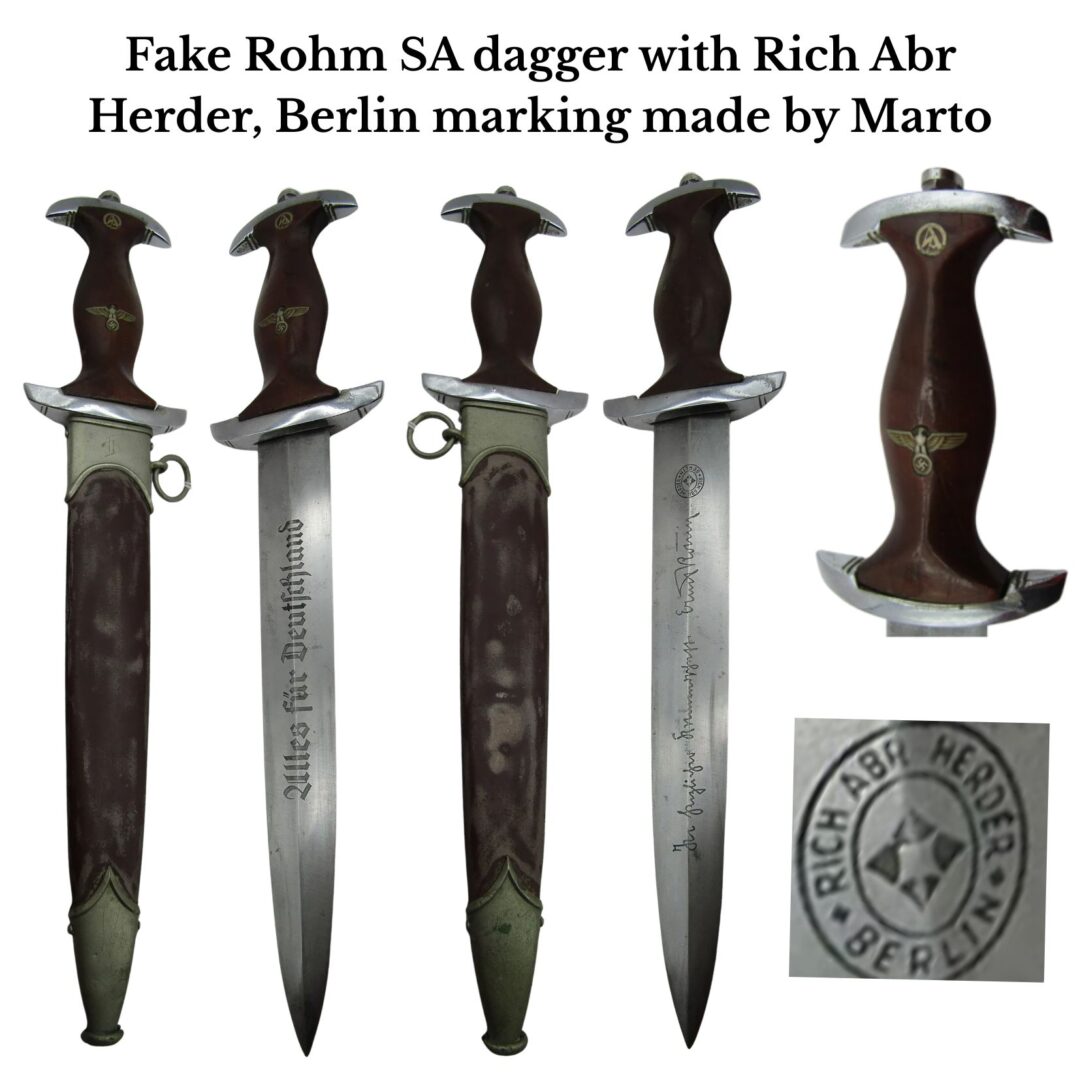
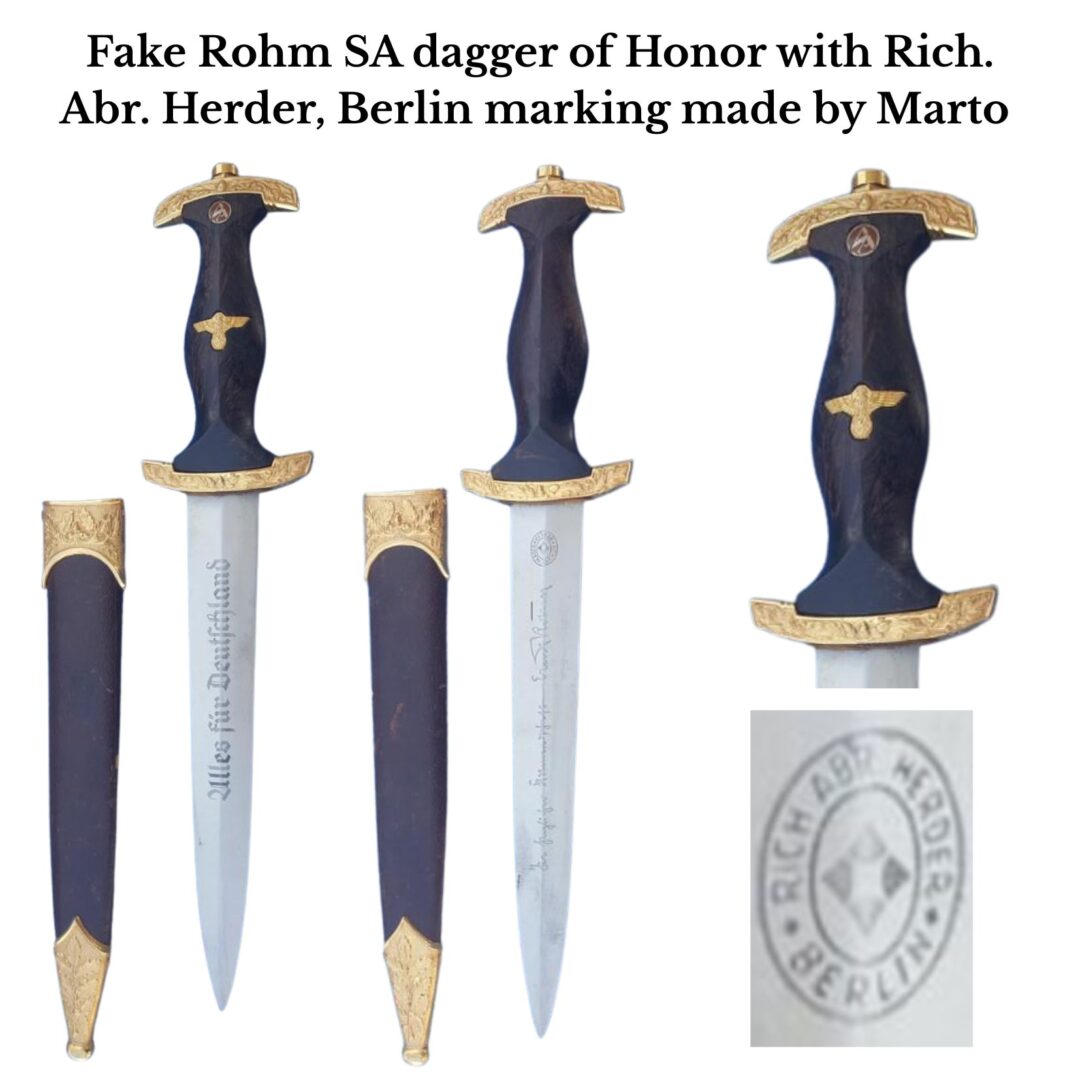
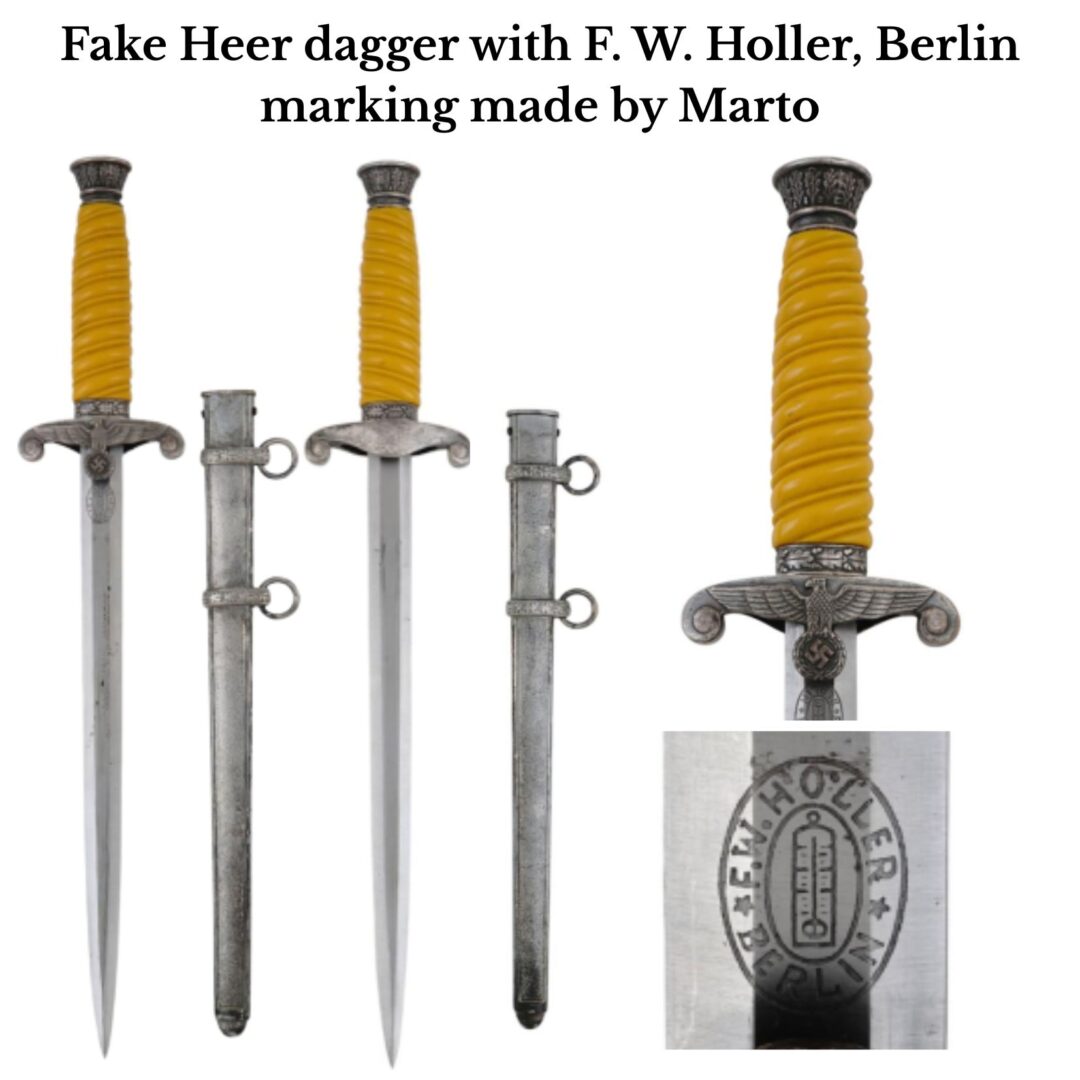
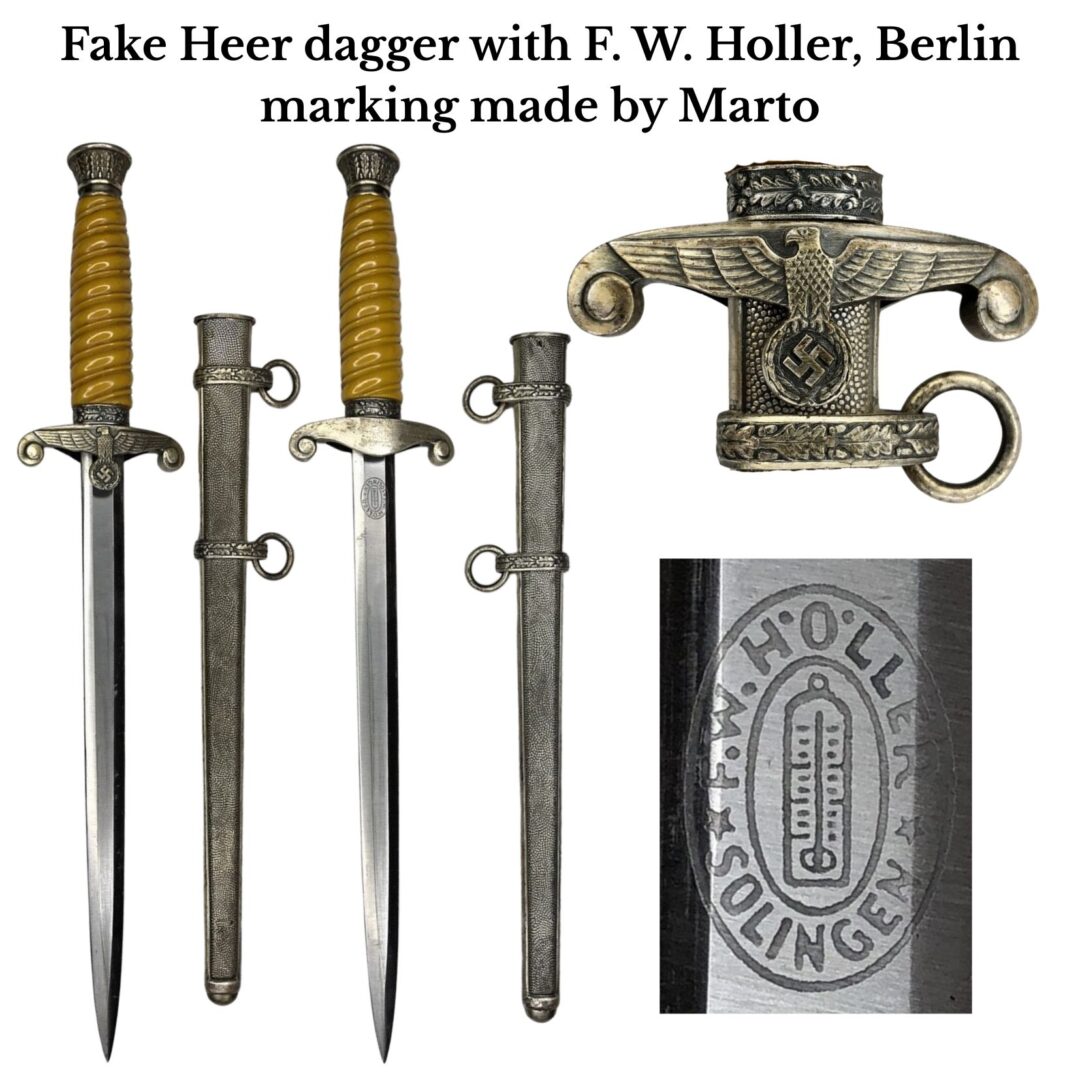
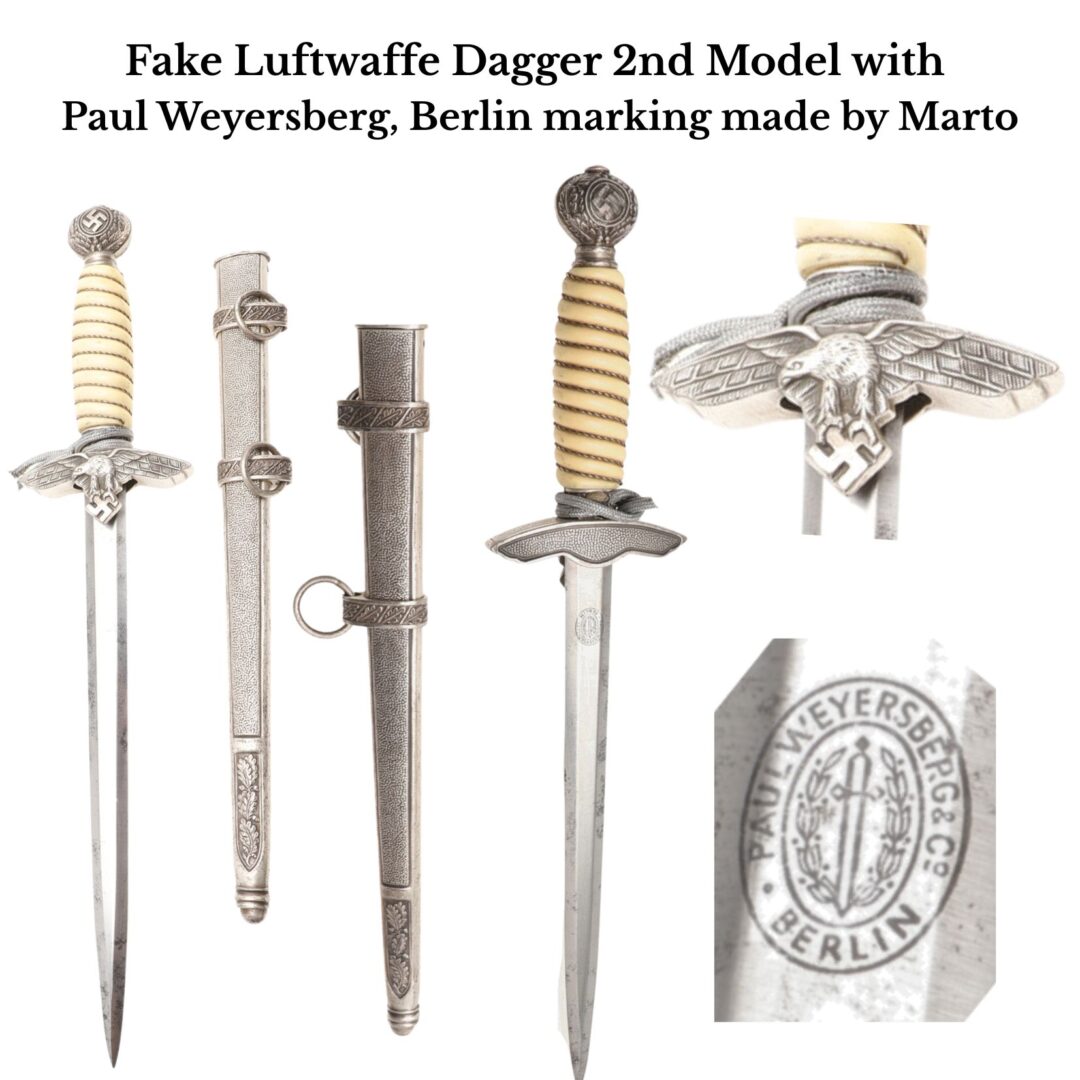
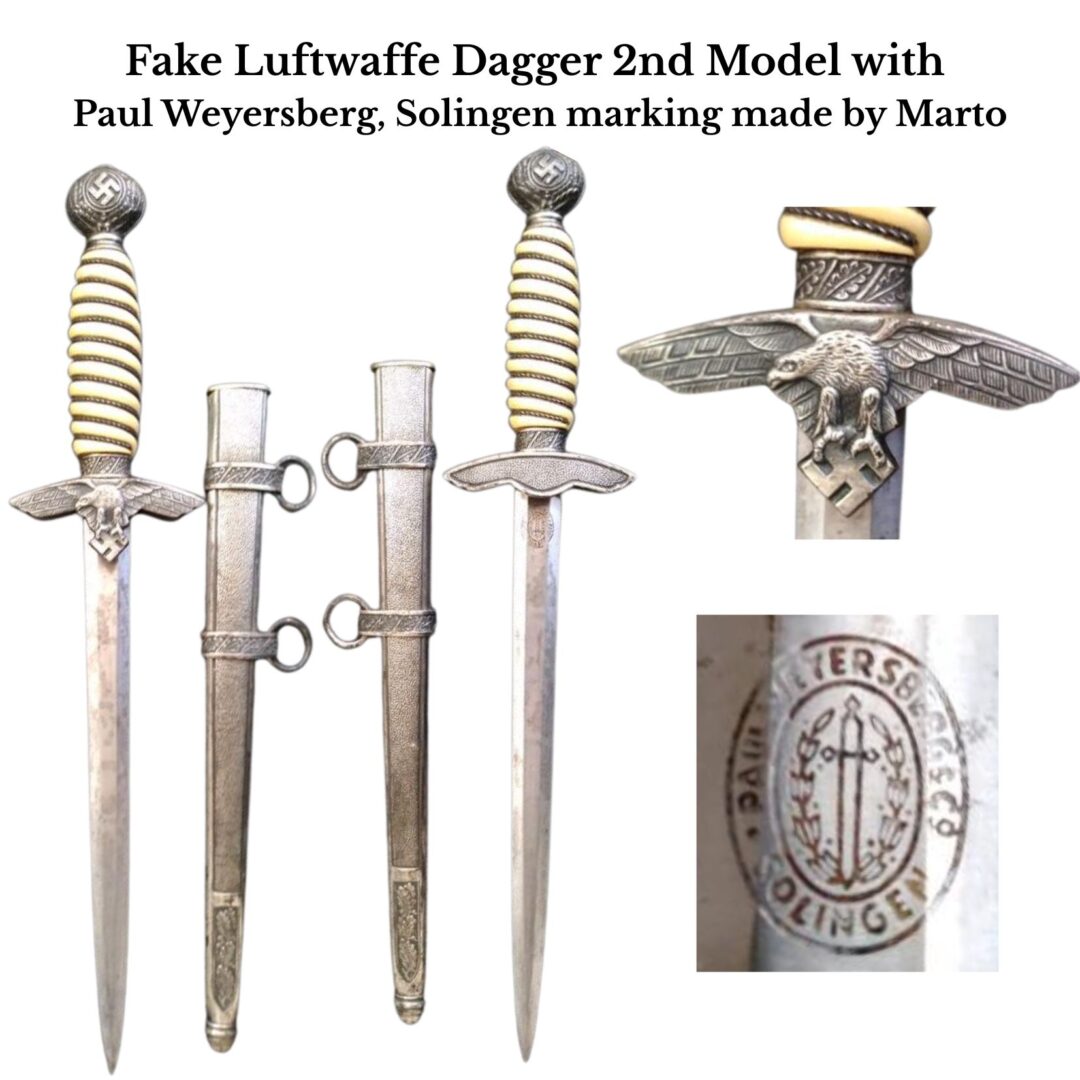
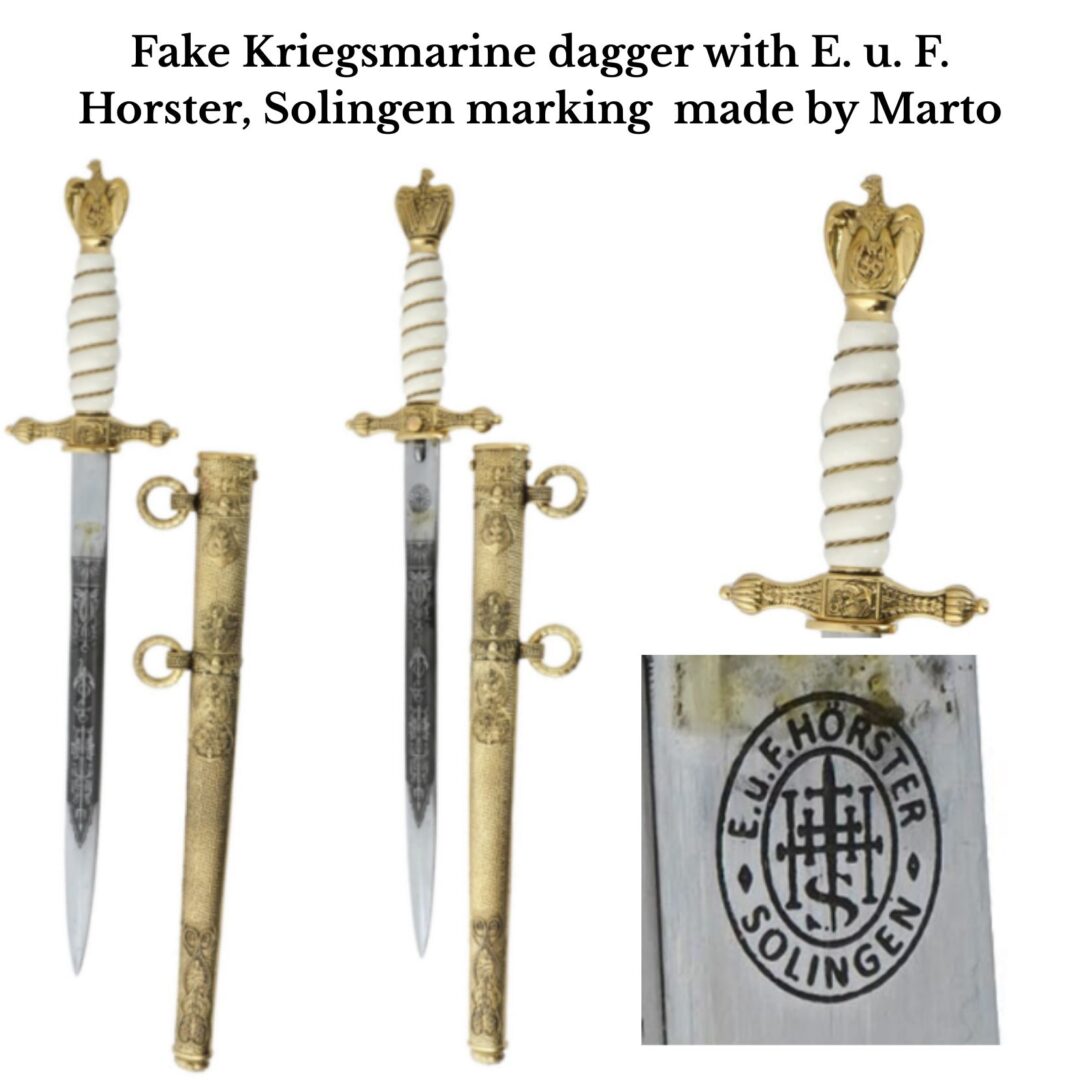
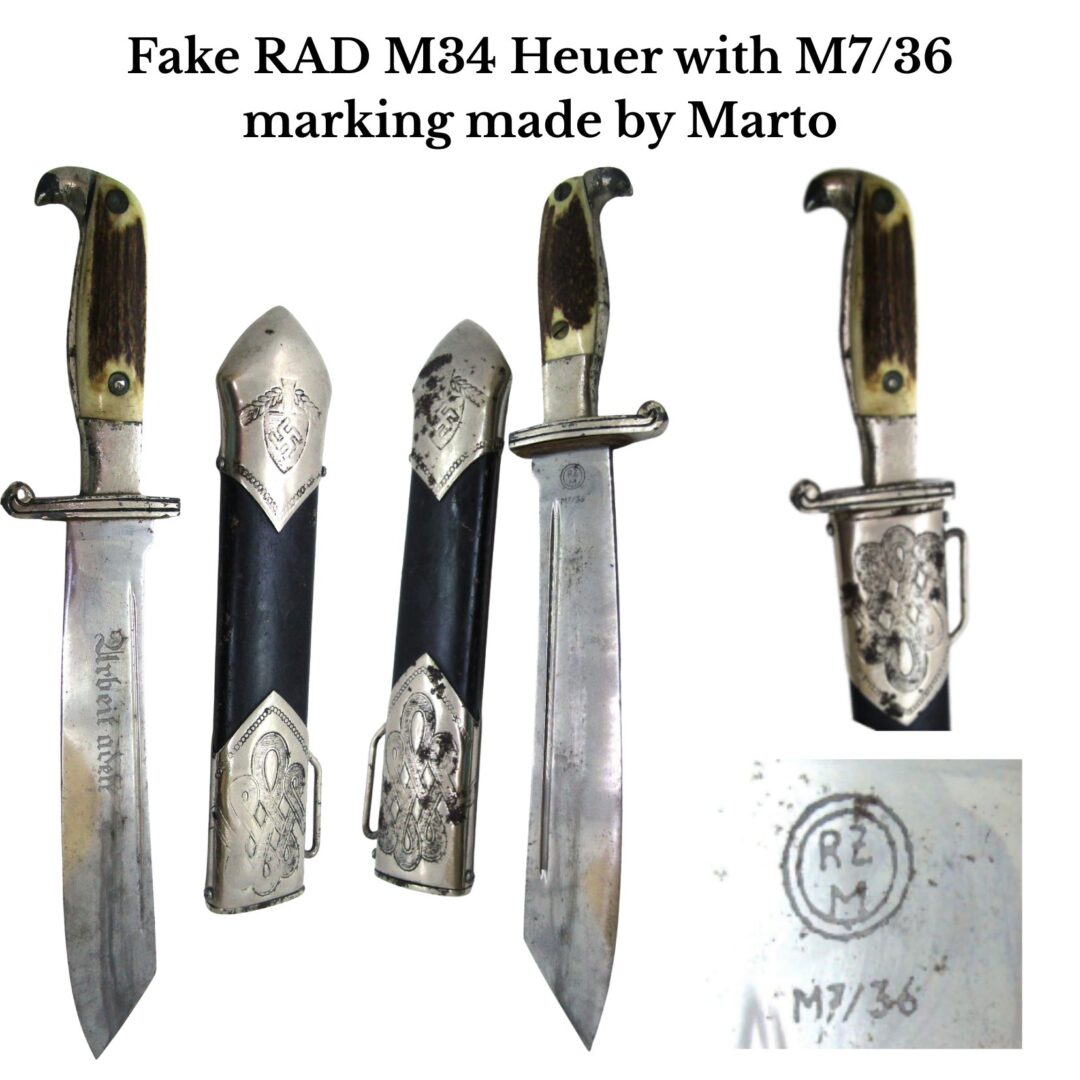
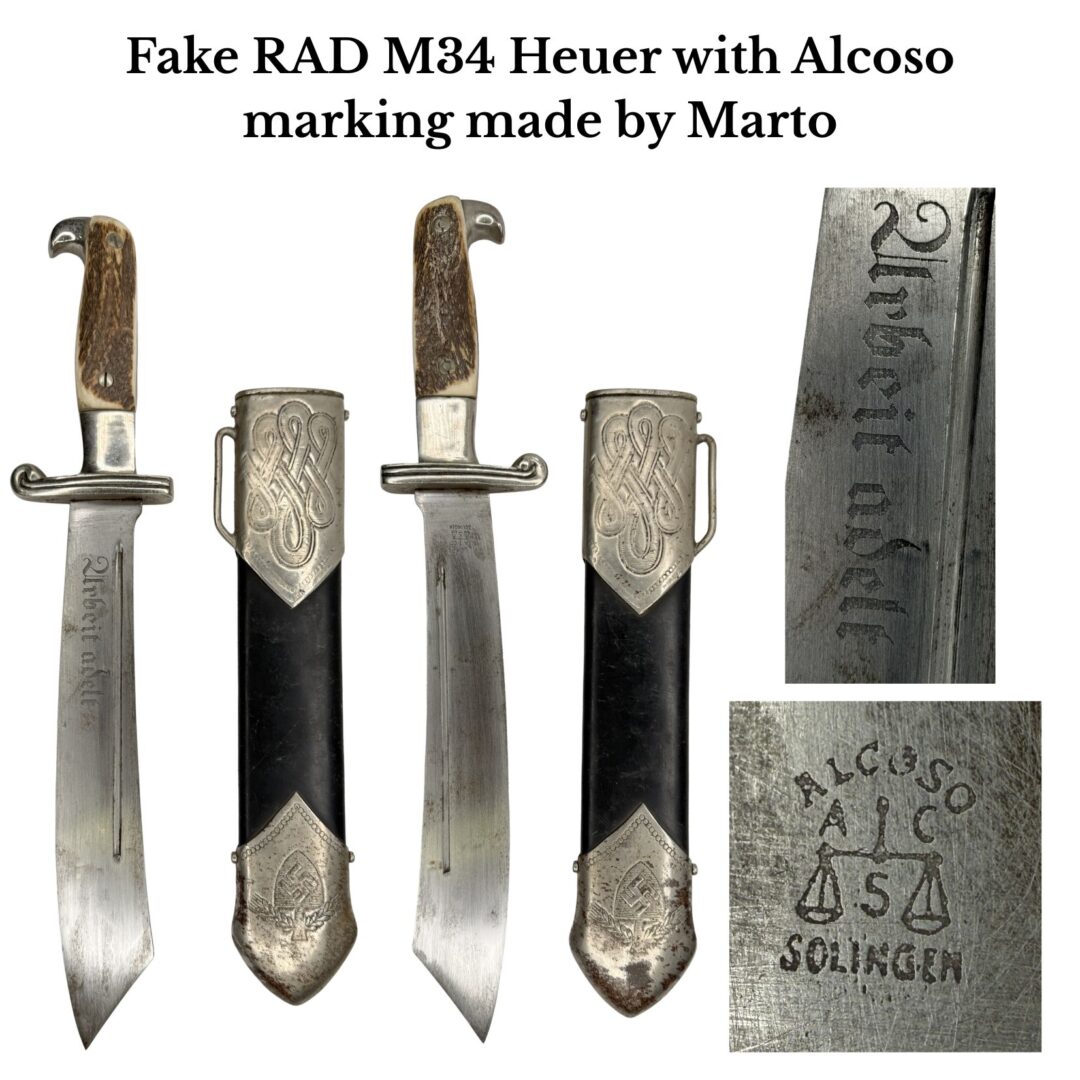
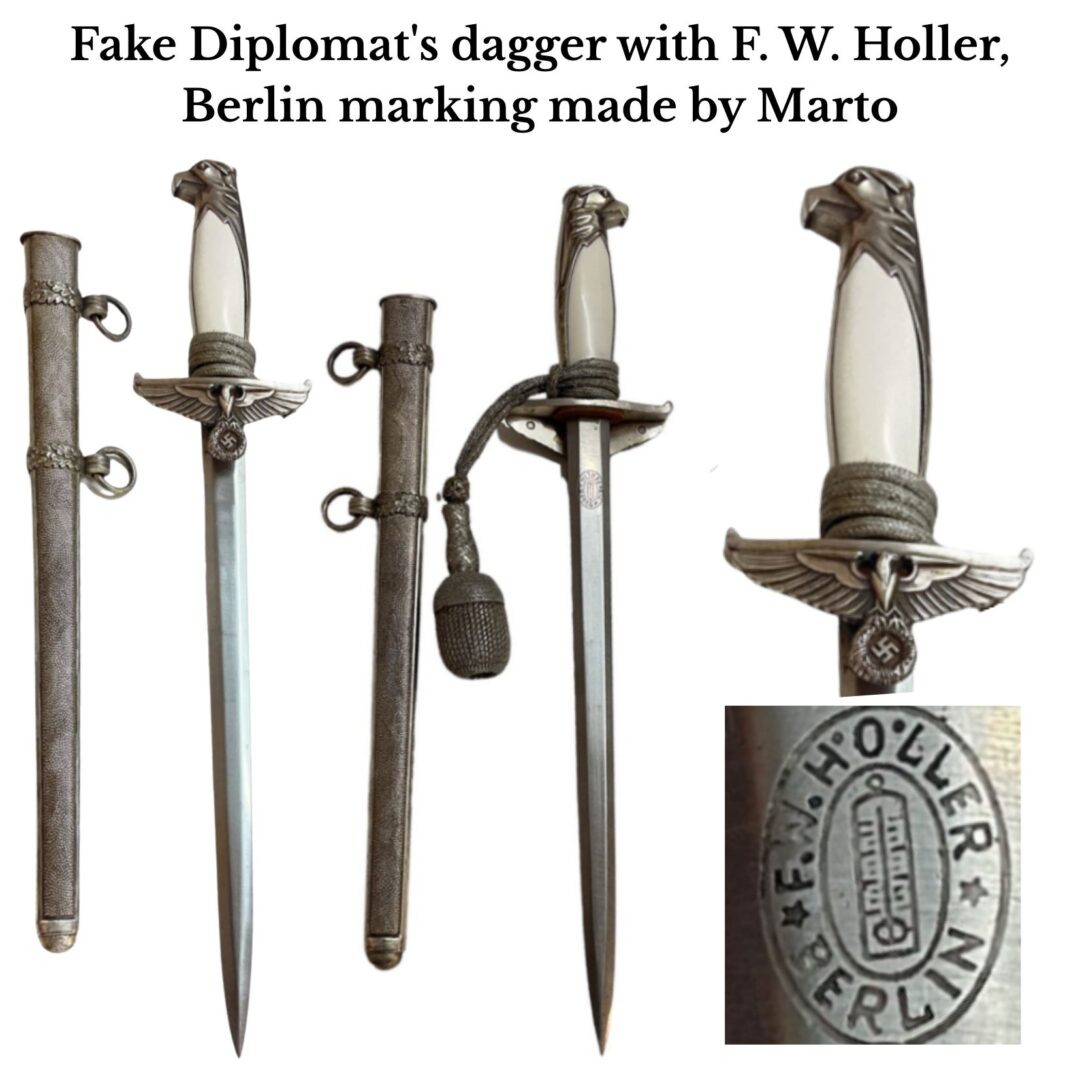
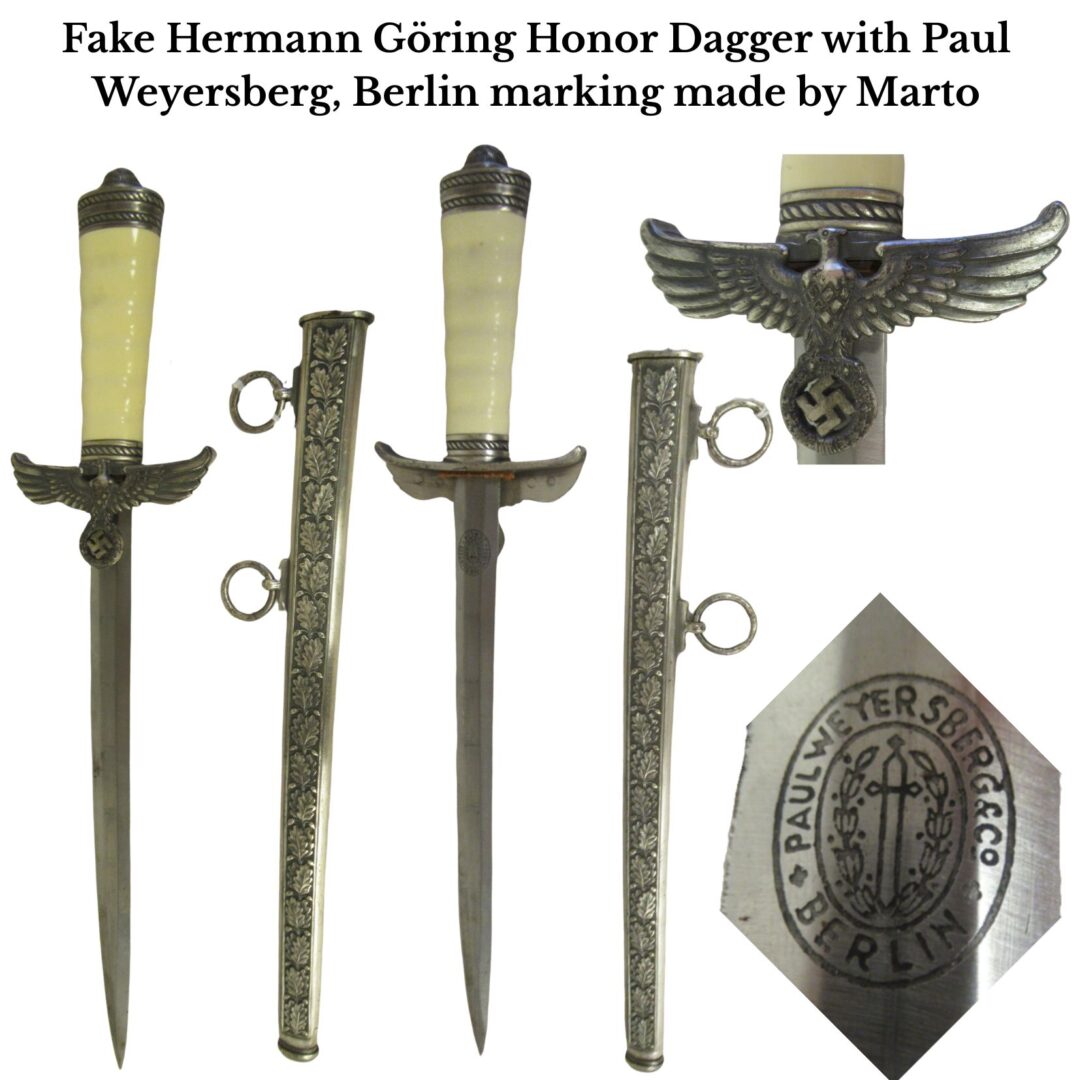
Although Marto manufactured many models and variations of German daggers, they consistently used the same markings. Fortunately for collectors, differences can be found between the original markings and the forged ones. We will analyze some of these differences below.
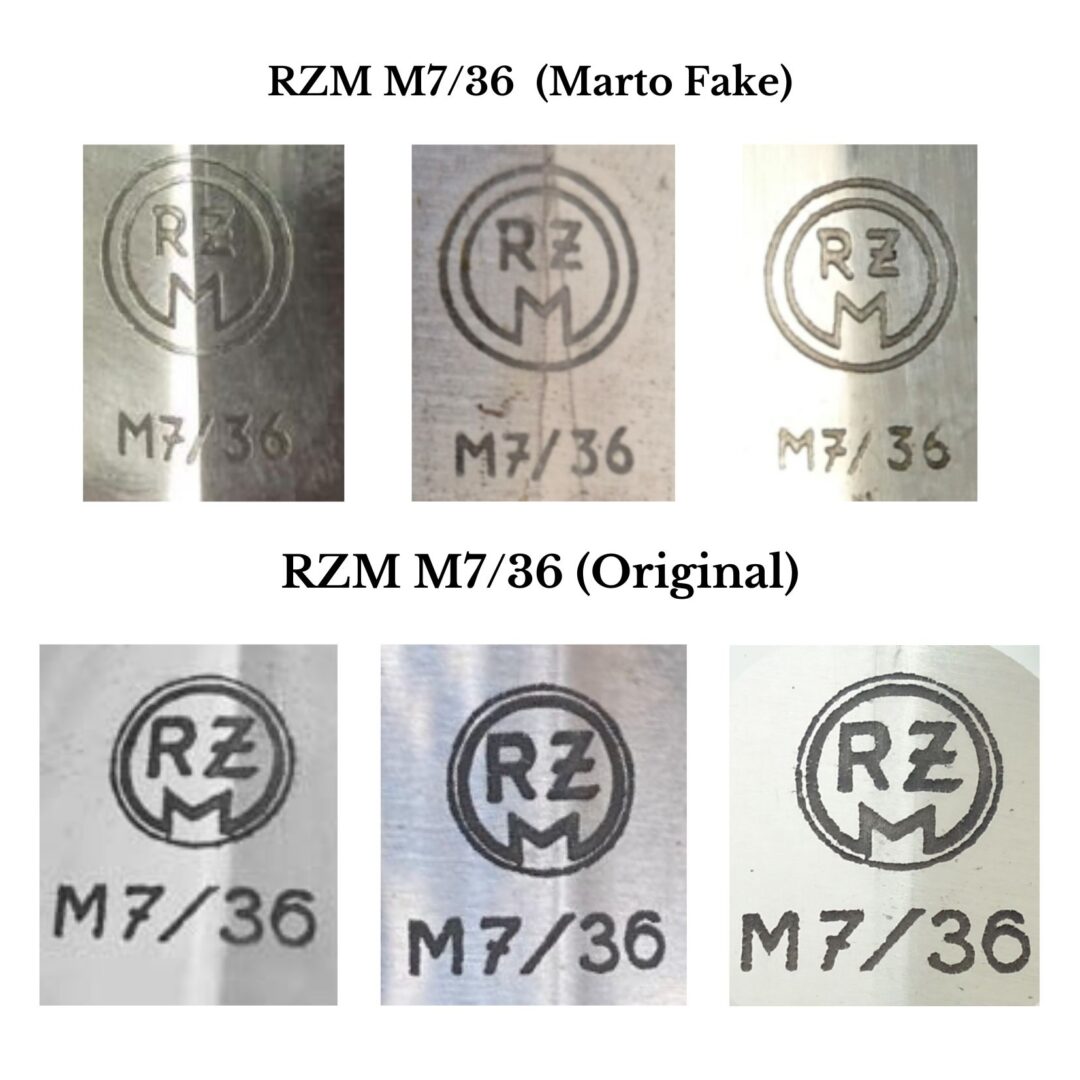
The Marto company primarily used the «RZM M7/36» marking on SS daggers. The RZM M7/36 code was originally used by the manufacturer E. F. Horster, who, interestingly, never produced SS daggers. Therefore, any SS dagger with this marking can be considered a counterfeit.
Furthermore, there are often noticeable differences in the outer double circle of the RZM and in the shape of the number 6 between the markings on replicas and the originals.
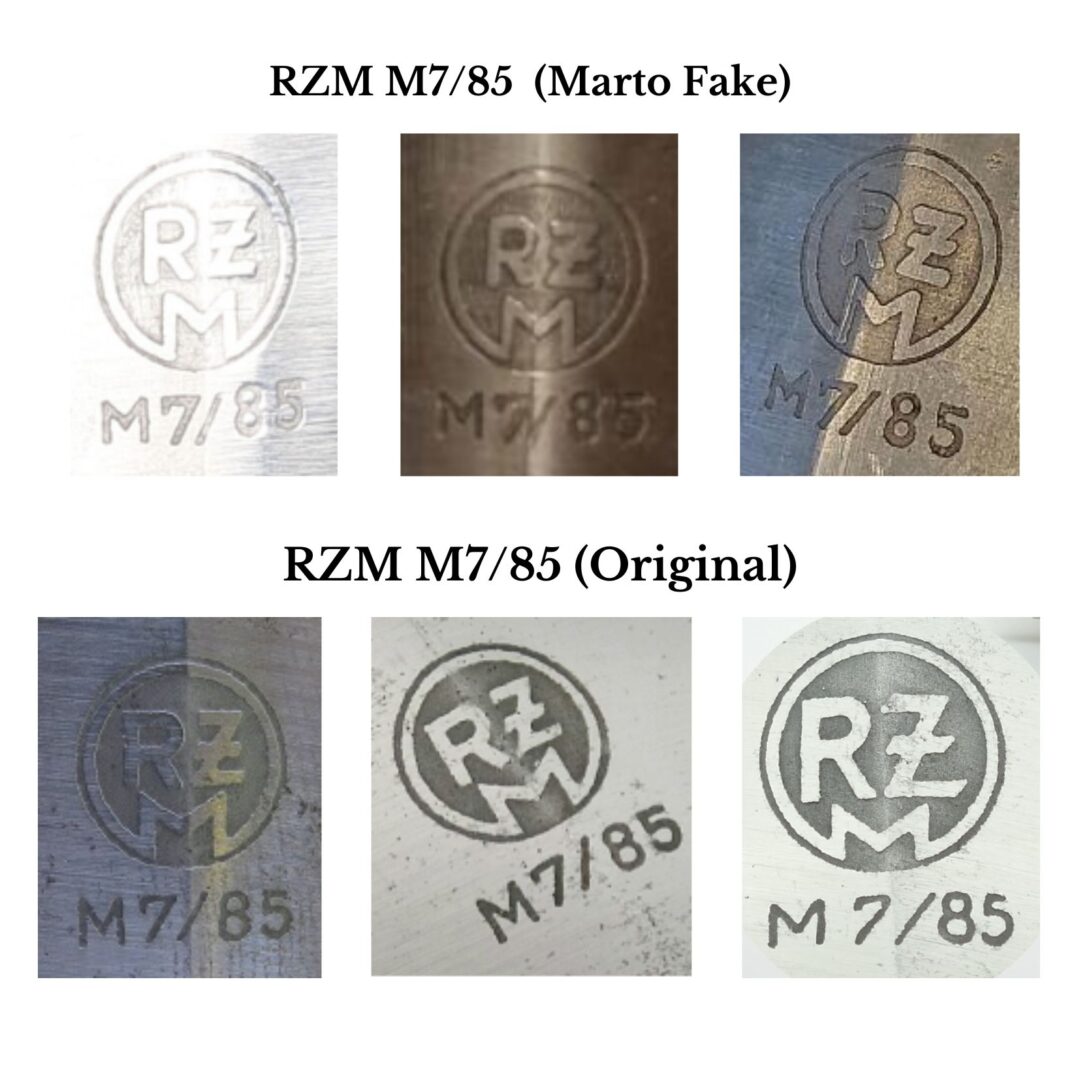
The RZM M7/85 marking used by Casa Marto was originally the code for the manufacturer Arthur Evertz. In this case, there is no quick way to distinguish the markings on Marto replicas from the originals; the only option is to compare the characteristics of each dagger in detail.
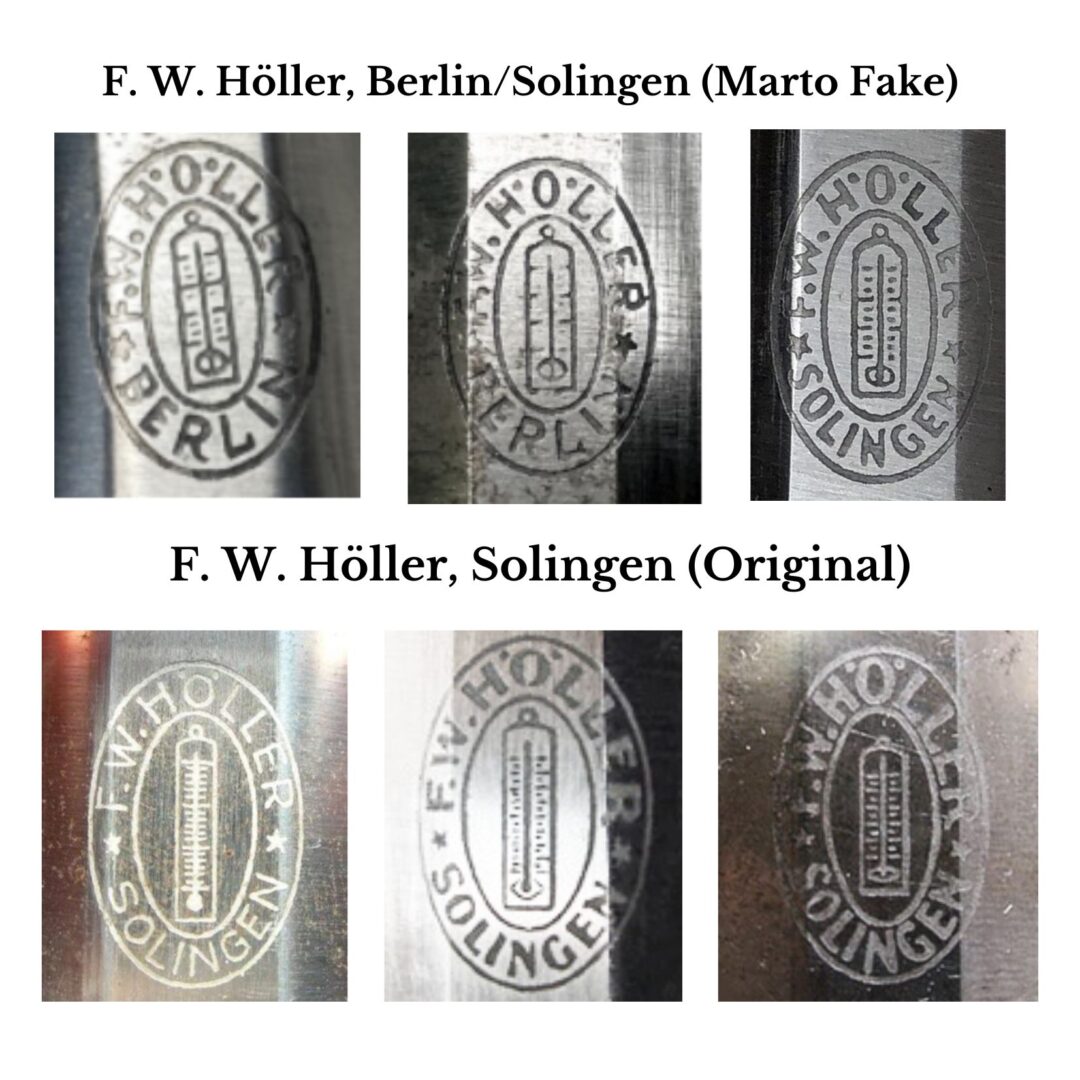
The Höller markings used by Casa Marto are two: «F. W. Höller, Berlin» and «F. W. Höller, Solingen». The «F. W. Höller, Berlin» marking was never used during the Third Reich, so we can automatically identify them as replicas.
To differentiate the original «F. W. Höller, Solingen» marking from the Marto replica, the easiest way is to count the lines on the sides of the thermometer. Original markings always have 11 or more lines on each side, whereas the fake Marto marking only has 10 lines per side. Furthermore, on the Marto replica, the lines are always arranged in the same way: 1 long line, 2 short lines.
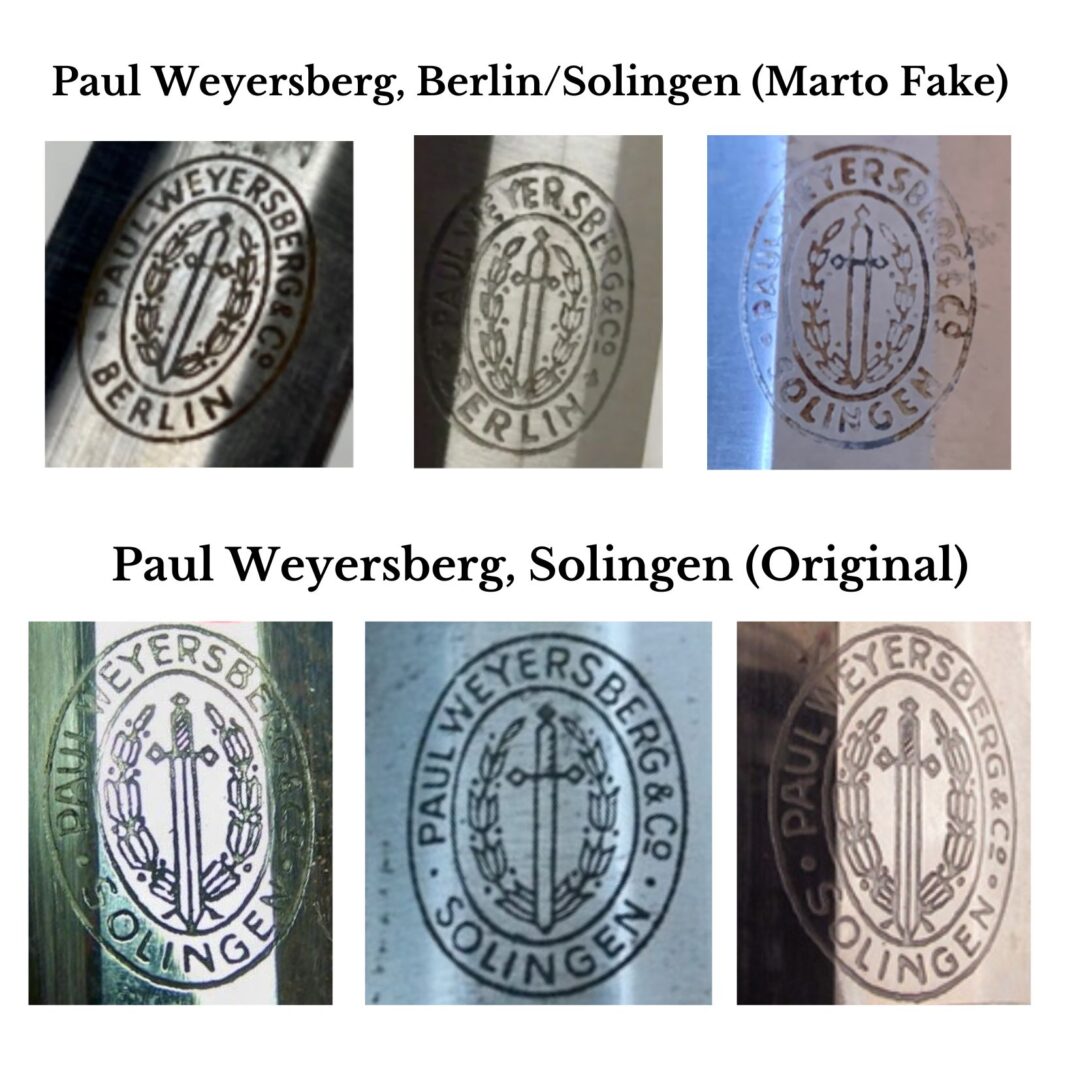
The Marto company used several Paul Weyersberg hallmarks, but two stand out: «Paul Weyersberg, Berlin» and «Paul Weyersberg, Solingen.» The «Paul Weyersberg, Berlin» hallmark was never used during World War II, making it easily recognizable as a Marto replica.
Furthermore, the quickest way to distinguish counterfeit Solingen models from genuine ones is by examining the sword’s hilt. Genuine hallmarks feature diagonal striations (either complete or partial), whereas the Marto «Paul Weyersberg, Solingen» hallmark has a completely smooth hilt.
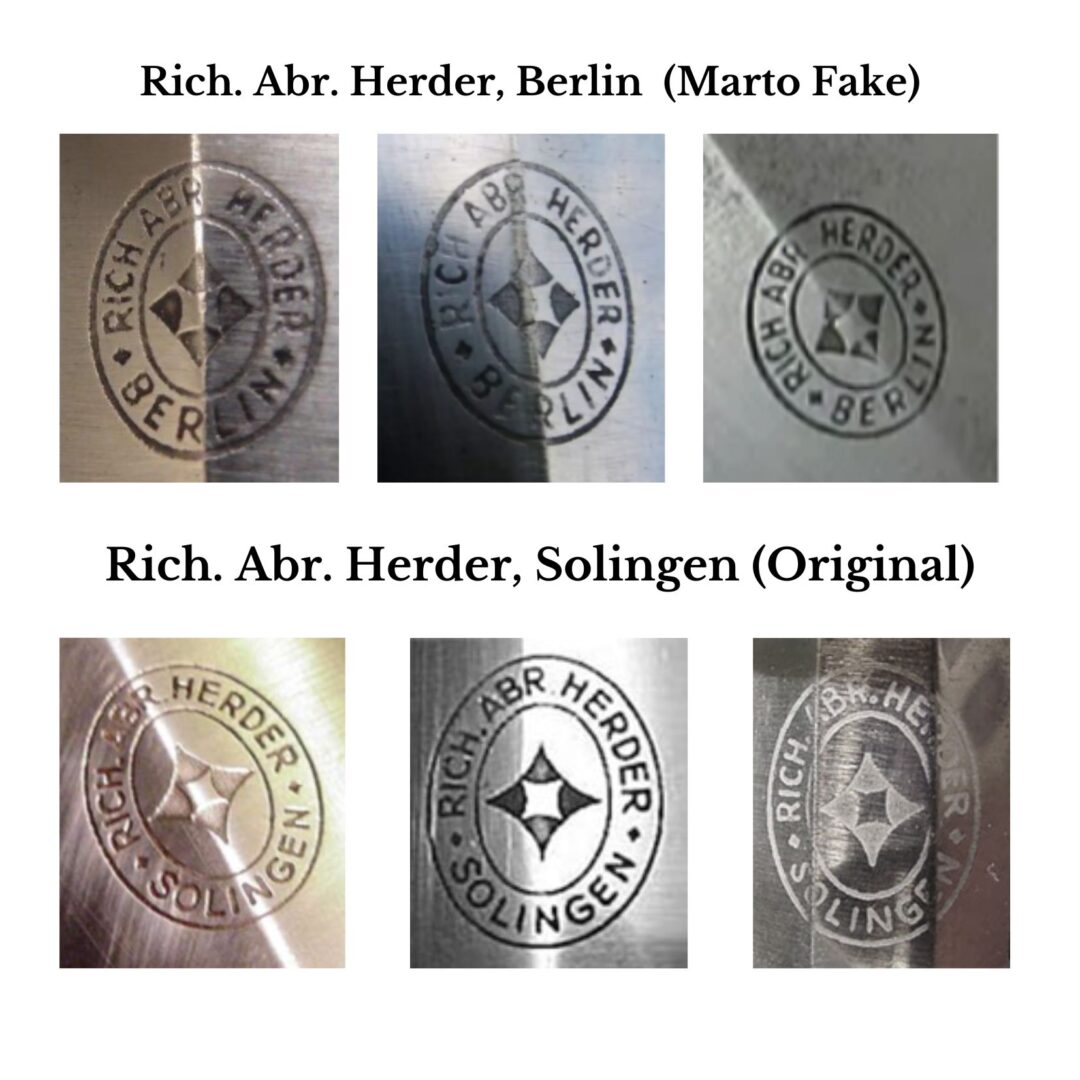
For Herder, we only know that the Marto House used the mark «Rich. Abr. Herder, Berlin». As with the previous marks, there was never a Herder mark that included the word «Berlin» during the Second World War; «Solingen» was always used.
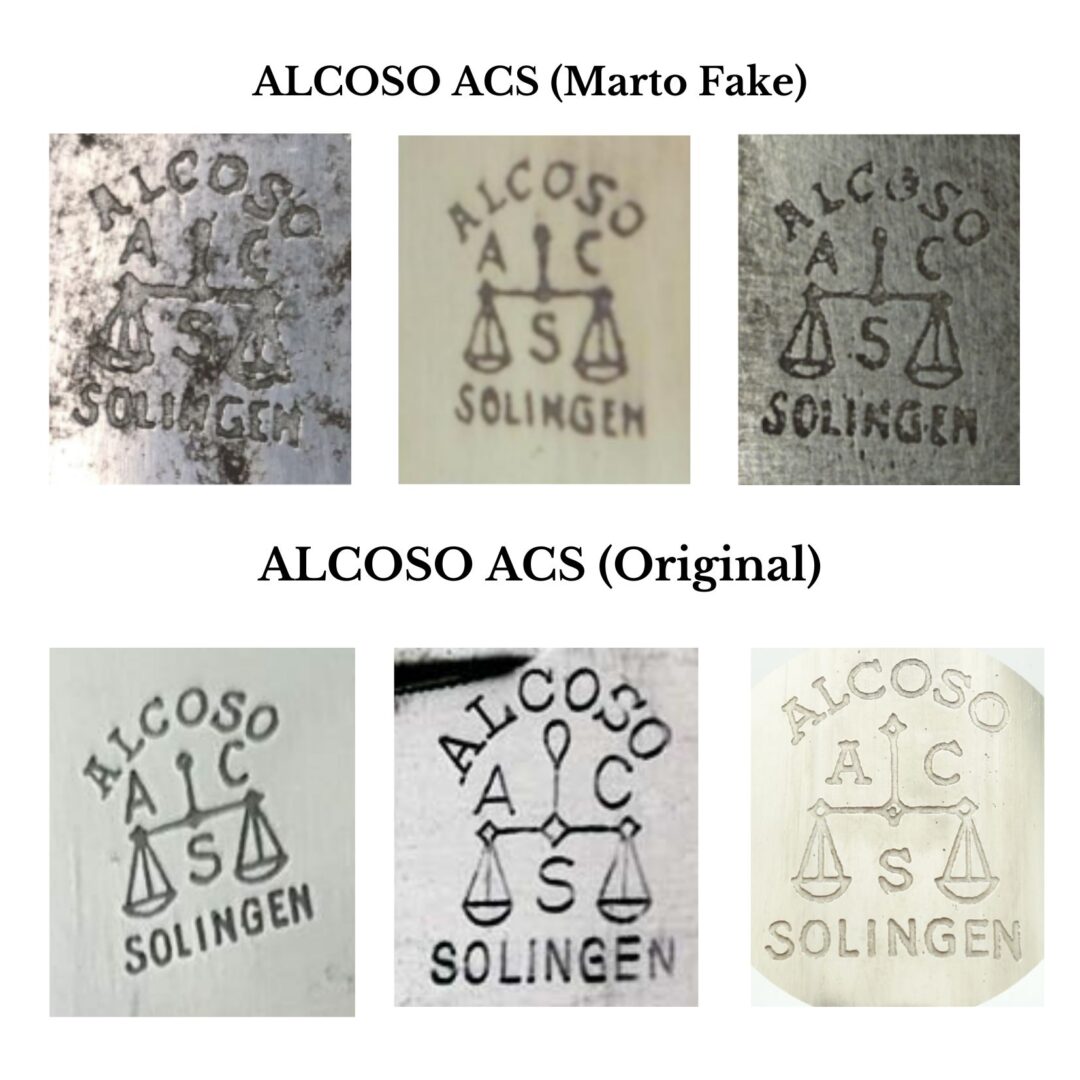
The «Alcoso ACS, Solingen» mark used by Casa Marto can be recognized as a counterfeit due to its poor detailing. Although these marks can also wear away over time, genuine Alcoso marks have much finer and more regular lines.
The main difference between Marto’s «E. u. F. Horster, Solingen» markings and the original World War II markings lies in the manufacturing method. According to many collectors, the original markings were stamped, while Marto’s post-war version were engraved (this is a controversial topic among collectors because many believe that engraved markings were indeed made before 1945).
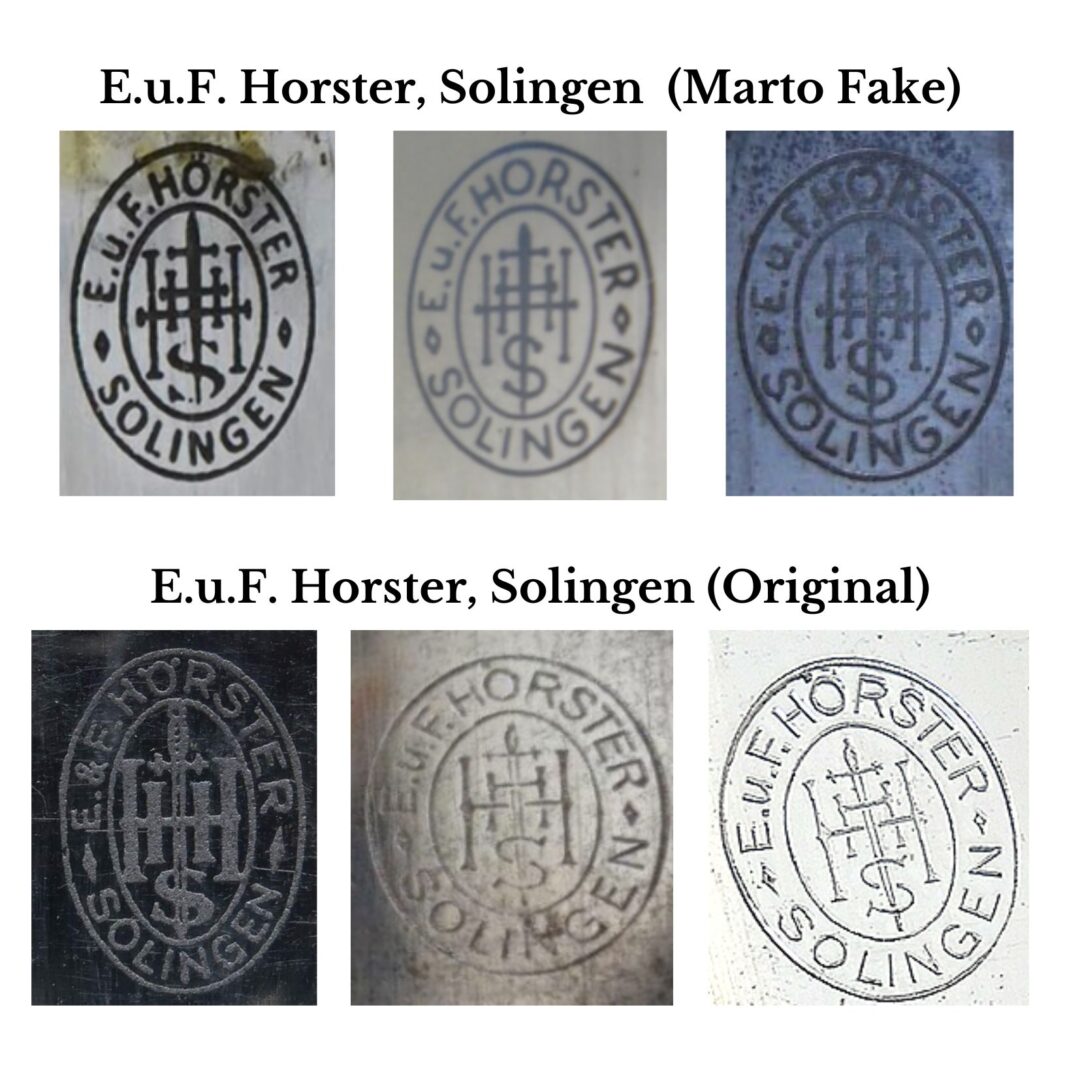
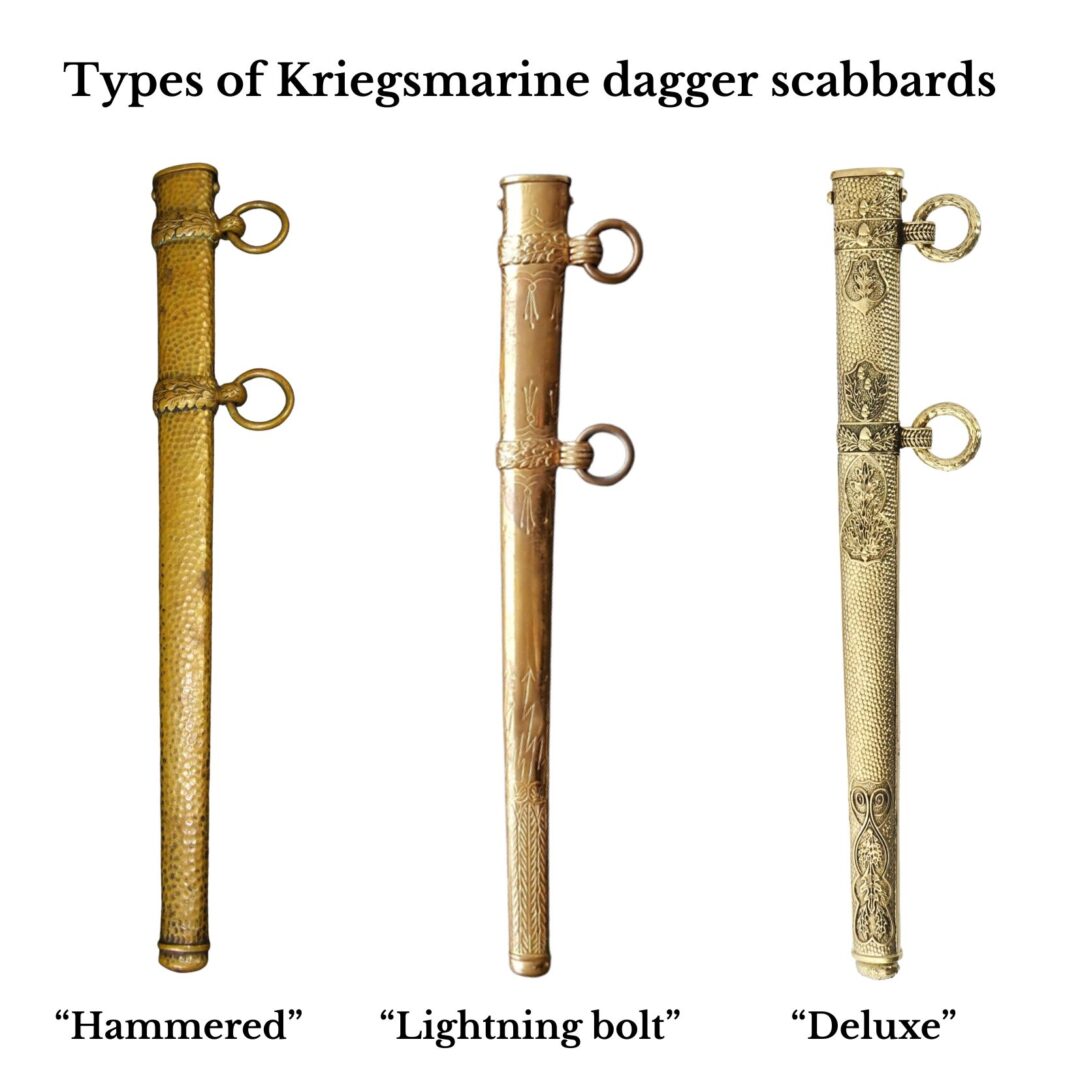
Furthermore, in this case Marto practically only used this marking for Kriegsmarine daggers, which gives us another detail to distinguish the originals from the fakes:the scabbards of Marto’s Horster-marked Kriegsmarine daggers are «deluxe scabbards,» and Horster never originally manufactured this type of scabbard.
German daggers from World War II are highly sought-after pieces, and as we’ve seen, reproductions have been manufactured for over 50 years, both to be sold as genuine and to be passed off as originals.
With this guide, we’ve tried to offer as much information as possible about the German daggers reproduced by Marto, but it’s likely that other models exist that we haven’t identified.
In any case, it’s always important to carefully study German daggers from the Third Reich, as there are many more forgeries on the market, and they aren’t always easy to spot.
How to tell the difference between an original German WW2 dagger and a fake?
There are many fakes on the market, but in Spain, those manufactured by Marto in the 1970s and 80s are very common. Comparing the details and markings of the originals is key to detecting fakes.
How do I know if my dagger is an original WW2 dagger?
There’s no quick way to verify if a dagger is an original WWII dagger or a post-war fake. It’s important to know the original models and compare them to find differences and similarities.
How much is a German WW2 dagger worth?
The prices of German daggers have risen considerably in recent years, but it’s still possible to find them starting at €500. However, depending on the model, they can be worth more than €10,000!
Where can I buy an original Nazi dagger?
You can buy it on our website (https://www.militariabcn.com/en/edged-weapons/bayonets-daggers-and-sabers-iii-reich) or in our physical store at Bruc 87 street in Barcelona.
If you have any questions, suggestions, or corrections, you can write to us at post@militariabcn.com
