
Usamos cookies en nuestro sitio web para darle la mejor experiencia. Al aceptar, aceptas el uso de todas las cookies. Puedes modificar o rechazar el uso de las cookies. Puedes ver la cookie policy.
Usamos cookies en nuestro sitio web para darle la mejor experiencia. Al aceptar, aceptas el uso de todas las cookies. Puedes modificar o rechazar el uso de las cookies. Puedes ver la cookie policy.




15 de abril de 2026
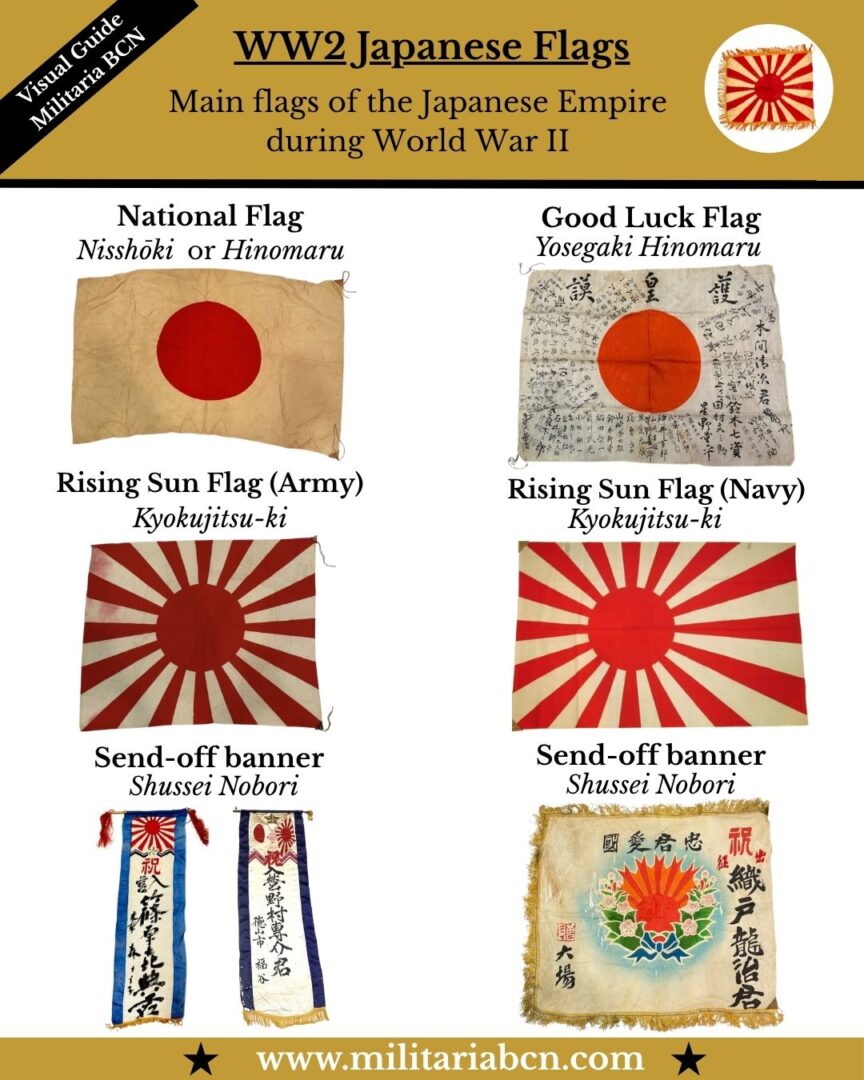
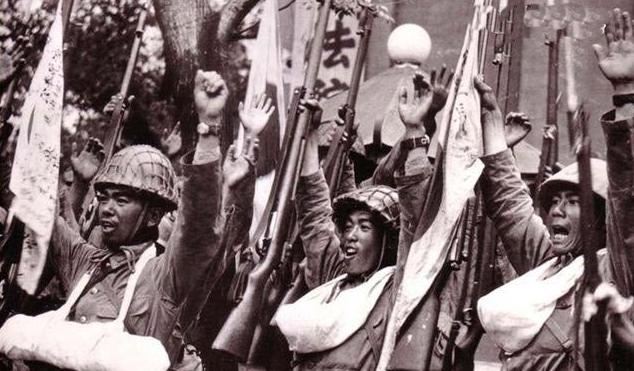
In this article, we will focus on Japanese flags from the Second World War that were signed by soldiers, their families, or their communities. We will accompany the article with period photographs and recovered original flags.
If you are interested in purchasing an original Japanese Second World War flag, you can visit our website:
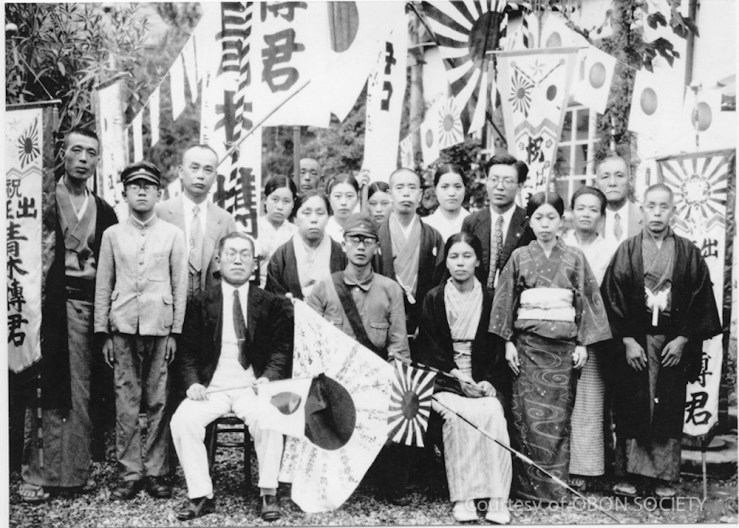
In Japan during the first half of the 20th century, the departure of men for military service was an event of social and communal significance. Various local organizations, including the Imperial Reservists Association (Teikoku Zaigo Gunjinkai) and the Greater Japan Women’s National Defense Association (Dai Nippon Kokubō Fujinkai), played a central role in organizing public ceremonies that culminated in farewell parades. These events, known as “Sokokai” were intended not only to send off recruits, but also to strengthen community cohesion and legitimize the bond between society, the Army, and the State through patriotic ritual.
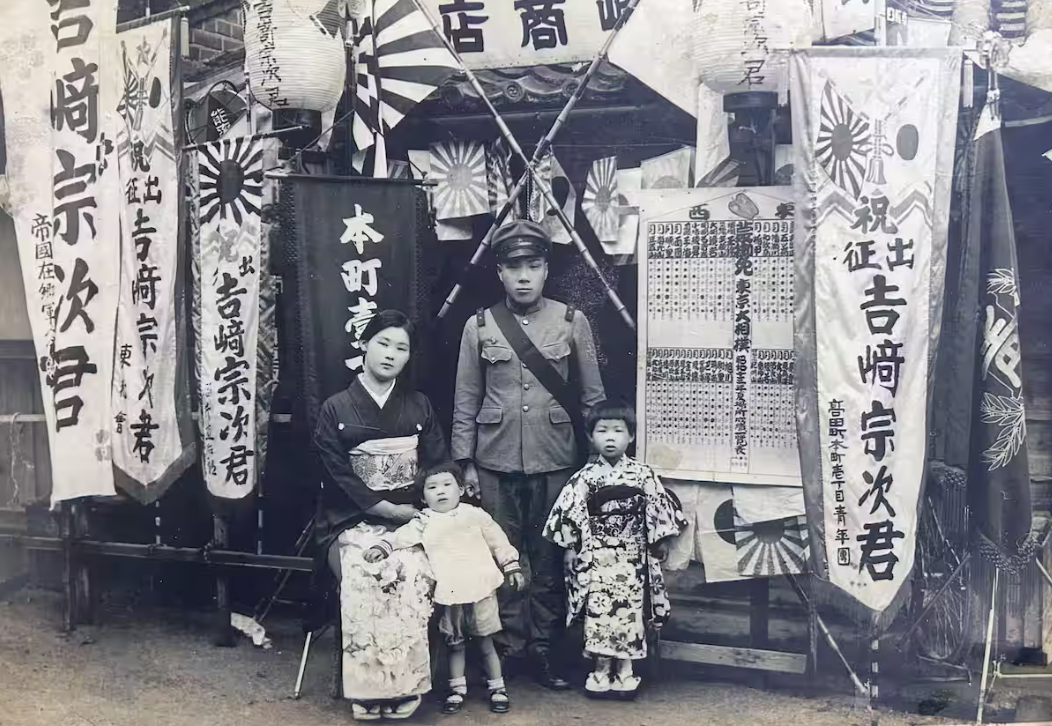
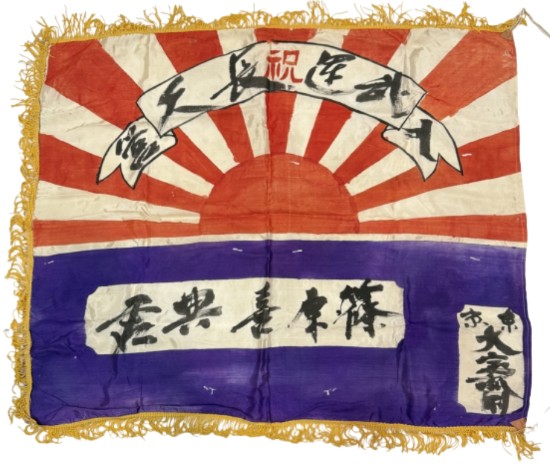
A characteristic element of these ceremonies were the banners (nobori) carried by participants, which displayed the names of the young men being called up. These were placed in front of homes or carried in parades through the streets. The specific designation of these banners depended on the slogan inscribed, although the most common phrase appears to have been shuku shussei (“congratulations on being called to active service”). Due to this repeated use, they are known as Shussei Nobori. The circulation of these visual expressions contributed to the symbolic construction of military duty as a source of collective pride and as a demonstration of the individual’s integration into the national project.
At the end of these ceremonies, it was customary to shout “banzai” and play military marches. There was even a march titled “Song to Send Off Soldiers to War” (出征兵士を送る歌, Shussei Heishi o Okuru Uta).
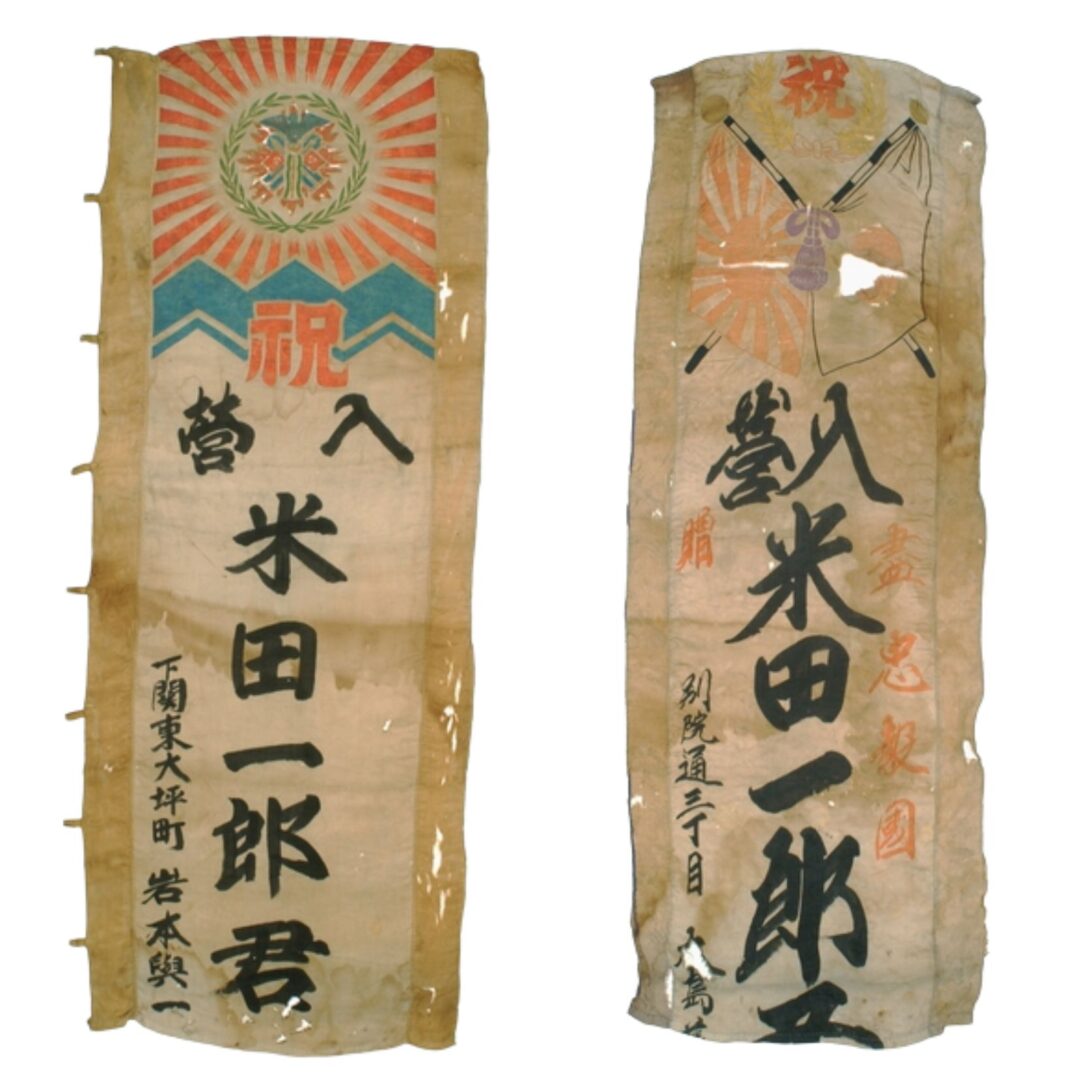
These banners are known by many names: “Congratulatory Banners,” “Send-Off Flags,” “Flags of Departure to War,” etc.
Shussei Nobori displayed notable diversity in size and materials. Although some reached monumental proportions, most were under 2 meters in length. They were typically made of silk, rayon, or cotton.
Most banners feature the kanji “Shuku” in red at the top, which can be translated as “congratulations.” They are usually accompanied by two kanji forming “Shussei,” together making shuku shussei (“congratulations on your deployment / call to service”).
Another recurring slogan combines “Shuku” with the kanji for “Nyu-ei,” forming Shuku Nyūei, which translates as “congratulations on your enlistment / entering the Army.”
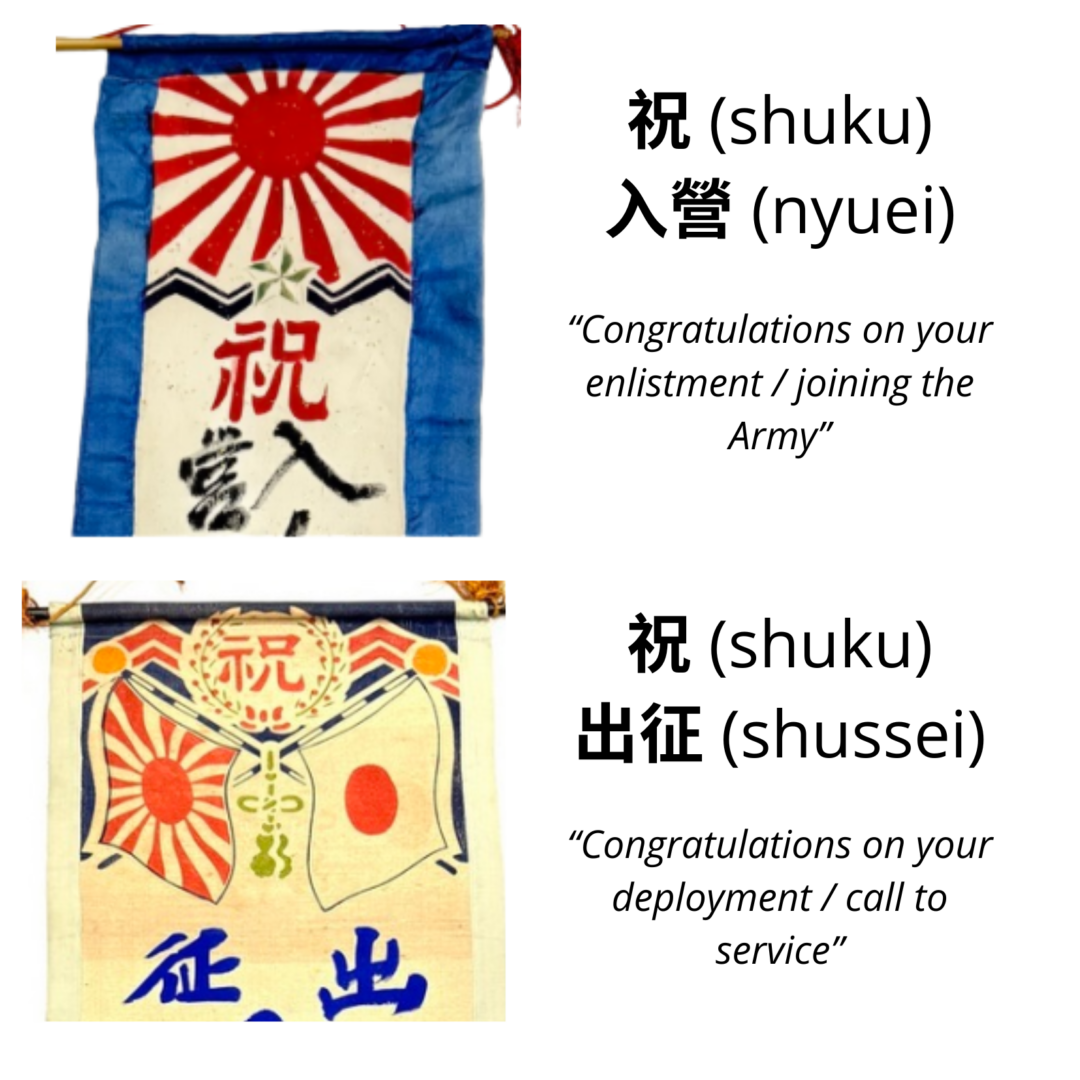
At the top, it is common to find representations of the national flag and the Rising Sun flag of the Imperial Japanese Army, although drawings of the Golden Kite (a mythological bird), the rising sun, or other patriotic symbols are also frequently seen.
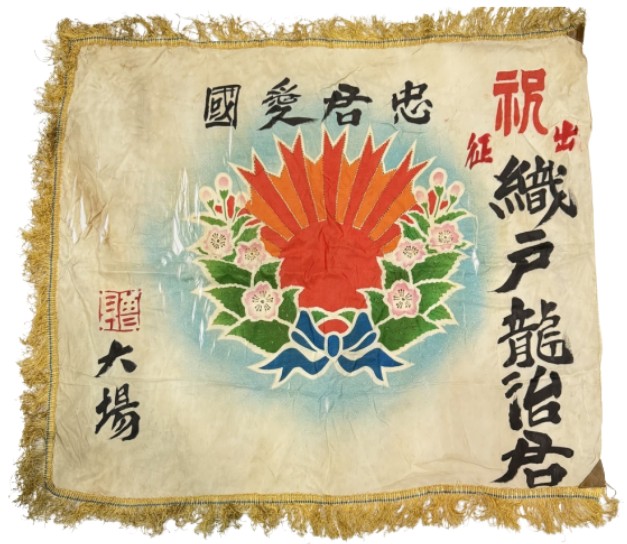
Although much less common, there are also rectangular Shussei Nobori, shaped more like flags.
Another communal ritual prior to soldiers departing for the front was the signing and presentation of Hinomaru Yosegaki. The Good Luck Flag, or Hinomaru Yosegaki, consisted of a Japanese national flag on which family members, friends, classmates, or community members wrote messages of encouragement, good wishes, prayers, and patriotic slogans before a soldier left for the front.
The term Hinomaru Yosegaki (日の丸寄せ書き) is best known in English as Good Luck Flag. It is composed of Hinomaru (日の丸), meaning “circle of the sun,” the common name for the Japanese national flag characterized by a red disc on a white background; and Yosegaki (寄せ書き), meaning “collected writings” or the practice of writing collective messages on a single object, usually commemorative or supportive. Therefore, Hinomaru Yosegaki could be translated as “collected writings around the circle of the sun”.
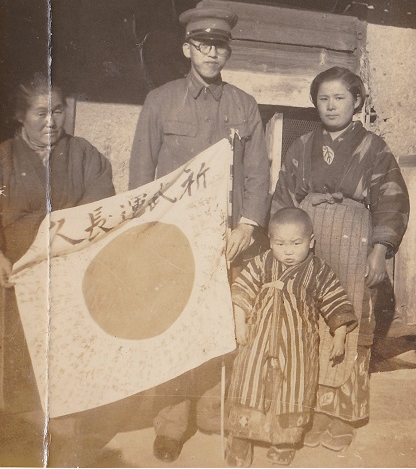
This was a common practice during the military campaigns of the Japanese Empire, with documented use as early as the First Sino-Japanese War (1894–1895), intensifying during the Second Sino-Japanese War (1937–1945) and the Second World War (1941–1945).
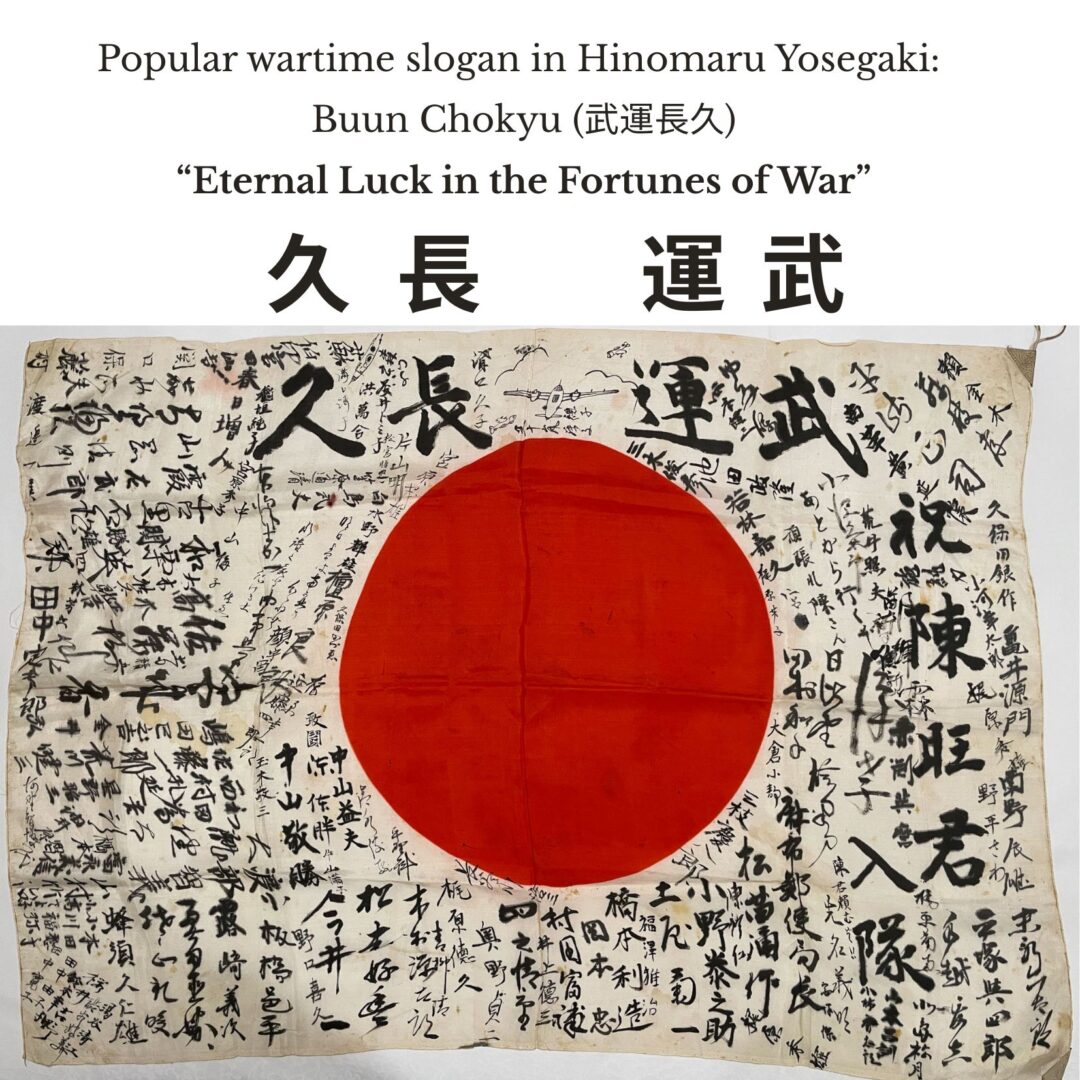
The central red disc, representing the sun, was usually left blank or reserved for a main dedication, while messages were distributed around it in the white space. Among the kanji written, the soldier’s name and the phrase “Bu un Cho kyu,” meaning “eternal luck in the fortunes of war”, often stood out. The rest of the names and dedications were spread across the entire flag. The writing was typically done with a calligraphy brush and black ink.
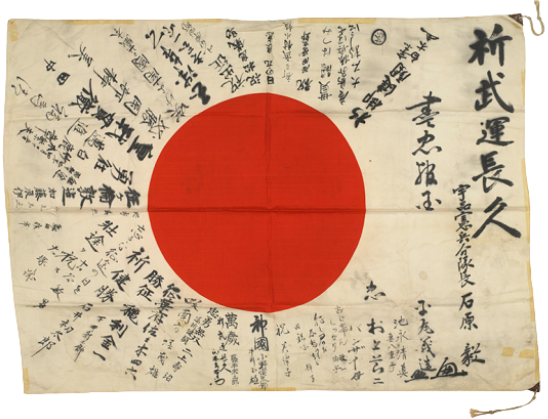
Most of these flags were made of cotton, silk, or rayon (artificial silk). The two right-hand corners were often reinforced with leather, paper, or cardboard.
Another common feature is the presence of red stamps or seals, typically from Shinto shrines belonging to the soldier’s community.
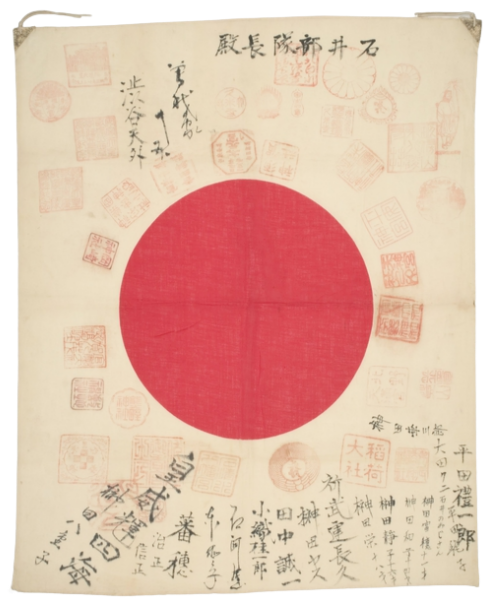
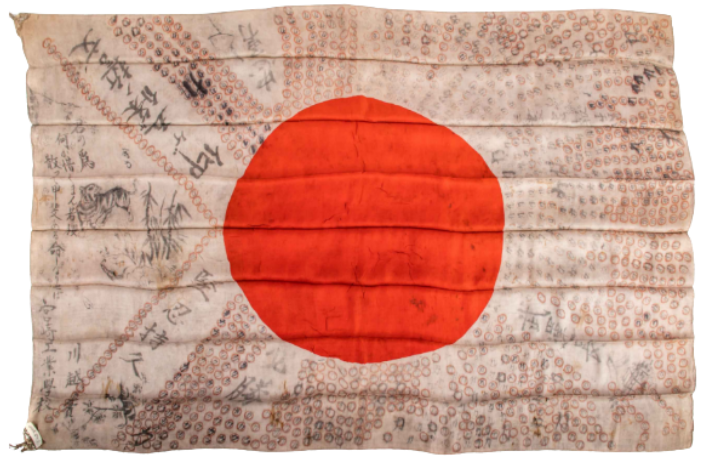
The Hinomaru Yosegaki thus acquired a deeply symbolic and personal dimension: it was not only a patriotic object, but also a protective talisman that the soldier carried as a reminder of his community and the national cause. For this reason, these flags were treasured and, in many cases, accompanied the soldier even in death, becoming relics with strong emotional significance.
During the war and postwar period, many Yosegaki were collected on battlefields or taken as souvenirs by Allied soldiers.
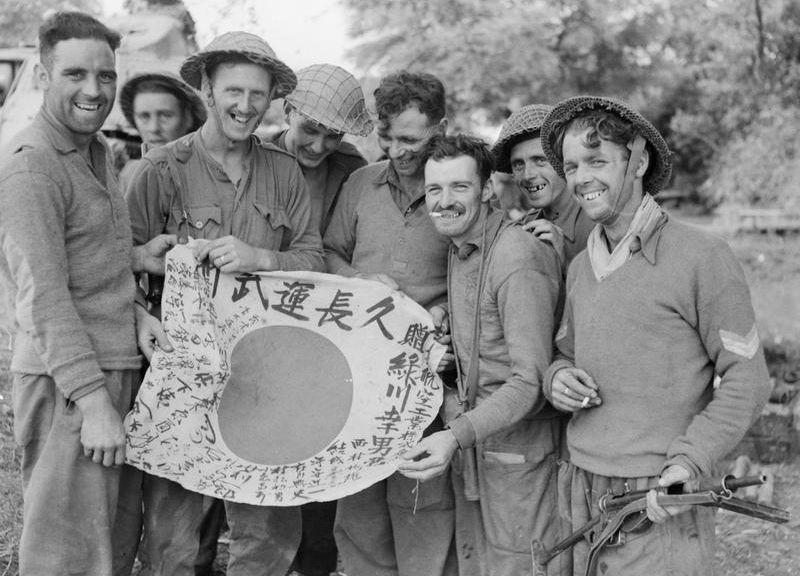
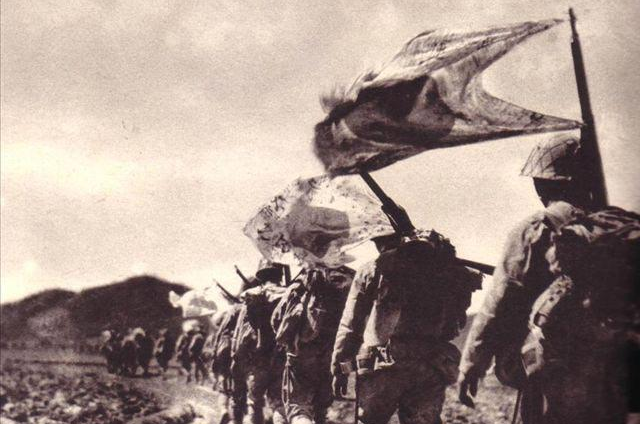
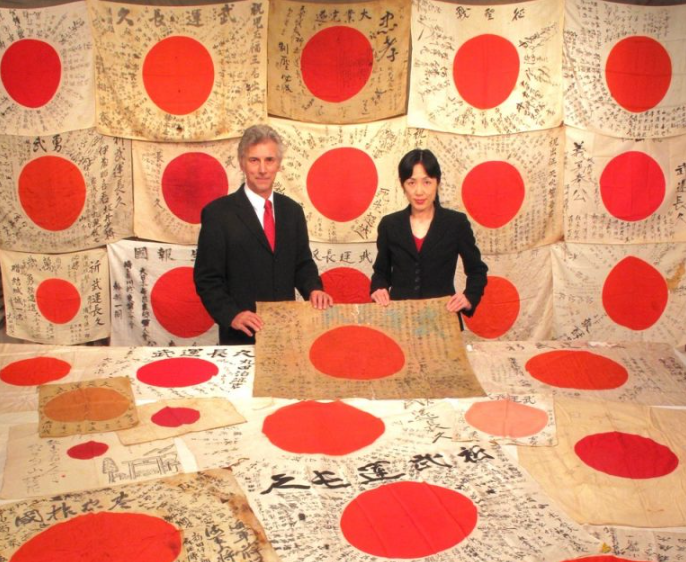
The Obon Society is a nonprofit organization founded in 2009 in Oregon (United States) with the aim of locating families in Japan and returning personal items—referred to as “Non-Biological Human Remains (NBHR)”—that belonged to Japanese soldiers during the Second World War. Among these objects, the most common are Yosegaki Hinomaru flags.
The relationship between the Obon Society and Yosegaki Hinomaru is central: the organization dedicates resources, genealogical research, and a structured repatriation system to return these flags to the living relatives of their original owners. On its website, the Obon Society states that these objects, due to their unique nature (calligraphy, names, personal messages), can be precisely identified, allowing families to be traced even decades later. This process has enabled the return of hundreds of flags from various countries to Japan, offering families a tangible link to lost ancestors and, in many cases, bringing closure to a chapter of personal and collective history tied to the conflict.
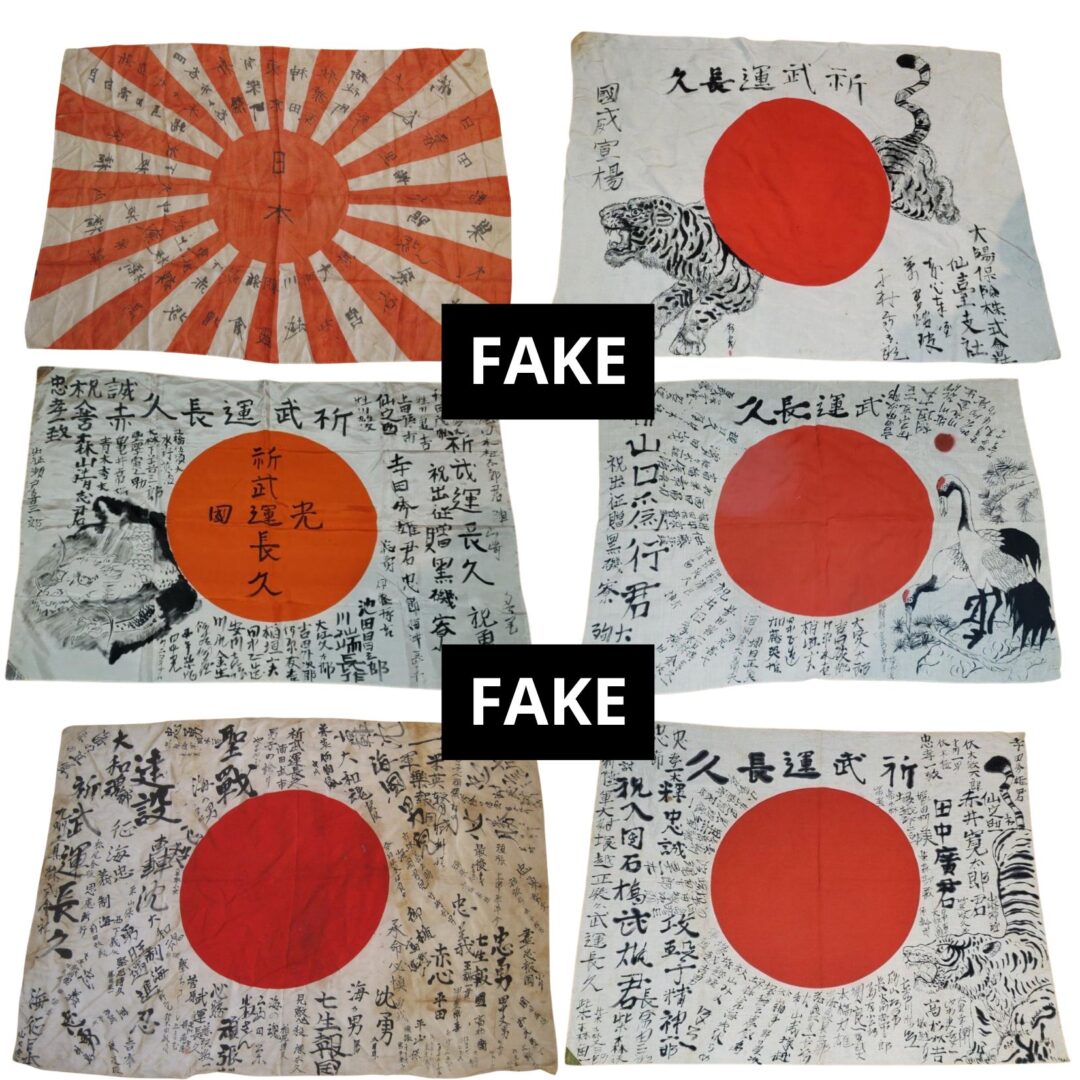
Today, it is not difficult to find original Japanese Second World War flags; however, caution is advised with more visually striking examples, as there are many forgeries.
There are signed Rising Sun flags as well as Good Luck Flags with drawings (tigers, flowers, etc.), but these are very rare and have been widely imitated through counterfeiting.
Even so, signed Japanese flags are essential collectible items for enthusiasts of Japanese culture and collectors of Second World War memorabilia.
What flag did the Japanese Army use during the Second World War?
Why did the Japanese sign flags during the Second World War?
What materials were Japanese flags made of during the Second World War?
Where can you buy original Japanese Second World War items?
If you have any questions, suggestions, or corrections, you can contact us at post@militariabcn.com
