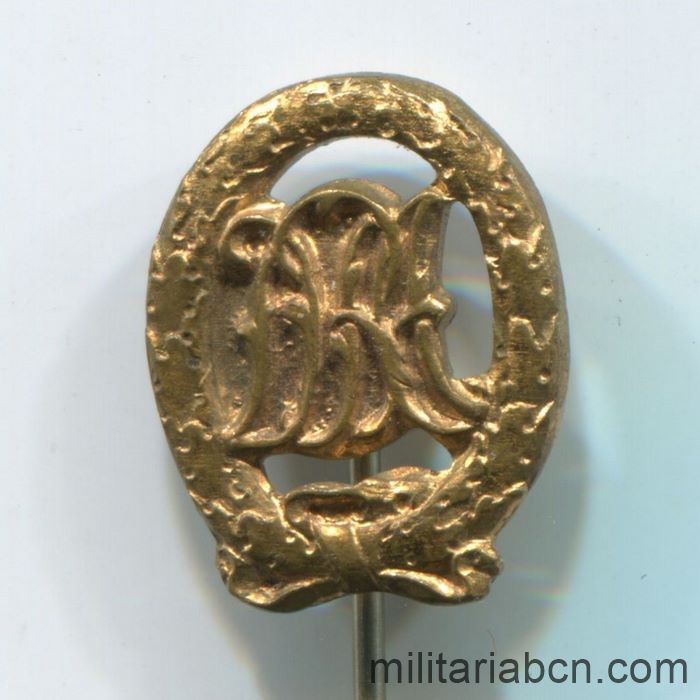
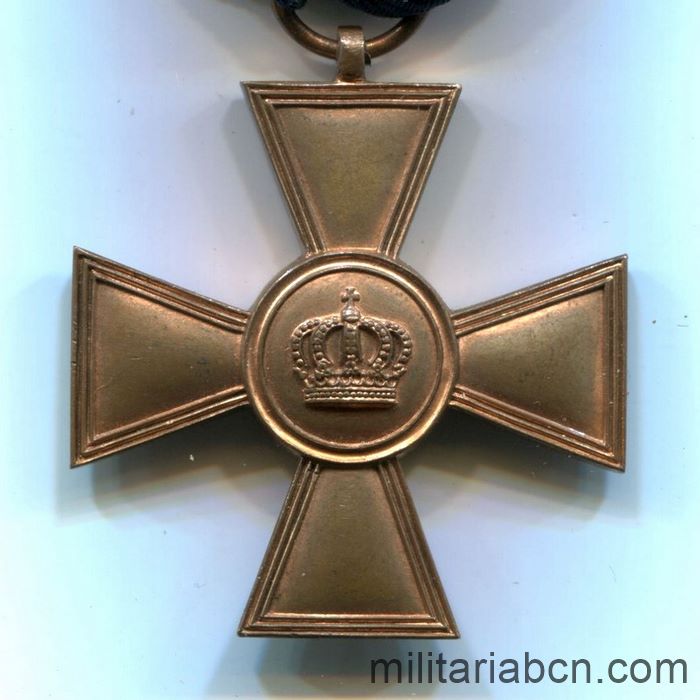
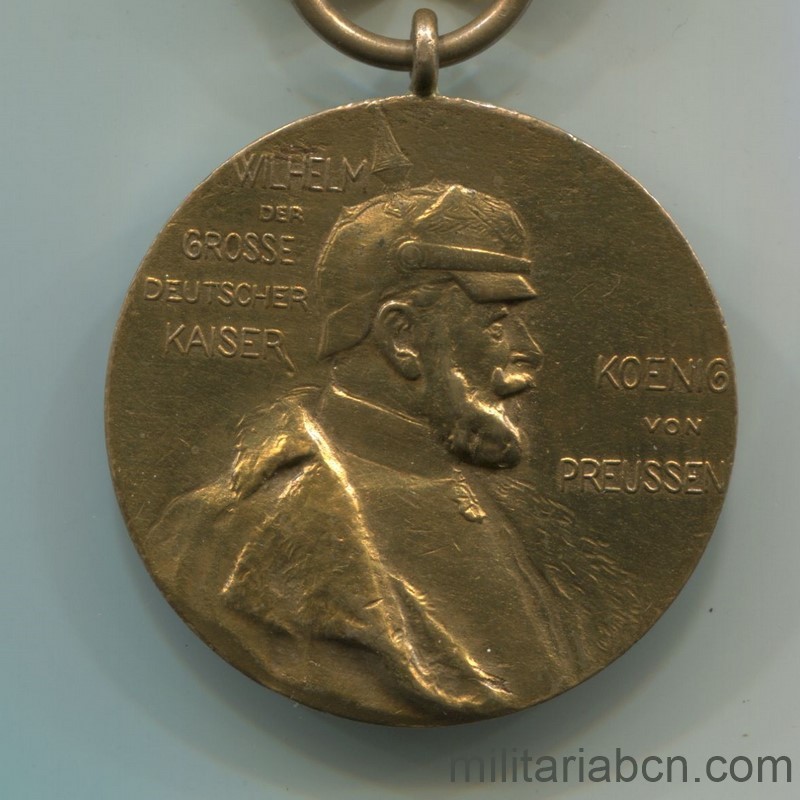
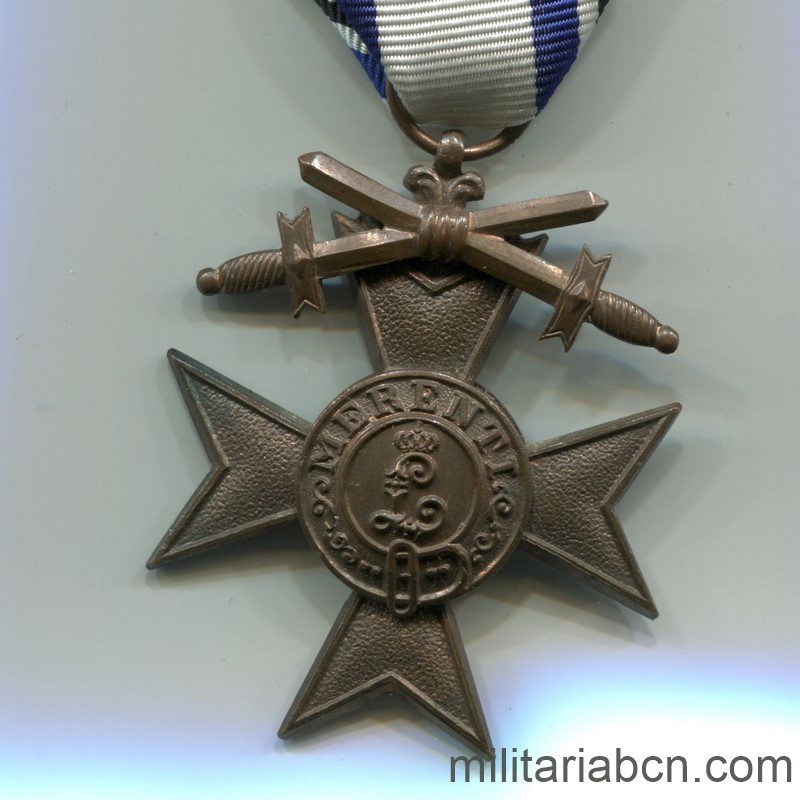
Imperial Germany. China Medal for Fighters 1901. Boxer Rebellion. Replacement Ribbon.
The Boxer Rebellion (in Traditional Chinese, 義和團之亂; in Simplified Chinese, 義和團匪亂), known in China as the Yihétuán Uprising (in Traditional Chinese, 義和團起義; in Simplified Chinese, 义和团起义; Pinyin, Yìhétuán Qǐyì; literally, ‘the righteous fists’ or literally: ‘the straight and harmonious fists’) was a movement that began in 1898, coinciding with the Hundred Days’ Reform, and ended on September 7, 1901.
It emerged in Qing Dynasty China against the imperialist intervention of the major Western powers and the Empire of Japan in Chinese territory, politics, economy, religion, and culture during the last years of the 19th century, during the period known as “the century of humiliation.” The movement was suppressed by a sector of the Chinese army and European, American, and Japanese military forces. It is estimated that over 100,000 people were killed during the conflict, of which about 3,000 were militia and between 200 and 250 were foreigners, mostly Christian missionaries.
It was initiated by the Righteous and Harmonious Fists (Yìhéquán), known in English as the Boxers because many of its members practiced Chinese martial arts, also known in the West as Chinese boxing. Villagers in northern China had developed resentment against Christian missionaries who ignored tax obligations and abused their extraterritorial rights to protect their congregants from legal actions. The immediate background of the uprising included a severe drought and disruption by the growing foreign spheres of influence after the Sino-Japanese War of 1895. After several months of growing violence and killings in Shandong and northern China’s plains against the foreign and Christian presence, in June 1900, the Boxer fighters, convinced they were invulnerable to foreign weapons, converged on Beijing with the slogan “Support the Qing government and exterminate the foreigners.” Foreigners and Chinese Christians sought refuge in the Legation Quarter.
In response to reports of an invasion by the Eight-Nation Alliance (forces from USA, Austria-Hungary, Britain, France, Germany, Italy, Japan, and Russia) to lift the siege, Empress Dowager Cixi, initially hesitant, supported the Boxers and on June 21 issued an imperial decree declaring war on the foreign powers. Diplomats, foreign civilians, and soldiers, as well as Chinese Christians in the Legation Quarter, were besieged for 55 days by the Imperial Chinese Army and the Boxers. The Chinese military was divided between those who supported the Boxers and those who favored reconciliation, led by Prince Qing. The supreme commander of the Chinese forces, the Manchu general Ronglu (Junglu), later claimed he acted to protect the foreigners. Officials of the Southeast China Mutual Protection ignored the imperial order to fight the foreigners.
The Eight-Nation Alliance, after being initially rejected, brought 20,000 armed troops to China, defeated the Imperial Army, and reached Beijing on August 14, relieving the siege of the Legations. A rampant looting of the capital and surrounding countryside took place, along with the summary execution of suspected Boxers. The Boxer Protocol of September 7, 1901, provided for the execution of government officials who had supported the Boxers, provisions for foreign troops to be stationed in Beijing, and 450 million taels of silver — approximately $10 billion at 2018 silver prices and more than the government’s annual tax revenue — to be paid as compensation over the next 39 years to the eight nations involved.