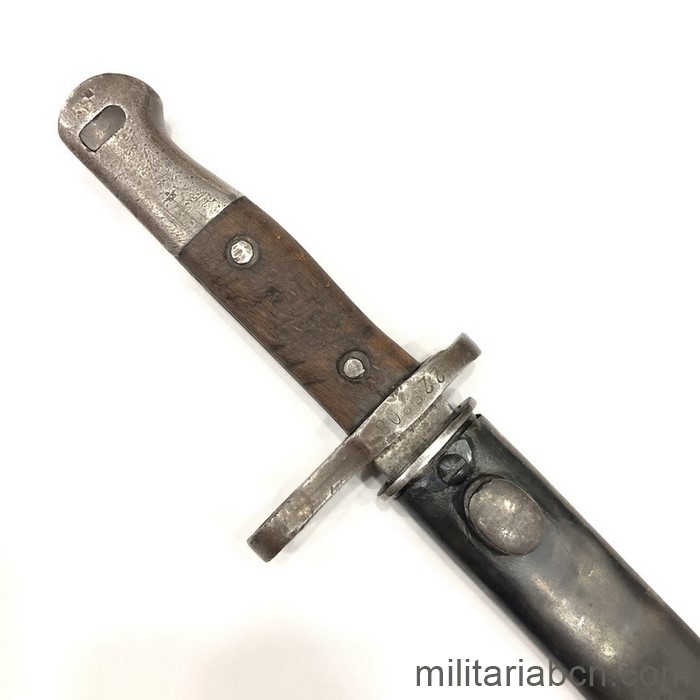
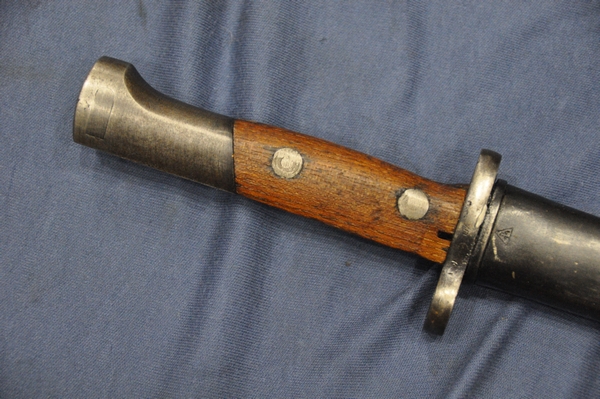
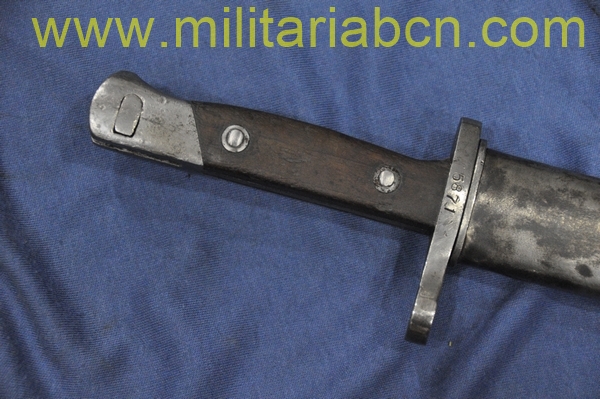
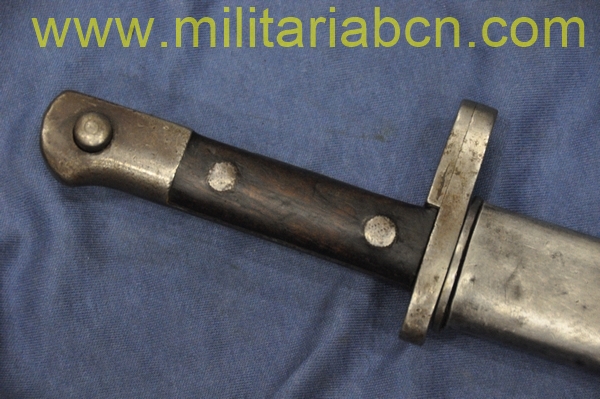
Belgium. Belgian Bayonet Model 1916/35 (M1916-35) of the 3rd Regiment of Chasseurs Ardennais
Bayonet modified for use with the Belgian Mauser M1935 rifle (7.65 mm) and the M1889/36 conversions.
The Chasseurs Ardennais are a Belgian Army infantry unit, conceived in 1913 but fully developed during the interwar period. They became distinguished during World War II. In 1940, during the German invasion, the Chasseurs were divided into two divisions, which carried out delaying and destructive actions in the Ardennes before joining the rest of the Belgian army fighting along the Dender. They notably took part in the Battle of the Lys, defending Deinze, Gottem, and Vinkt.
One of their most significant missions was to delay the Germans and prevent them from encircling the Belgian army before French reinforcements could arrive to help block the German advance at the Meuse River. In Bodange, the Chasseurs Ardennais—heavily outnumbered and outgunned—managed to hold off Rommel’s 7th Panzer Division for nine hours before retreating. The division fought its way through Belgium during the 18 days of combat, with its final stand taking place over four days in Lille, France, giving the British vital time to evacuate Dunkirk.
Without the possibility of evacuation, many Chasseurs evaded capture and joined the Maquis resistance. More than 500 Chasseurs Ardennais were killed during the 18 days of fighting in May 1940.
Total length with scabbard: 58.3 cm
Blade length: 44.2 cm
Original Belgian bayonet from the Second World War.