We use cookies on our website to give you the most relevant experience by remembering your preferences and repeat visits. By clicking Accept, you consent to the use of ALL the cookies. You can Modify or Reject the use of the cookies. See our cookie policy.
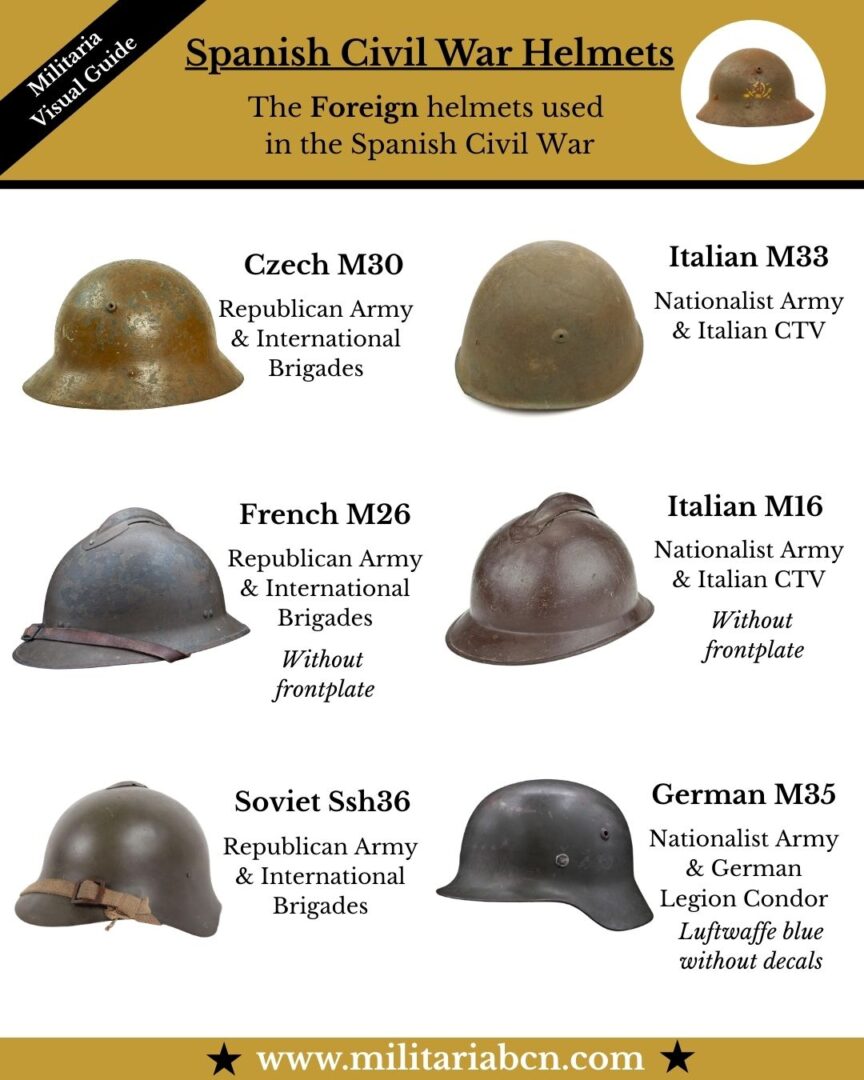
In this article we explain which foreign or international military helmets were used during the Spanish Civil War, their technical characteristics and variants. Historical photographs and images of original helmets are included.
If you are looking to buy an original Spanish Civil War helmet for your collection, visit our online store:
Index
Historical Context
The Spanish Civil War was the prelude to the Second World War, not only because it immediately preceded it, but because the international support received by both the Republican and Nationalist sides reflected, to a certain extent, the alliances that would later shape the largest conflict in history.
On one side, the Republican government received support from the Soviet Union, which explains the presence of the Soviet standard-issue SSh-36 helmet among Republican troops. Other future Allied countries, particularly France and United Kingdom, officially maintained neutrality. However, the Republican government sourced military equipment across Europe, acquiring French M15 and M26 helmets and Czechoslovak Vz30 helmets.
On the other side, Fascist Benito Mussolini’s Kingdom of Italy supported the Nationalists through the Corpo Truppe Volontarie (CTV), supplying Italian M16 Lippmann and M33 helmets. Meanwhile, Adolf Hitler’s Nazi Germany intervened with the Condor Legion, bringing German M35 helmets.
Below, we analyze the different international helmet models used during the conflict.
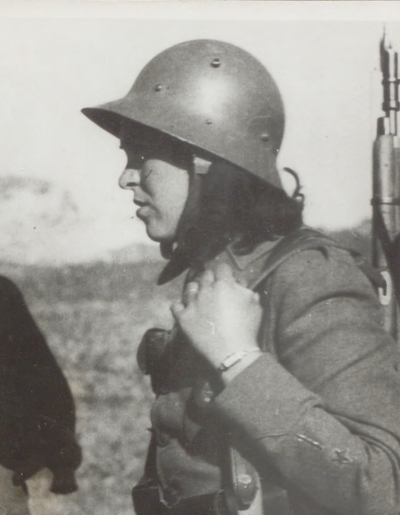
The Famous «Chata», Sergeant of the 3rd Mixed Brigade of the 10th Division, with a Czechoslovakian Vz30 helmet.
Italian M16 and M33 Helmets
In October 1936, only months after the outbreak of the war, the first 9,000 Italian soldiers of the Corpo Truppe Volontarie arrived in Spain to support the Nationalist army. During the conflict, more than 78,000 Italian troops served in Spain.
They were organized into their own divisions, such as “Dio lo Vuole,” “Fiamme Nere,” “Penne Nere,” and “Littorio,” as well as mixed Spanish-Italian formations like the Flechas Negras and Flechas Azules Brigades. The Italian Aviazione Legionaria also provided air support. Assistance included not only personnel but also significant quantities of military equipment.
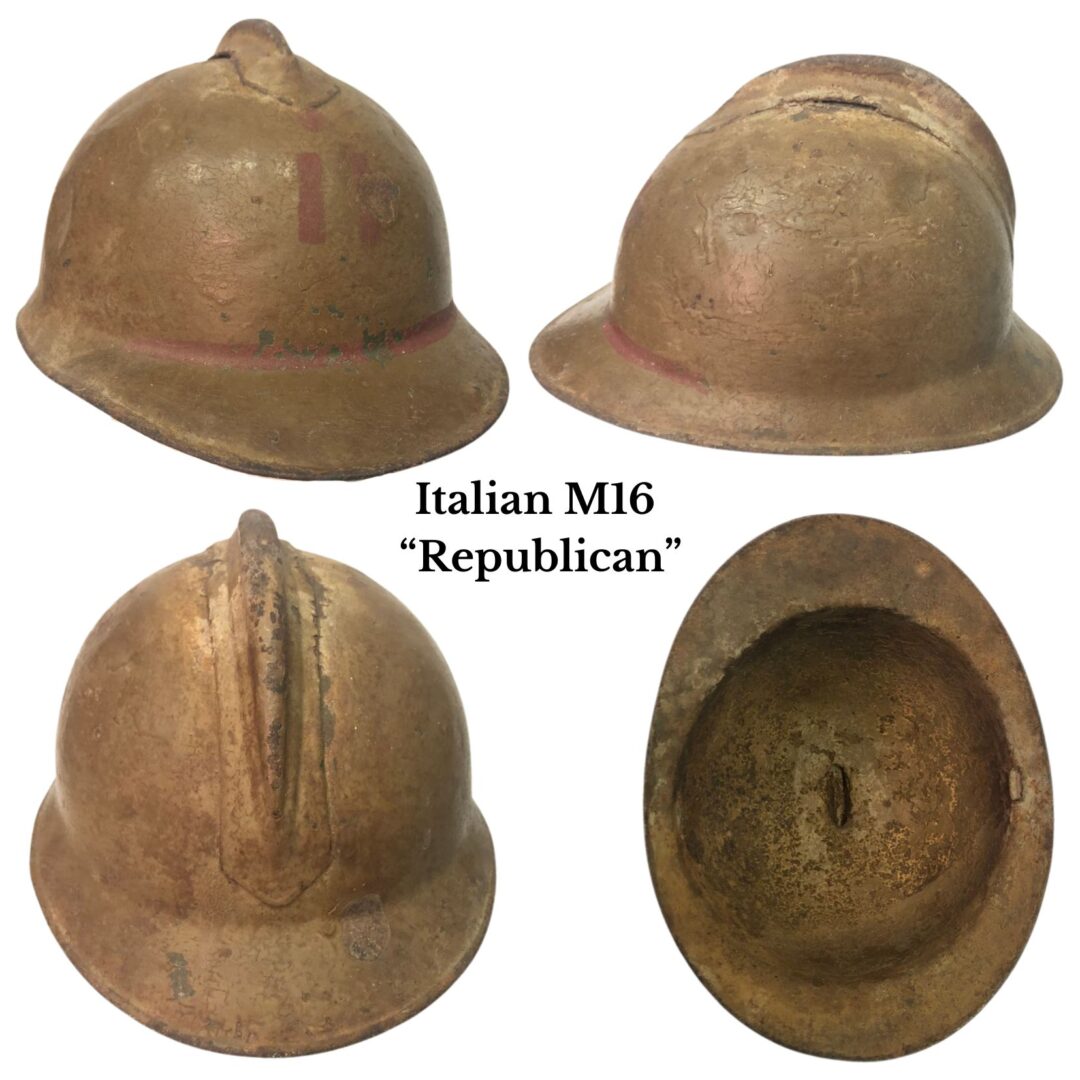
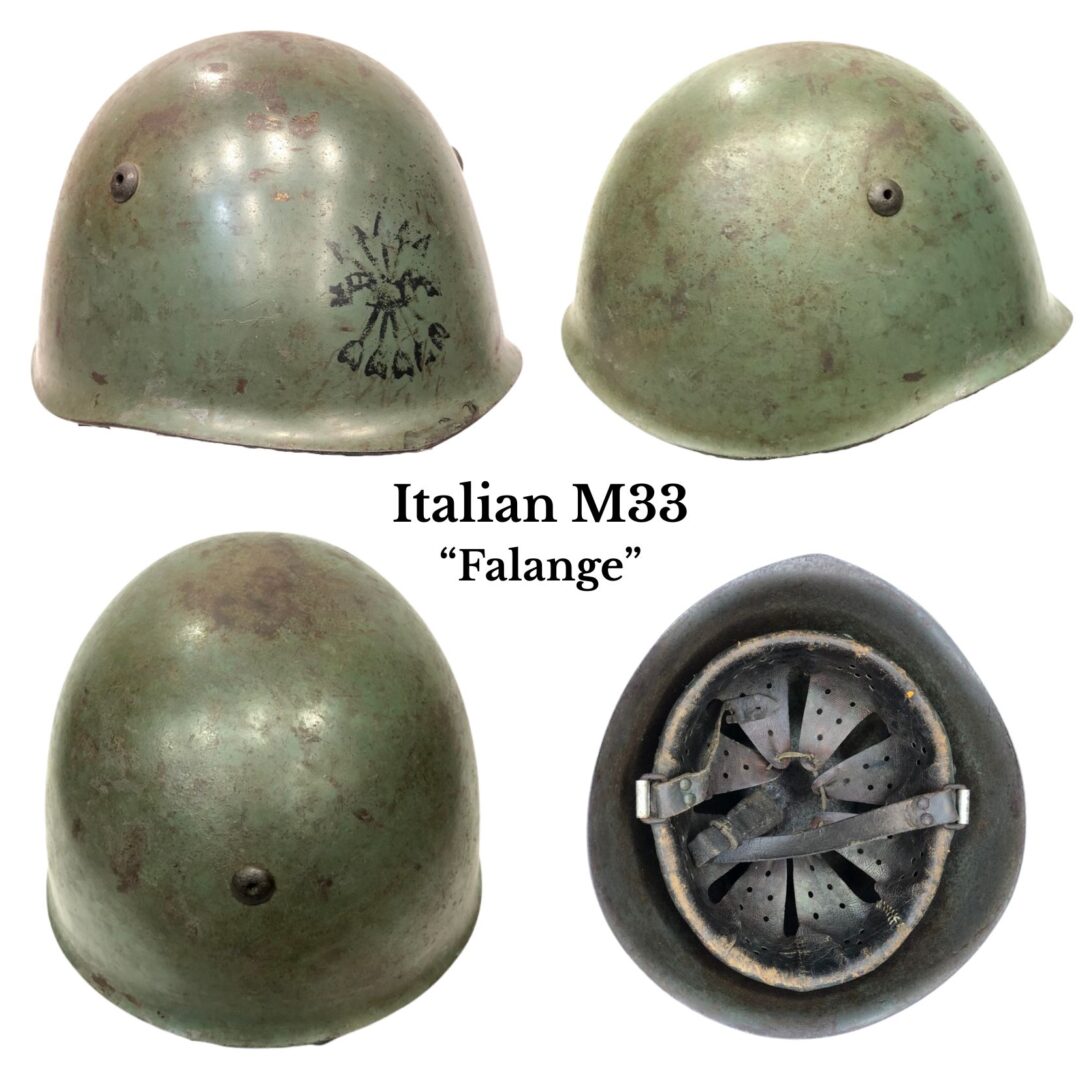
Some original Italian helmets found today bear Falange or Flechas paintings. Helmets officially sent as military aid typically lacked front plates or drilled holes for badges.
At the time, the Italian Army was transitioning from the Model 1916 (M16 Lippmann) to the Model 1933 (M33), meaning both were used in Spain. The M16 is recognizable by its crest, secured by either three rivets or none, depending on production.
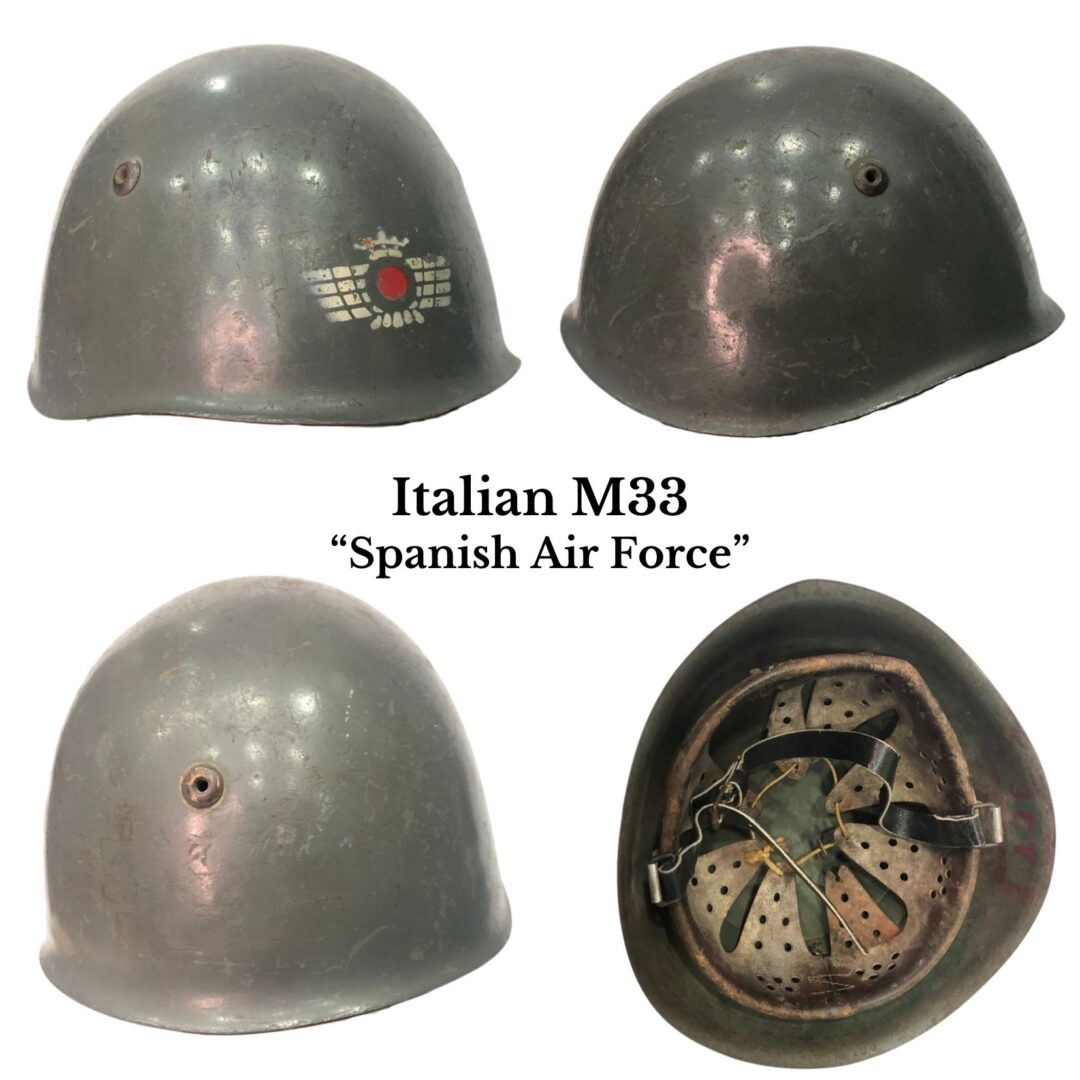
Toward the end of the war and into the postwar period, numerous M33 helmets were issued to the Spanish Air Force (Francoist Army), repainted grey and fitted with aviation insignia. Many were later refurbished during the 1940s Recovery Campaign in olive green with a frontal clip for the Spanish Army emblem.
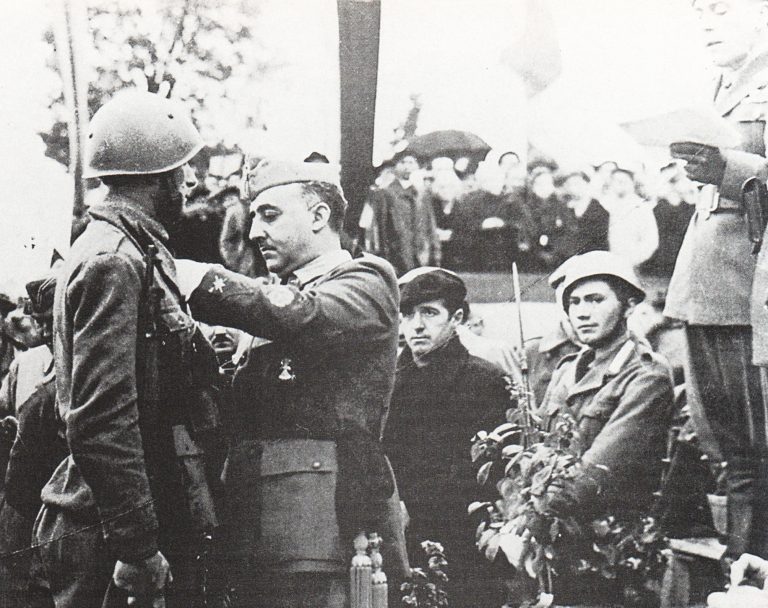
Franco decorating an Italian soldier with an M33 helmet.
Soviet SSh-36 Helmet
The Soviet Union was virtually the only government — apart from Mexico — to openly support the Spanish Republic.
Initial Soviet aid consisted of food and medical supplies, but from September 1936 onward, substantial military assistance began arriving. Hundreds of advisers, tank crews and aviation specialists were integrated into Republican forces, though officially designated as non-combatants.
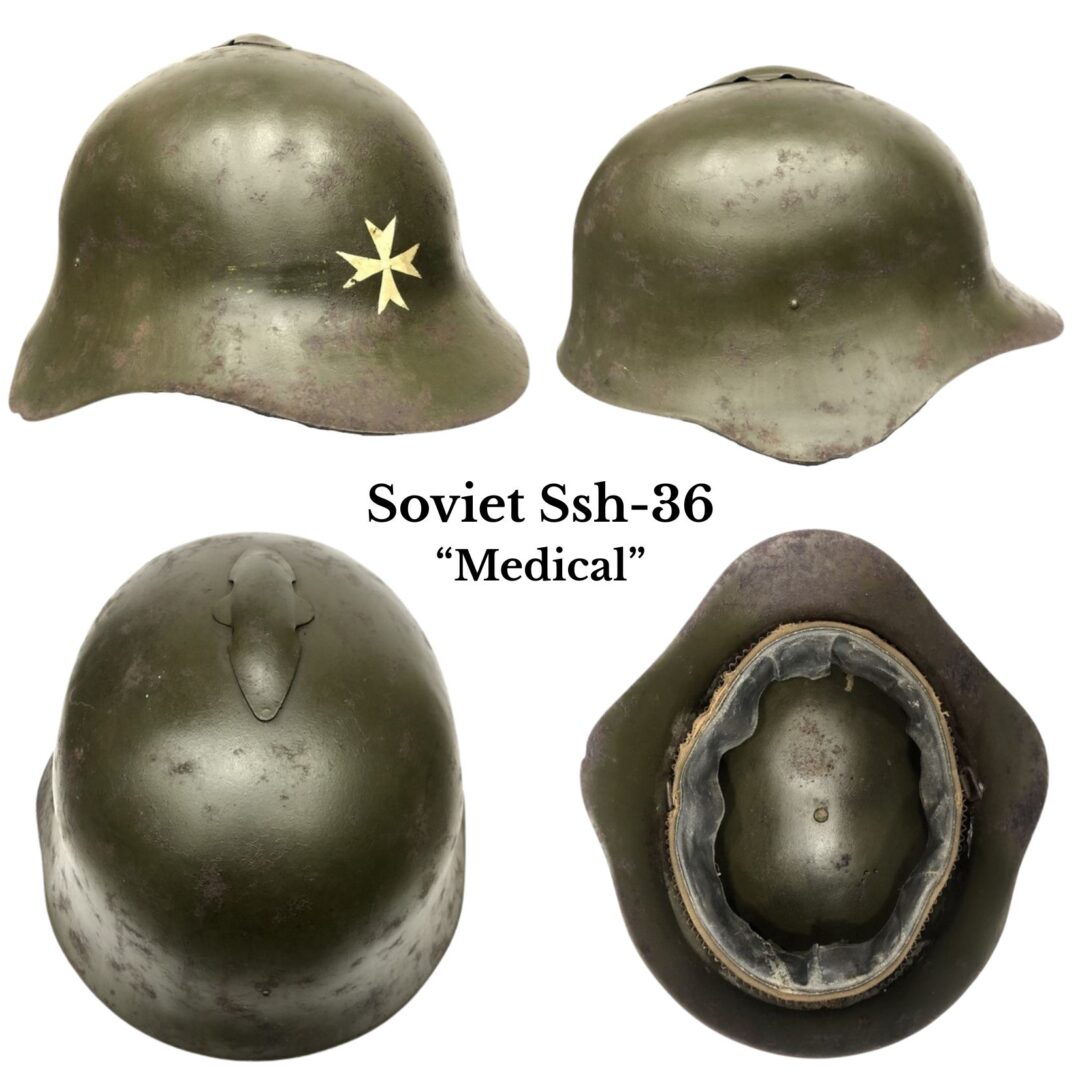
Photographic evidence confirms the use of the Soviet SSh-36 helmet in Spain, although in limited numbers. Spanish-issued examples tend to feature a darker olive green paint. Liners may be the original cloth model or an eight-tongue leather version often attributed to Spanish manufacture.
In May 1937, the merchant ship Aldecoa arrived in Cartagena carrying military equipment, including 10,000 steel helmets. There remains debate among historians and collectors whether these were Soviet SSh-36 helmets or Czechoslovak Vz30 helmets. As a result, it is nearly impossible to determine the exact number of SSh-36 helmets used during the war.
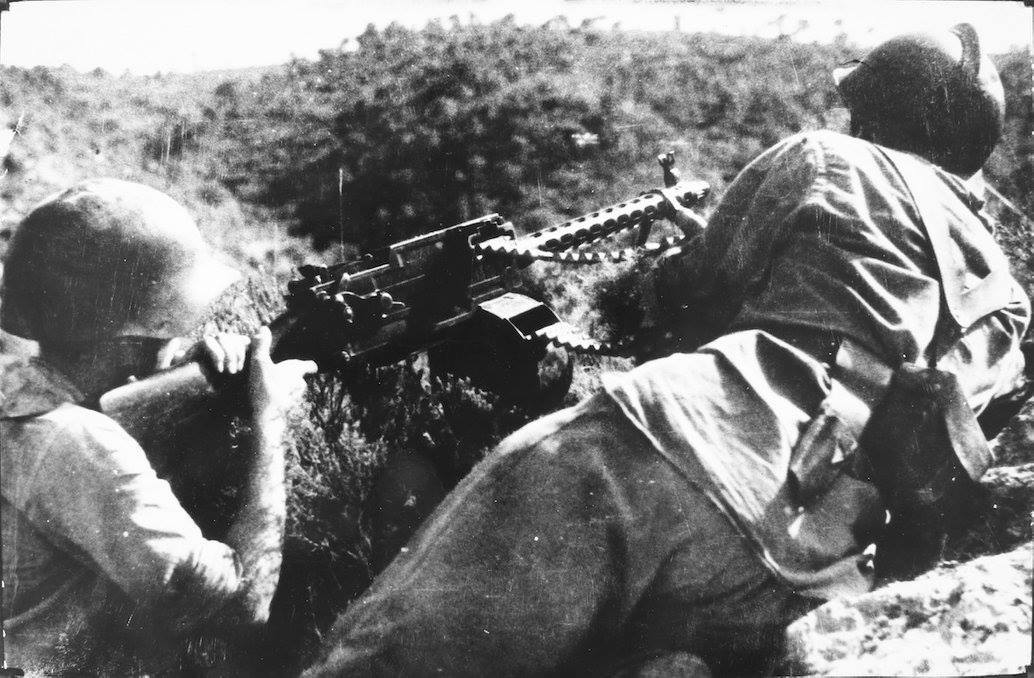
Republican soldiers with a Maxim-Tokarev submachine gun. The soldier on the left wears the Soviet Ssh36 helmet and the one on the right the French Adrian M26 helmet.
Czechoslovak Vz30 Helmet
When the war began, the Republican government lacked sufficient equipment. Czechoslovakia became a key supplier.
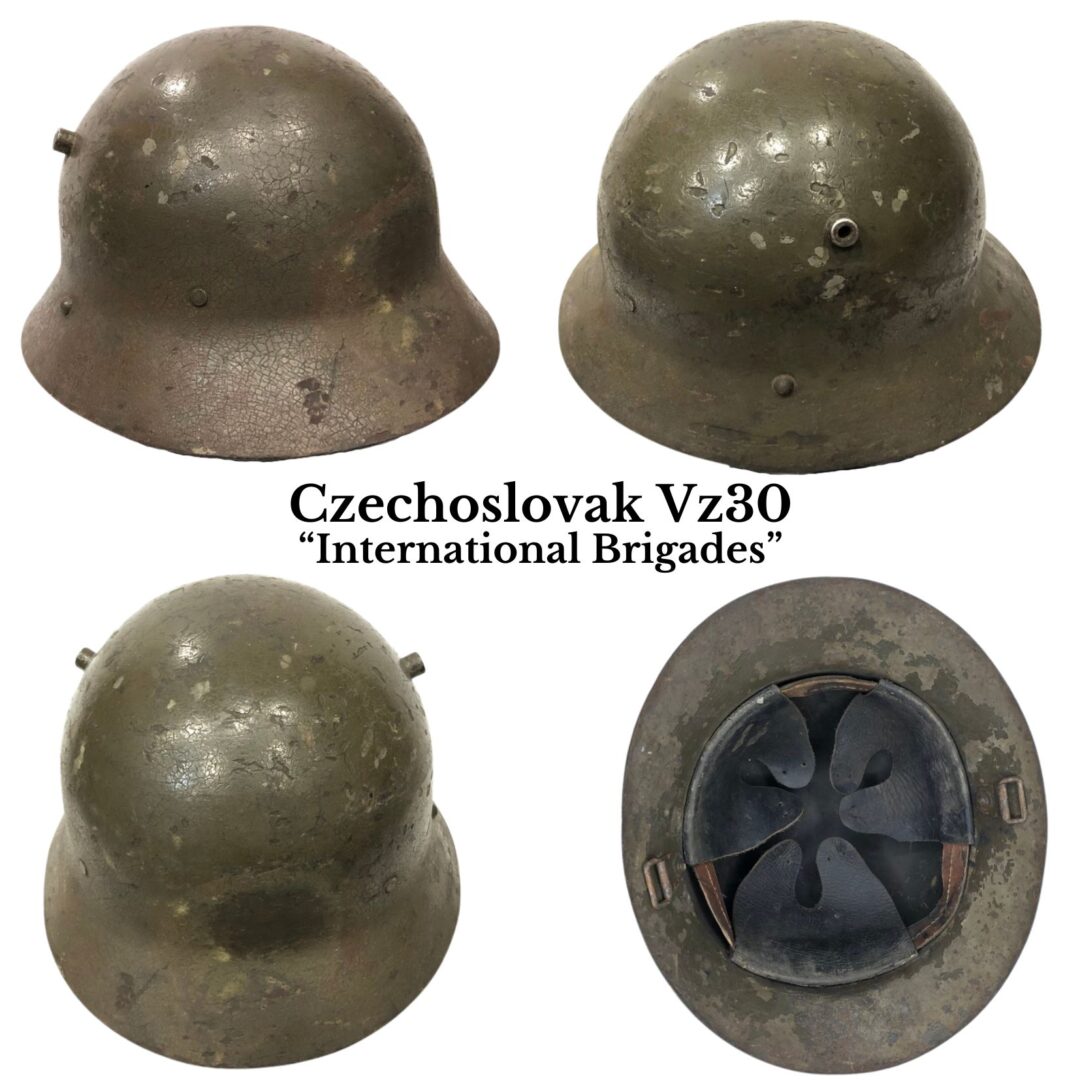
Introduced in 1930, the Vz30 helmet was produced in large numbers but saw little or no domestic use, being primarily exported. Many were issued to Mixed Brigades of the Popular Army of the Republic and to the International Brigades, which included over 2,000 Czechoslovak volunteers.
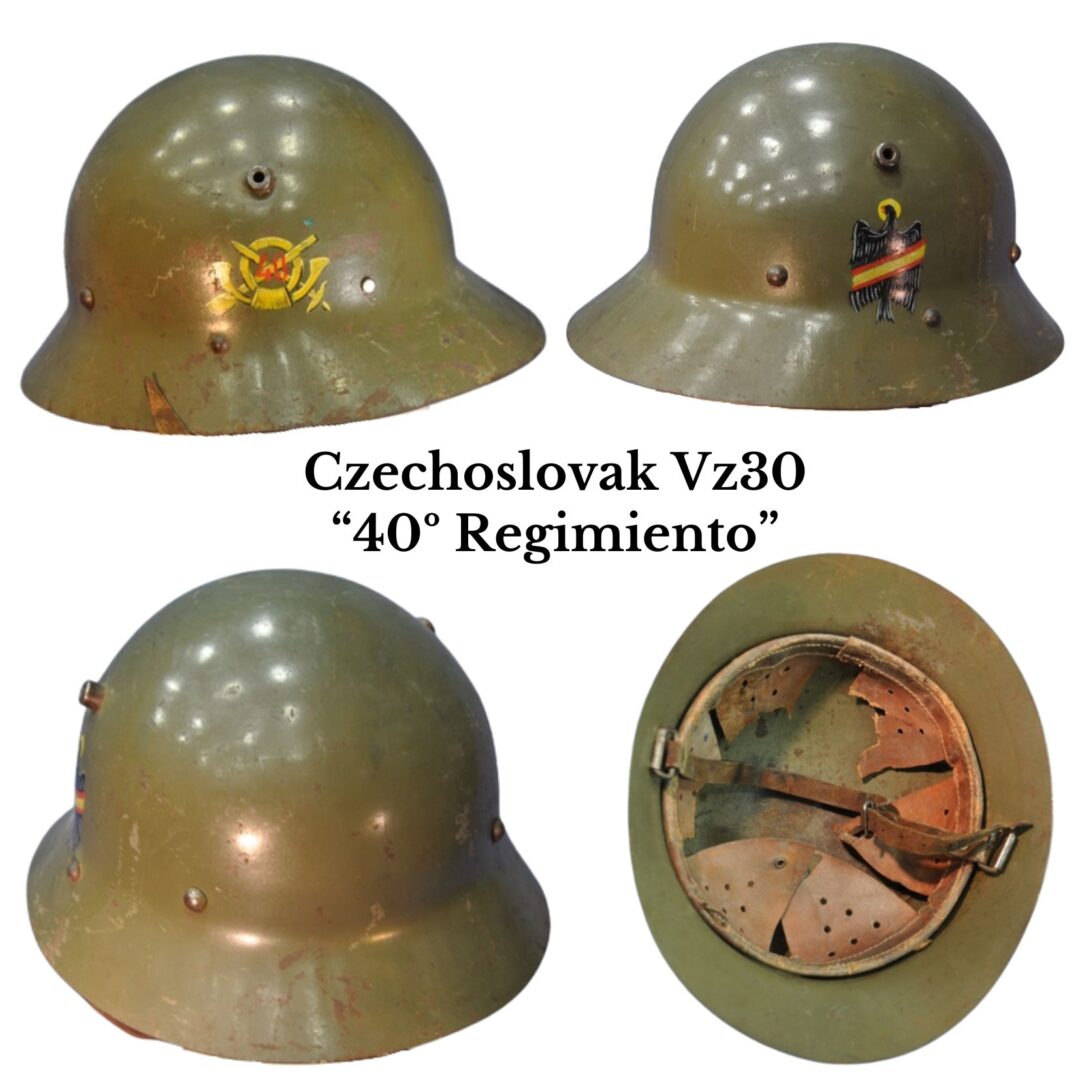
The Vz30 features two prominent ventilation lugs reminiscent of the German M16 of World War I, six external rivets, and a single size shell. The liner consists of six leather tongues, either perforated or smooth. Surviving examples are typically found in green, khaki or brown.
After the war, captured examples were repainted and reused by Francoist units, including Regiment No. 40 for the Victory Parade.
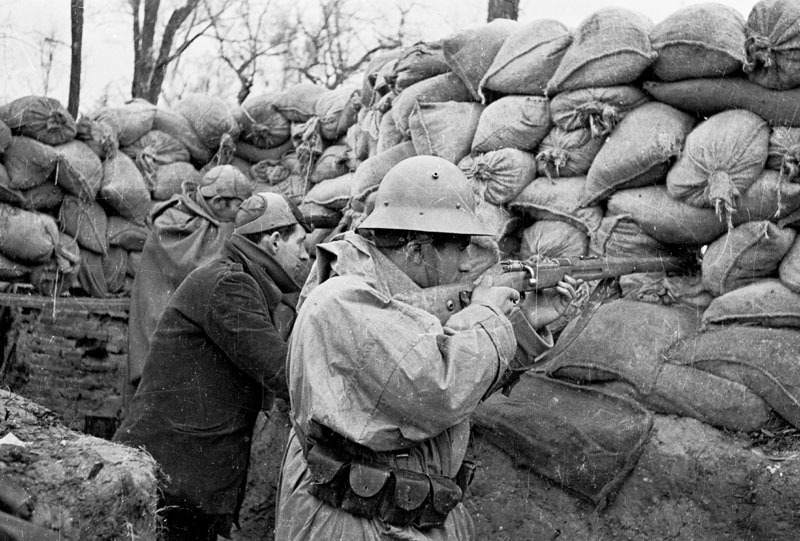
Soldier in the trench with a Czechoslovakian Vz30 helmet.
German M35 Helmet
In late October 1936, Adolf Hitler significantly increased German military assistance by sending an air contingent that would become known as the Condor Legion.
By early November, the Condor Legion was combat-ready with around 5,000 men and approximately 100 aircraft. Throughout the war, nearly 19,000 German personnel rotated through Spain. Among the material supplied was a limited batch of German M35 helmets.
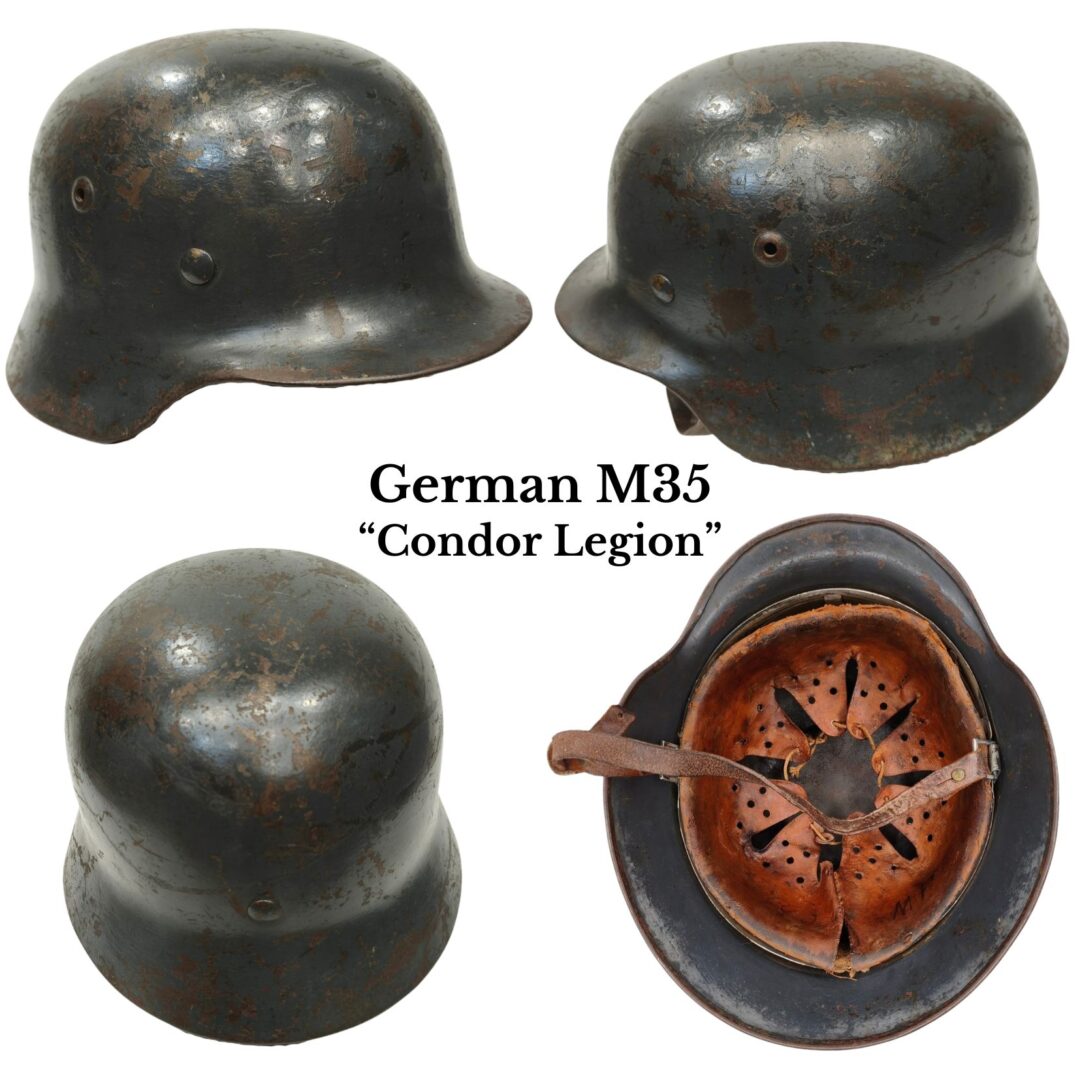
Condor Legion helmets were painted Luftwaffe blue and typically lacked decals, unlike later WWII examples. According to collector research, they often had no shell markings or bore serial numbers in the 29XX–32XX range. Liners were the standard M31 type with 7, 8 or 9 leather tongues attached to a metal band.
Helmets delivered as aid were often repainted khaki, brown or grey and later reused by the Francoist army, sometimes fitted with German M31 or Spanish M26 liners.
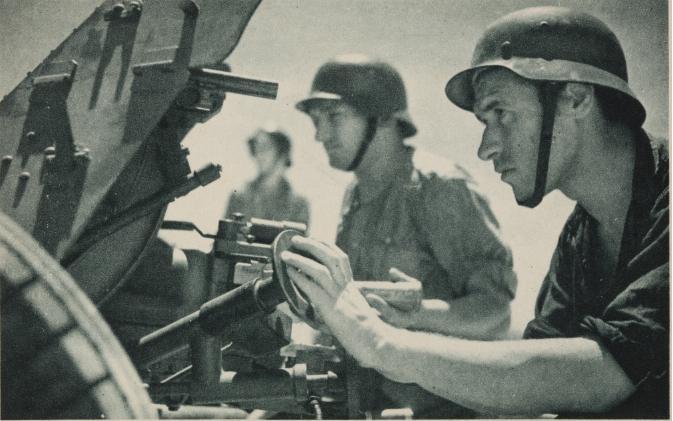
German soldiers of the anti-aircraft battalion of the Condor Legion with an M35 helmet.
French M26 and M15 Helmets
At the outbreak of war, the Republican government urgently needed steel helmets. Following the precedent set by Czechoslovakia, France accepted an urgent order for Adrian Model 1926 helmets.
These were delivered without emblems or front badge slots. Additional helmets arrived through French volunteers of the International Brigades.
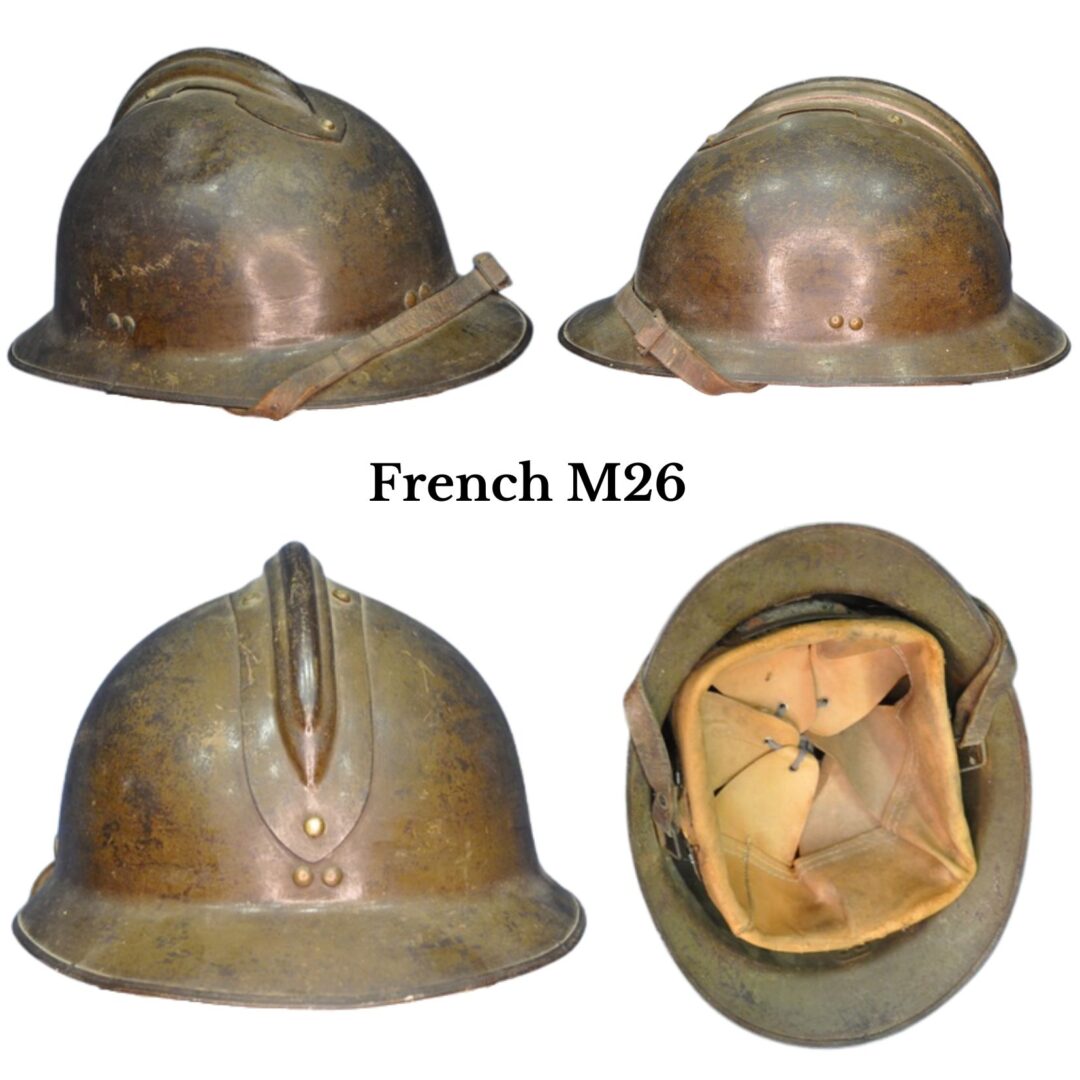
The French M26 Adrian is among the most varied foreign helmets used in Spain. Early arrivals were repainted in numerous colors and bore different emblems. Some captured examples were later repainted and reused by Falangist militias. Shipments also included older M15 Adrian helmets.
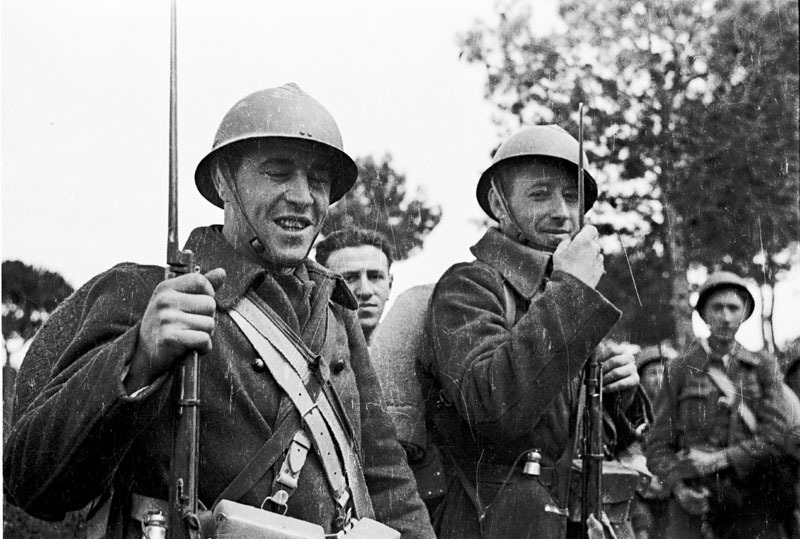
French M15 and M26 helmets can be distinguished from the Italian M16 Lippmann by their single front crest rivet and two additional rivets above the visor. The Italian model typically has three crest rivets or none, and lacks the extra visor rivets.
Soldiers of the International Brigades with a French M26 helmet.
Conclusions
The Spanish Civil War erupted at a time when liberal democracies, communist states and fascist dictatorships were on the brink of global confrontation in the Second World War. As a result, the conflict became an international testing ground, reflected in the wide variety of foreign helmets used.
More than 85 years later, many helmets were modified for postwar reuse, repainted, restored or lost. Original, untouched examples are increasingly scarce and highly valued by collectors.
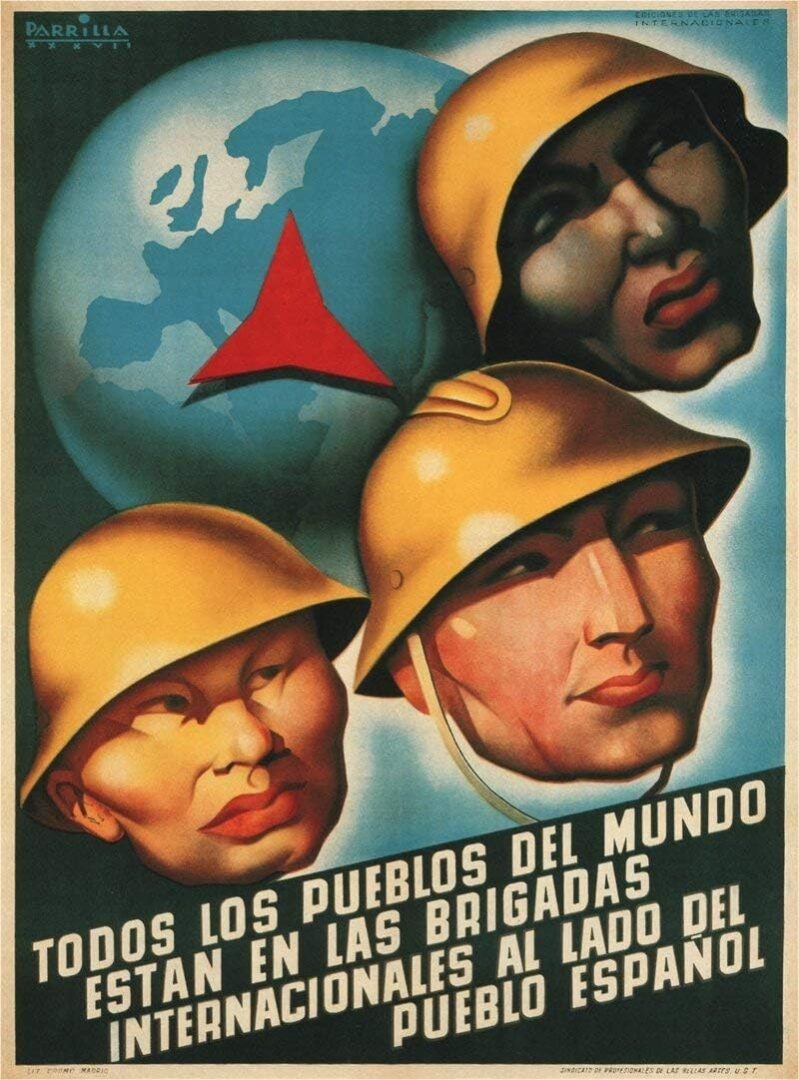
Poster of the International Brigades. The helmets probably represent a Czech Vz30 helmet, a French M26 helmet and a Spanish M26 «con ala» helmet.
FAQs
What helmets were used in the Spanish Civil War?
Spanish M21, M26 and M38 helmets; French M15 and M26; Italian M16 and M33; German M35; Czechoslovak Vz30; and Soviet SSh-36 helmets.
Which countries supported the Spanish Republic?
Mexico and the Soviet Union were the only countries to openly support the Republic. France, United Kingdom and the United States adopted a policy of non-intervention.
Which countries supported Franco?
Nazi Germany, Kingdom of Italy and Portugal were the principal allies of the Nationalist side.