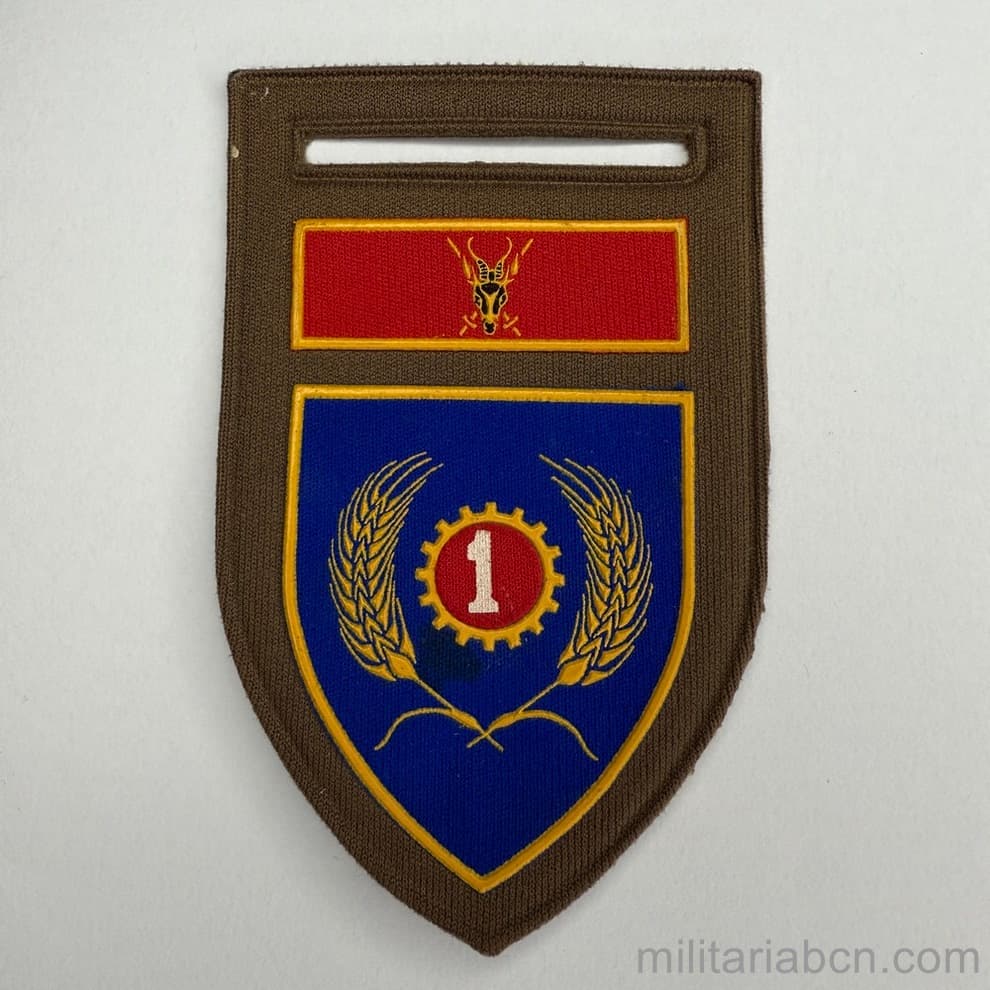
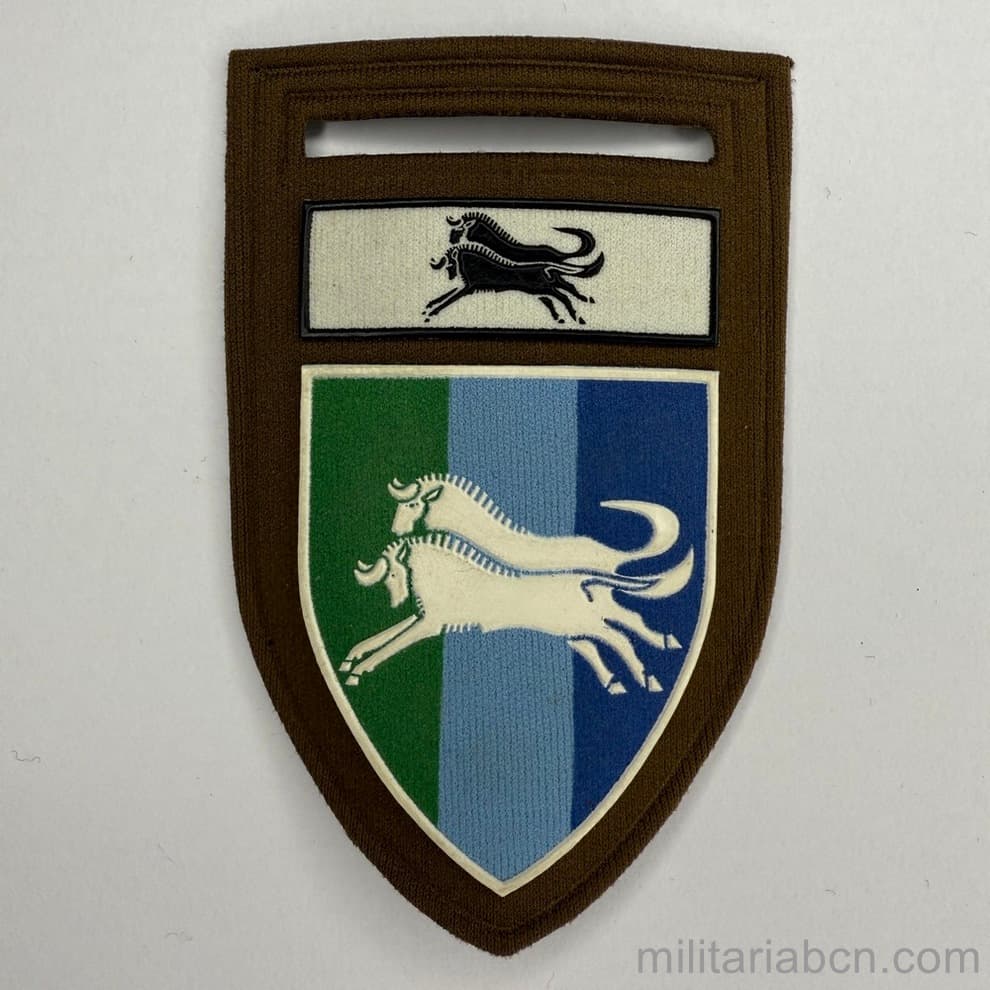
Chile. Numbered Badge of the Chilean Nationalist Front, 1950s
During the 1930s, 1940s, and 1950s, various fascist- or authoritarian nationalist-inspired groups emerged in Chile, influenced by the European regimes of Benito Mussolini in Italy, Adolf Hitler in Germany, and Francisco Franco in Spain. Although none of these movements succeeded in establishing a fascist regime in the country, they left a mark on the political landscape of the time, particularly through their nationalist, anti-communist, and authoritarian rhetoric.
The most emblematic of these groups was the National Socialist Movement of Chile (MNSCH), founded in 1932 by Jorge González von Marées. Directly inspired by German Nazism, this movement promoted anti-Semitism, anti-communism, and strong nationalism. Its members wore green shirts, emulated the fascist salute, and adopted aesthetics similar to those of Nazi parties. In 1938, they attempted a coup d’état—known as the Seguro Obrero Massacre—which ended with the execution of 59 young Chilean «nacistas» by government forces. Following this event, the movement was dissolved, and several of its members joined more traditional parties.
Later, the Nationalist Party of Chile, also known as the «Nacista Party», became active in the late 1930s and early 1940s. Although ideologically less radical than the MNSCH, this party also promoted a strong state, Catholic nationalism, and anti-Marxism. It had limited electoral success and gradually lost prominence.
In the 1940s, the Popular Socialist Vanguard (VPS) emerged, linked to Carlos Keller, a nationalist thinker and former collaborator of González von Marées. The VPS advocated a «third position» between capitalism and communism, in line with other European fascist movements, and supported an organic, corporatist vision of the state. While it did not adopt all the symbols of classical fascism, its proposals reflected modernizing authoritarianism.
There were also segments of conservative Catholicism that, during the 1940s, sympathized with Spanish Falangism and the idea of a corporative state. Some Catholic nationalist groups promoted a Christian authoritarian order, inspired by José Antonio Primo de Rivera and Franco’s regime in Spain.
Finally, it’s worth noting that some factions of the Chilean military and sectors of the traditional right expressed sympathies for the Axis powers during the 1930s and early 1940s, before Chile decisively aligned with the Allies during World War II. However, the international environment changed dramatically after the defeat of Nazism and fascism in Europe.
After 1945, the prestige of fascist ideas declined sharply. The Axis defeat in World War II discredited such movements globally, including in Chile. Fascist or national-socialist groups disappeared or merged into more moderate formations.
Among the minor fascist groups that survived was the Chilean Nationalist Front, which used this badge.