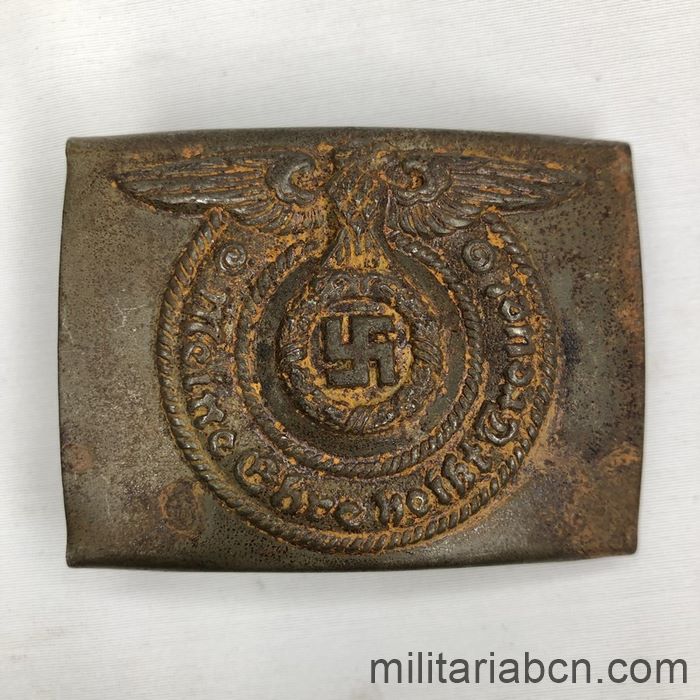
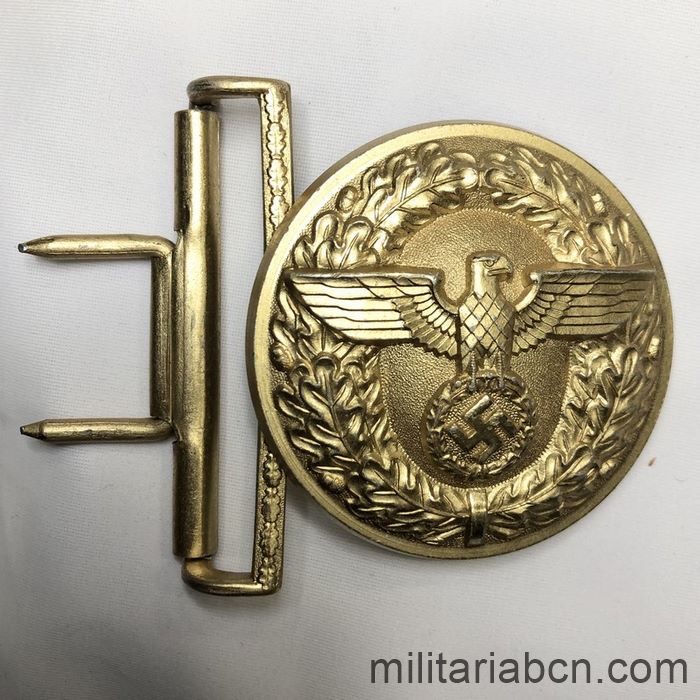
Germany. Weimar Republic / Third Reich. Early Sturmabteilung (SA) Belt Buckle, First Pattern, Sonnenrad (Sunwheel) Variant. Also Used by Early SS Members. 1920s-1930s
German Sturmabteilung (SA) belt buckle (Koppelschloss), associated with the paramilitary organization of the National Socialist German Workers’ Party (NSDAP), commonly known as the “Brownshirts”. This is an early pattern used during the interwar period.
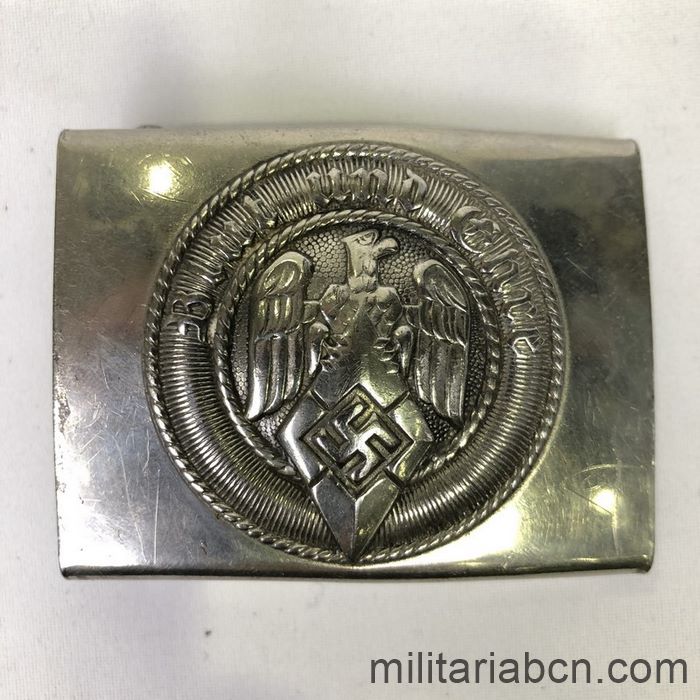
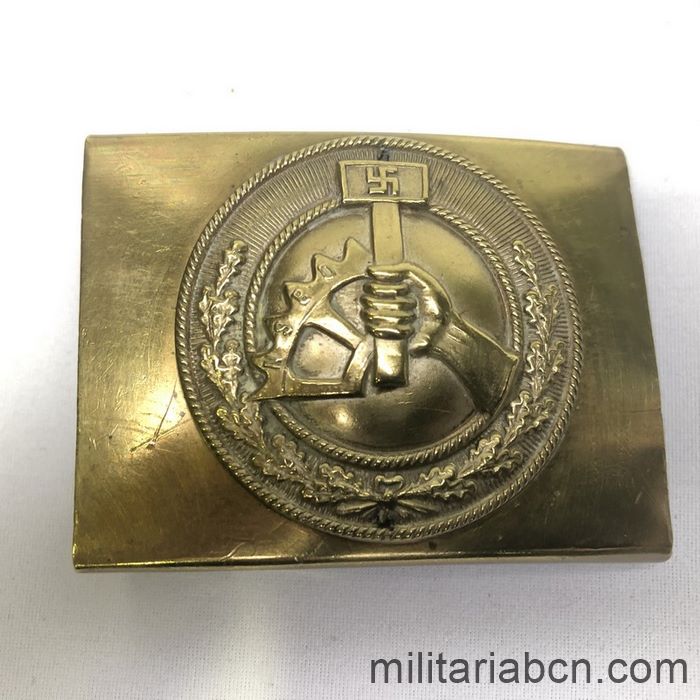
The buckle belongs to the distinctive Sonnenrad (sunwheel) variant, featuring a swastika with curved arms creating the appearance of circular movement. This design is less commonly encountered than variants featuring a conventional straight-armed swastika.
It features a rectangular two-piece box-type construction (Kastenschloss), consisting of a brass body with a separately manufactured silver-coloured metal central medallion attached to the front.
The central emblem depicts an early-style eagle with outstretched wings, together with an ornamental wreath surrounding the sunwheel swastika. The design is framed by decorative circular borders resembling twisted rope, together with foliage motifs including oak leaves.
The reverse features the traditional belt fastening mechanism, with a bar and two metal prongs designed to secure the buckle to the brown leather belt worn with the SA uniform.
This pattern was primarily intended for SA enlisted men and non-commissioned officers. During the early years of the National Socialist movement, similar buckles were also worn by members of the early SS (Schutzstaffel) and other NSDAP-affiliated organizations before the introduction of their own distinctive belt buckles.
Early SA buckles were not fully standardized and appeared in several variants, differing in the shape of the swastika, medallion construction, materials and fastening arrangements. The Sonnenrad variant is particularly distinctive because of its unusual central design.
The Sturmabteilung, founded in 1921, became one of the principal paramilitary organizations of the NSDAP. Its members participated in party security activities, political intimidation and street violence during the Weimar Republic and the early years of the National Socialist dictatorship.
During the 1930s, this type of buckle was progressively replaced by other fastening systems and uniform patterns, although existing examples continued to be worn.
Because of their early design and association with the first uniformed formations of the NSDAP, Sonnenrad buckles represent a distinctive category within the collecting of German military and paramilitary belt buckles.
Early Sturmabteilung (SA) belt buckle, first pattern, Sonnenrad (sunwheel) variant, also worn by members of the early SS. Two-piece construction with rectangular brass body and applied silver-coloured central medallion depicting an eagle and curved-arm swastika. Reverse fastening system with two prongs. Germany, Weimar Republic / early Third Reich, 1920s-1930s.