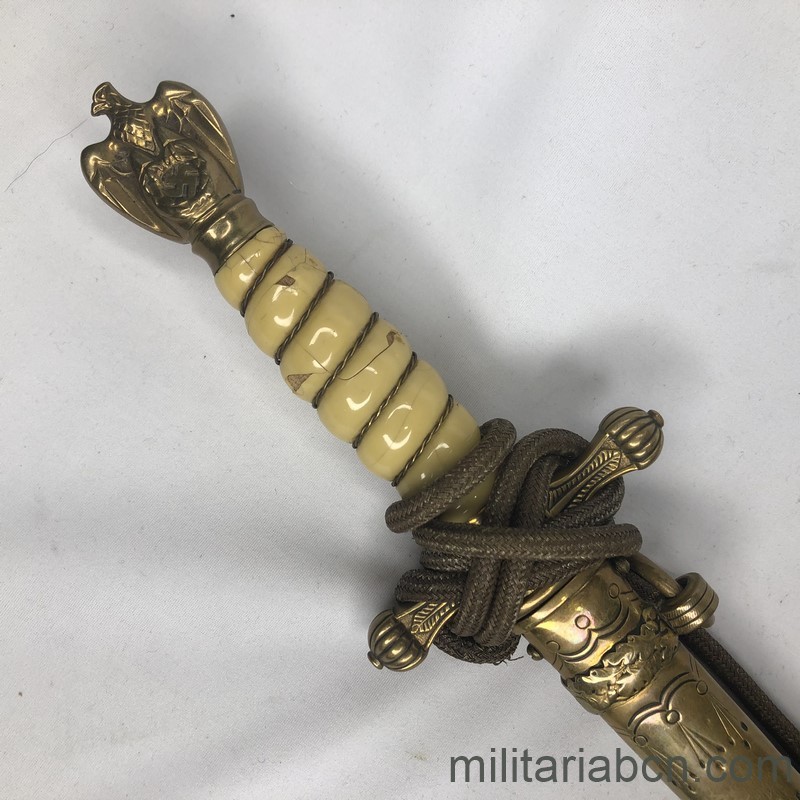
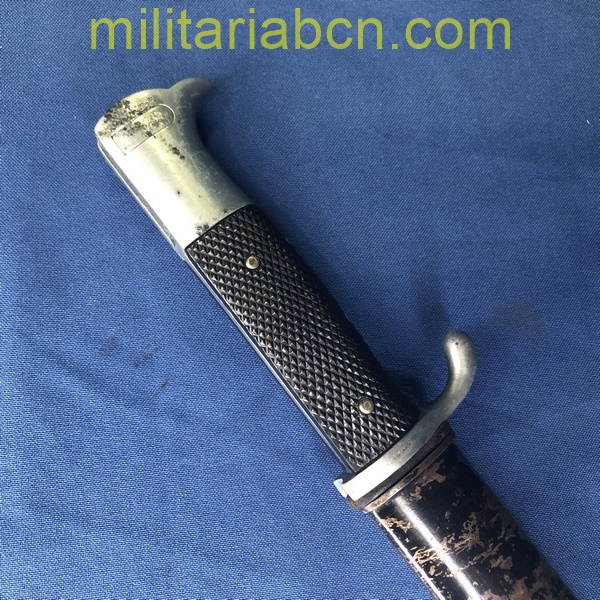
Germany. Third Reich. Second World War. German Army (Heer) Officer’s Dagger, Model 1935, with Suspension Hangers. Made by Eickhorn, Solinge,
Fabricada por Eickhorn, Solingen
Fabricada por Eickhorn, Solingen
German Army (Heer) Officer’s Dress Dagger, Model 1935 (Heeres-Offiziersdolch), belonging to the Wehrmacht and worn during the Third Reich and the Second World War.
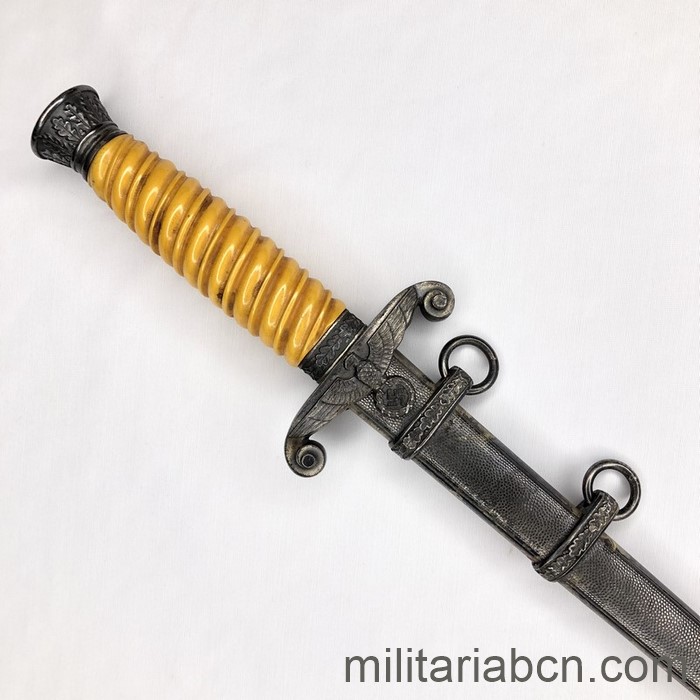
Introduced in 1935, this pattern formed part of the ceremonial and dress uniform worn by German Army officers. Its characteristic design includes a spiral-fluted grip and metal fittings decorated with heraldic and foliage motifs.
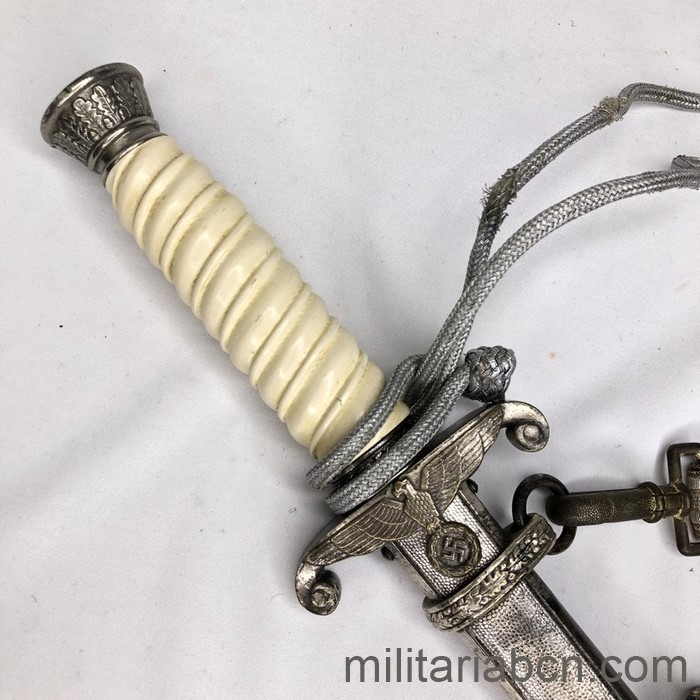
The dagger features an ivory-white spiral-fluted grip. The slightly truncated conical pommel is decorated with raised oak-leaf motifs, traditionally associated with German military symbolism.
The crossguard features the German Army eagle with outstretched wings, holding a swastika within a circular wreath, characteristic of the Heer officer’s dagger.
It retains its metal scabbard with a pebbled or hammered-texture finish, fitted with two suspension bands and carrying rings.
The dagger is accompanied by its suspension hangers (Gehänge), featuring decorative metal fittings and buckles, designed for attachment to the officer’s dress uniform belt.
German Army officers’ daggers were primarily ceremonial and representative edged weapons, worn during parades, official functions and formal military occasions rather than intended for combat use.
German Army (Heer) Officer’s Dagger, Model 1935 (Heeres-Offiziersdolch), featuring an ivory-coloured spiral-fluted grip, oak-leaf decorated pommel, national eagle crossguard, pebbled metal scabbard and suspension hangers (Gehänge). Germany, Third Reich, Second World War.
CATALÀ