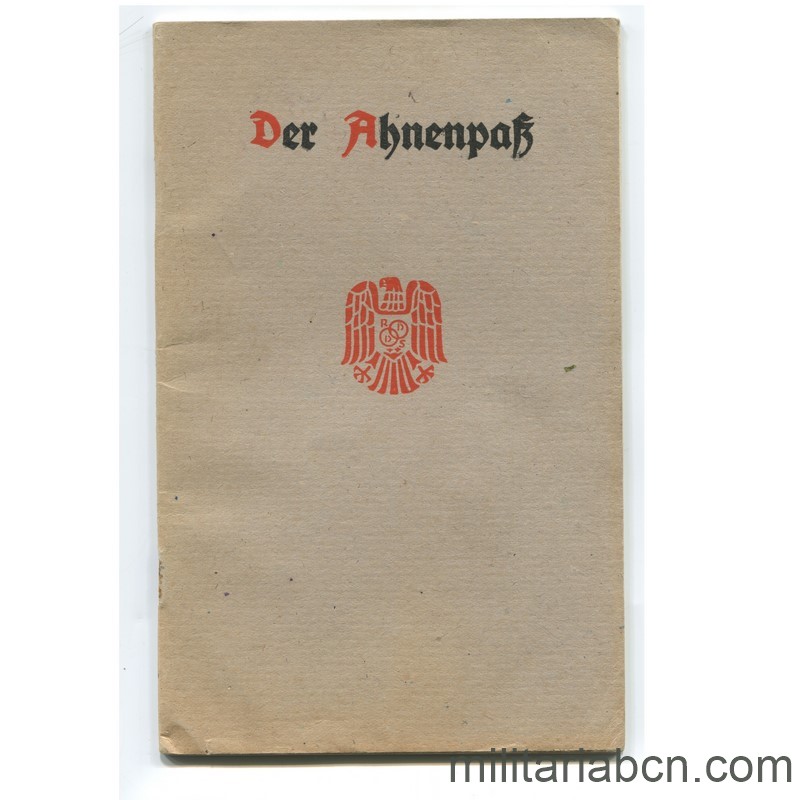
Germany. Third Reich. Second World War. Resettlement Identity Card (Umsiedlerausweis) of SS Shutzstaffel soldie, Balthasar Frank, from the USSR. SS (Schutzstaffel) Administration. 1944
Resettlement identity card (Umsiedlerausweis) issued by the authorities of the Third Reich to Balthasar Frank, born on 12 December 1911, a married farmer originating from the Soviet Union. The document is dated 8 November 1944, during the Second World War.
This type of document was used to identify and register individuals transferred from other territories, particularly members of ethnic German communities established in Eastern Europe and the Soviet Union, commonly referred to as Volksdeutsche. Its issuance formed part of the population displacement, racial classification and resettlement policies implemented by the National Socialist regime.
The card was issued through the Einwandererzentralstelle (EWZ), or Central Immigration Office, an organization associated with the SS (Schutzstaffel) and responsible for examining, classifying and registering individuals included in resettlement programmes. The EWZ assessed their ancestry, family circumstances and eligibility for settlement in German-controlled territories.
Balthasar Frank’s Soviet origin and personal details suggest that he may have belonged to one of the historically established German-speaking communities in the Soviet Union, whose members were subjected to displacement and resettlement programmes during the war.
The document provides historical evidence of the Third Reich’s population policies and the administrative activities of the SS during the Second World War.
Resettlement identity card (Umsiedlerausweis) issued by the Einwandererzentralstelle (EWZ), an organization associated with the SS, to Balthasar Frank, born 12 December 1911, a married farmer from the Soviet Union. Dated 8 November 1944. Germany, Third Reich, Second World War.