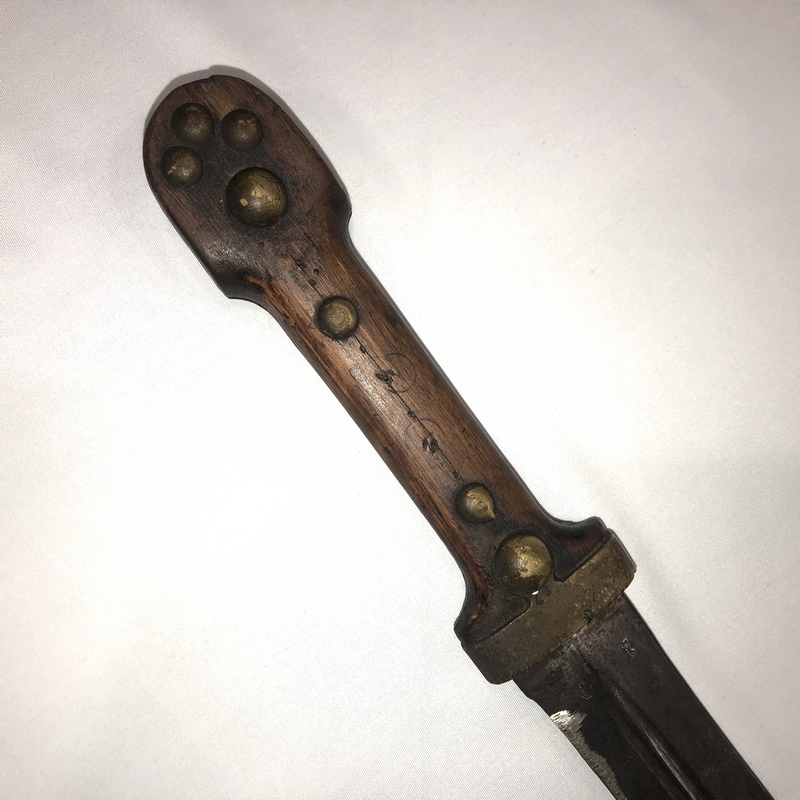
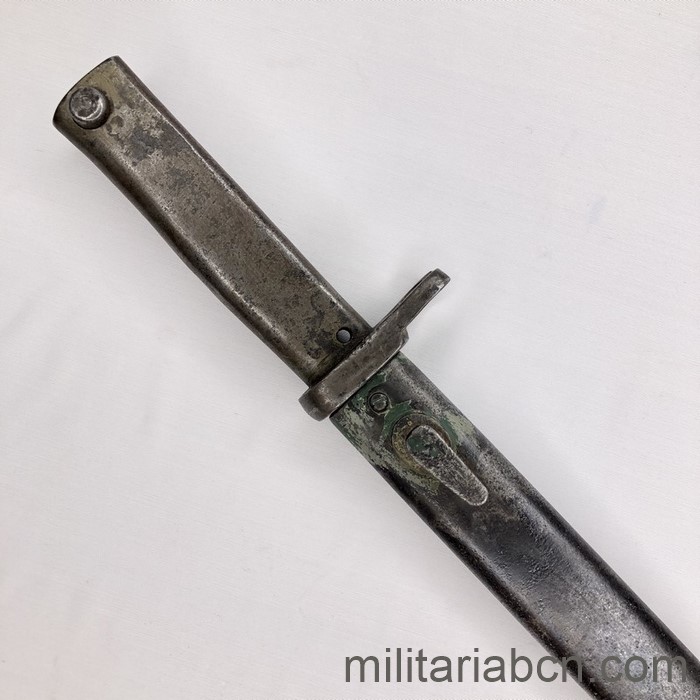
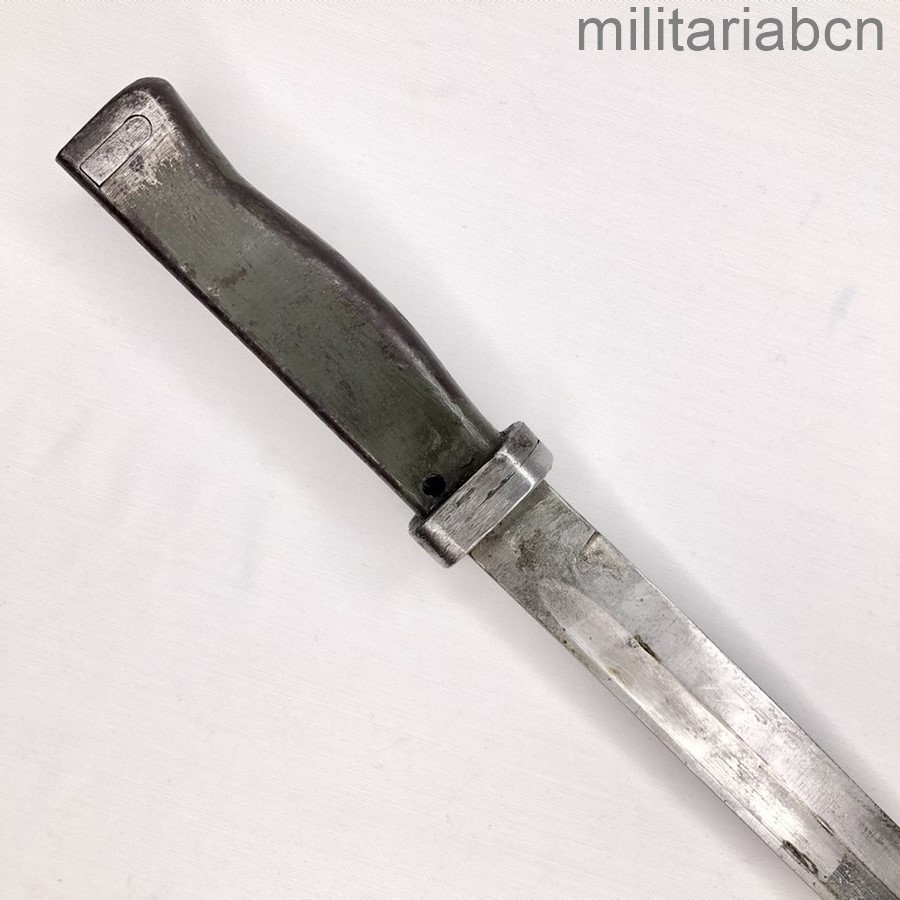
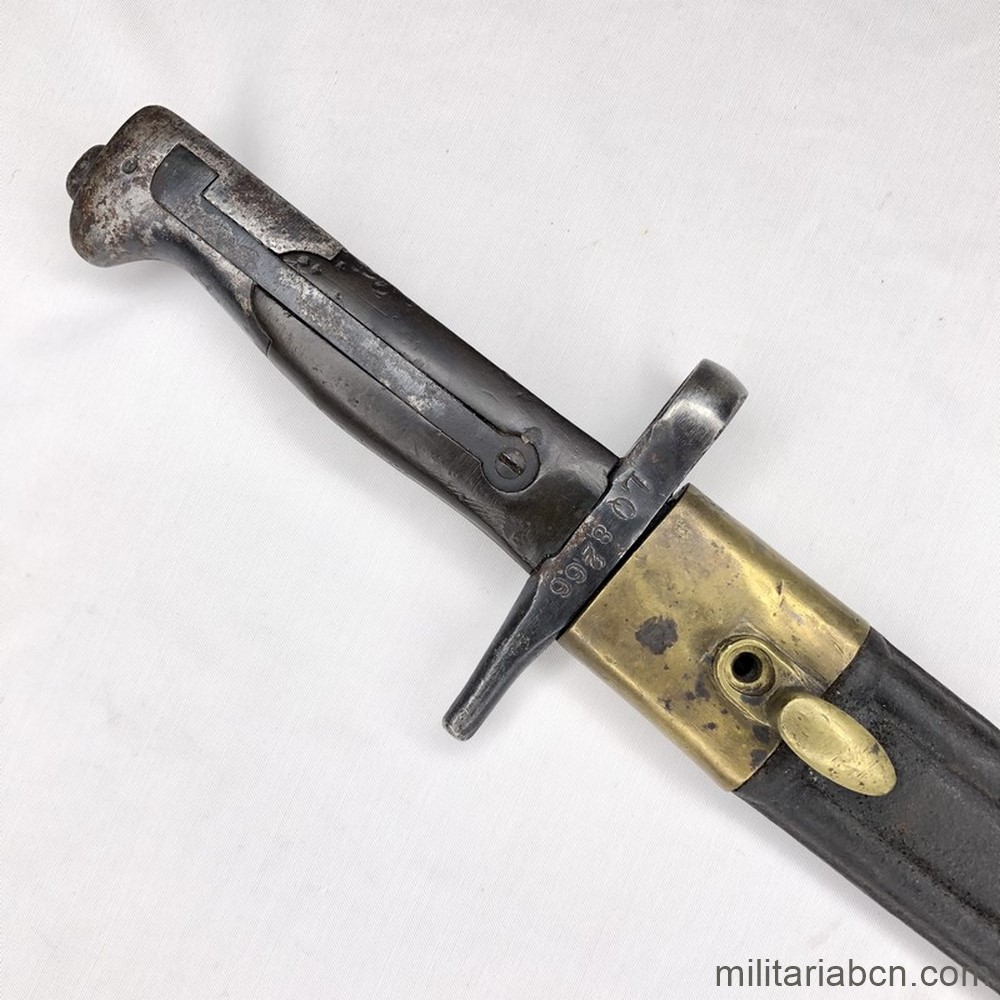
Great Britain. First World War. Pritchard-Greener model 1916 bayonet for the Webley Mk VI revolver. REPRODUCTION.
British Pritchard-Greener system bayonet designed in 1916 for the British Army’s Webley Mk VI service revolver during the First World War.
Copper-alloy hilt with a distinctive revolver attachment system. T-section steel blade derived from the French model 1874 Gras bayonet.
The guard bears the inscription “PATENT Nº 17143/16”, corresponding to the British patent of 1916, and the oval “W.W.G.” marking accompanied by an elephant, the trademark of W. W. Greener of Birmingham.
With steel scabbard and brown leather frog, possibly a later replacement.
This model was developed by Captain Arthur Pritchard of the Royal Berkshire Regiment, drawing on his experience on the French front. After the design was initially rejected by Wilkinson Sword, W. W. Greener undertook its manufacture.
The bayonet was never officially adopted by the British Army but was marketed privately, primarily to officers. Original production is estimated at approximately 200 examples, although there is no conclusive evidence of its actual use in the trenches.
An example of this model is preserved in the National Army Museum in London under inventory reference 1983-06-57.
Identification: British Pritchard-Greener model 1916 bayonet for the Webley Mk VI revolver. Authenticity pending confirmation.