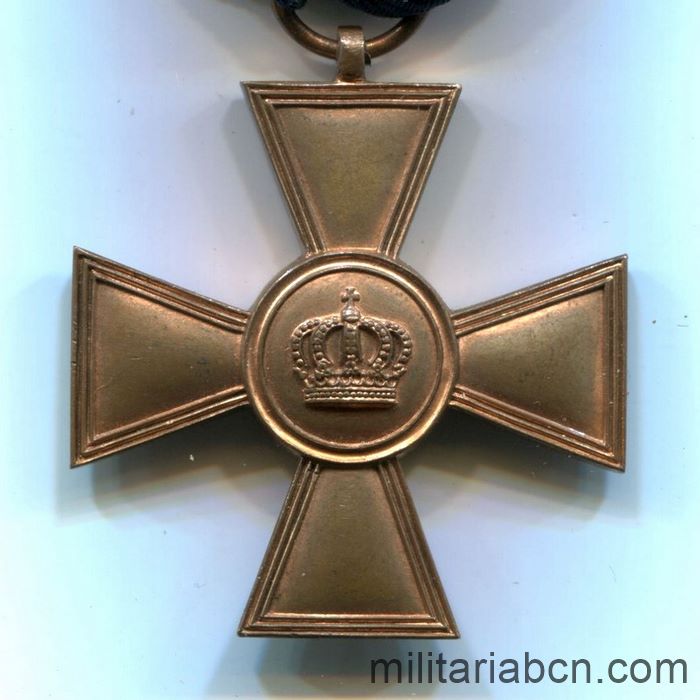
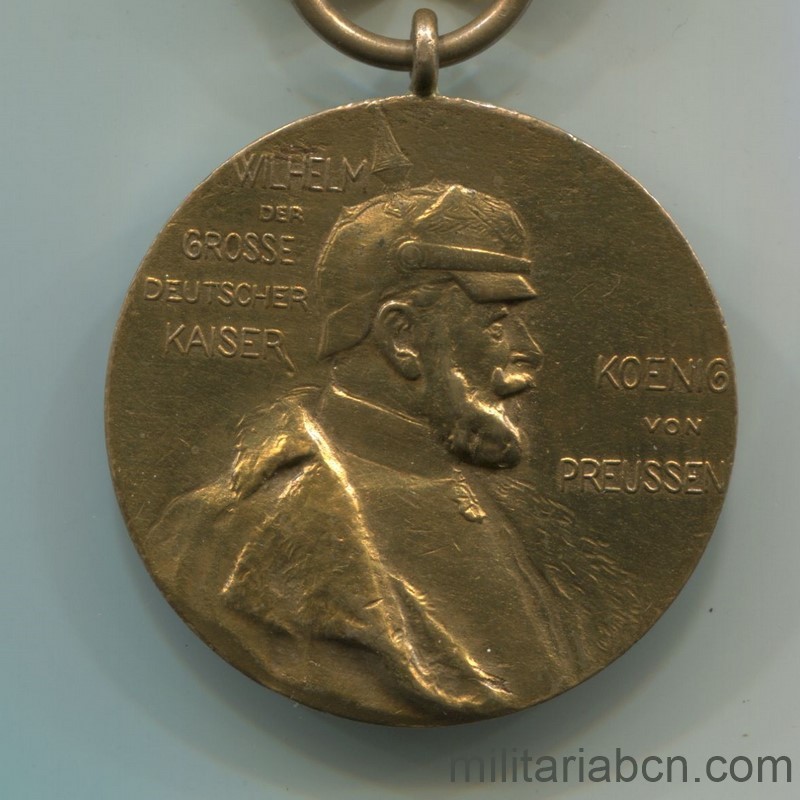
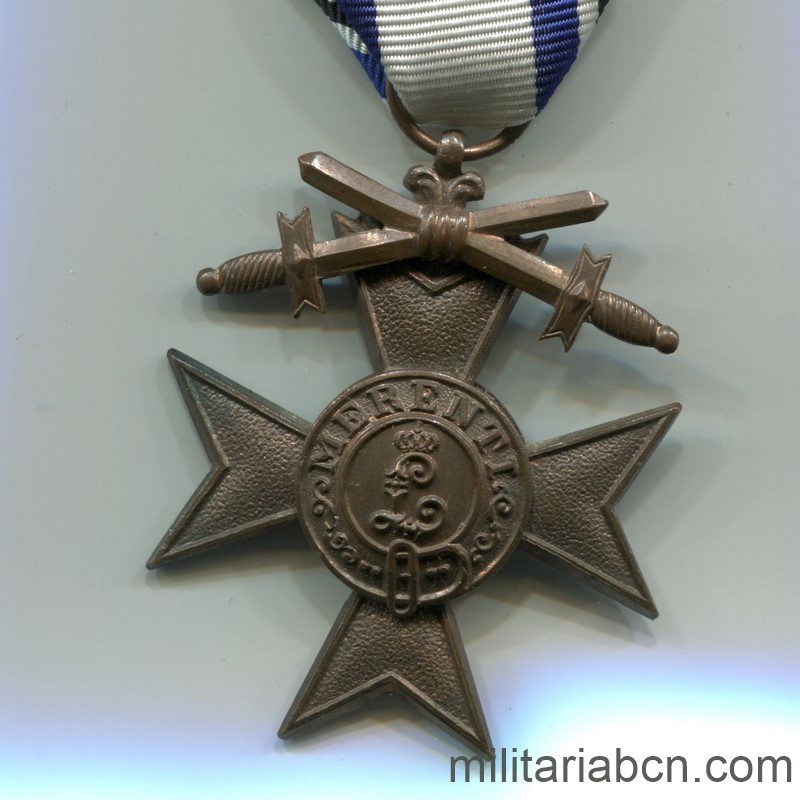
Imperial Germany. South West Africa Commemorative Medal for Combatants, 1907. With AUOB clasp
The South West Africa Commemorative Medal was instituted on March 19, 1907, by King and Emperor Wilhelm II. This medal was awarded to recognize the outstanding achievements, bravery, efforts, and sacrifices of the German armed forces in suppressing the uprisings in South West Africa. The decisive period covered was from January 1904 to March 31, 1907. It was issued in bronze for combatants and in steel for non-combatants.
This combatant version was awarded to all officers, soldiers, naval engineers, civil servants, garrison and artillery officers who were deployed in South West Africa or were already stationed there when hostilities broke out. Additionally, other individuals who supported the suppression effort with arms were honored, including foreigners, Boers, and members of the voluntary nursing service during this period. Field postal service officials were also eligible if their service benefited the troops.
In 1908, the list of eligible recipients was expanded to include participants in the Kalahari expedition. Battle clasps were awarded for those who took part in specific battles, worn with the commemorative medal.
On the obverse, Germania is depicted looking to the left, wearing a winged helmet. On the left edge appears the inscription SOUTHWEST AFRICA. On the right edge, slightly lower, is the arched inscription 1904–06.
On the reverse, at the center, is the imperial crown with ribbons on either side. Below it is a Gothic W; on either side of the central bar of the W is a number 1 and a Roman numeral I, together forming the number 2. Beneath the W are two crossed swords, one with a straight guard and the other with an S-shaped curved guard. Around the border is the circular inscription: DEN SIEGREICHEN STREITERN («To the victorious warriors»).
Südwestafrika-Denkmünze für Kämpfer
Imperial German medal