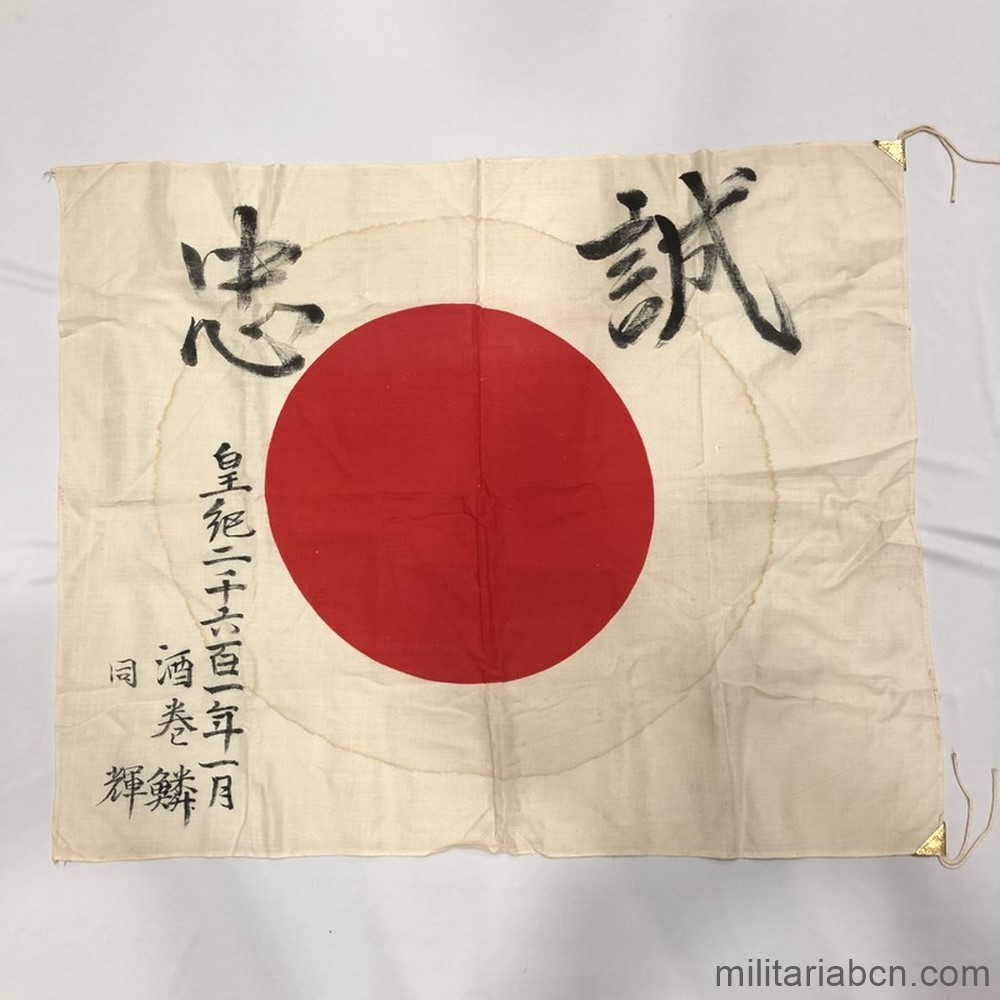
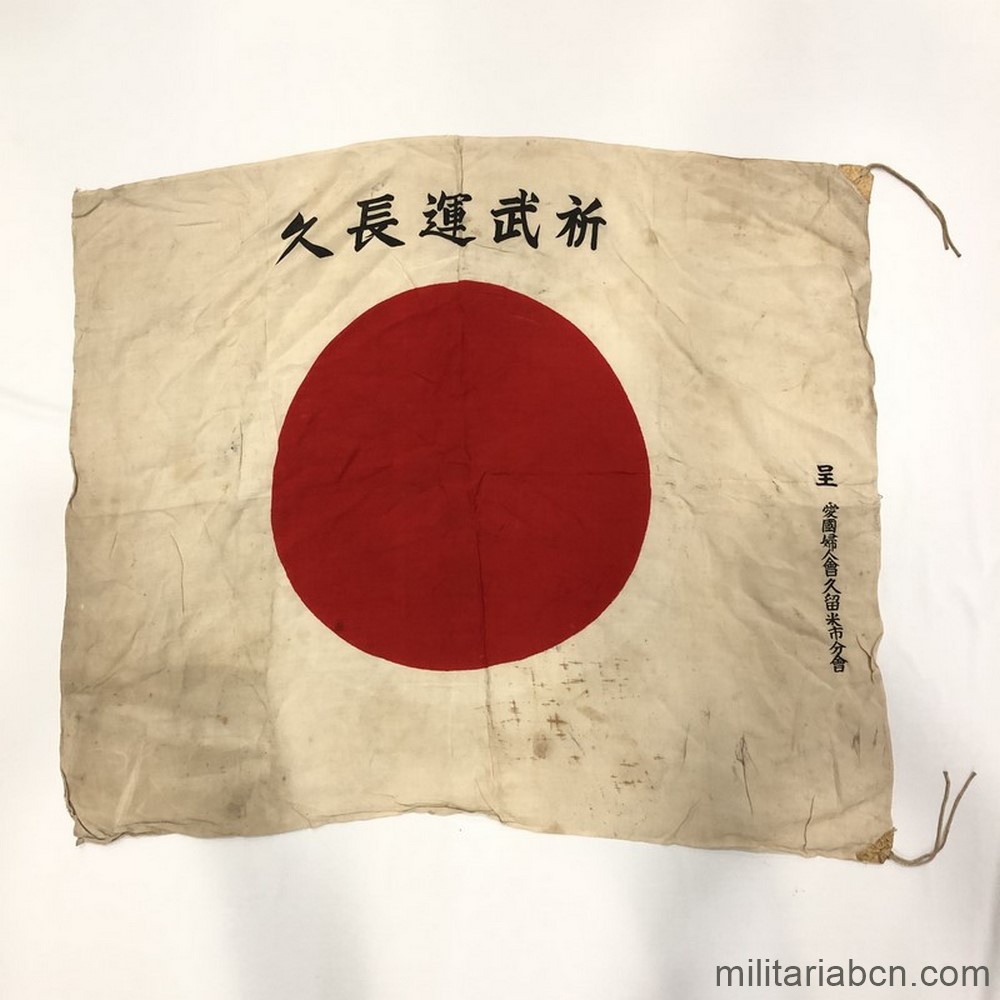
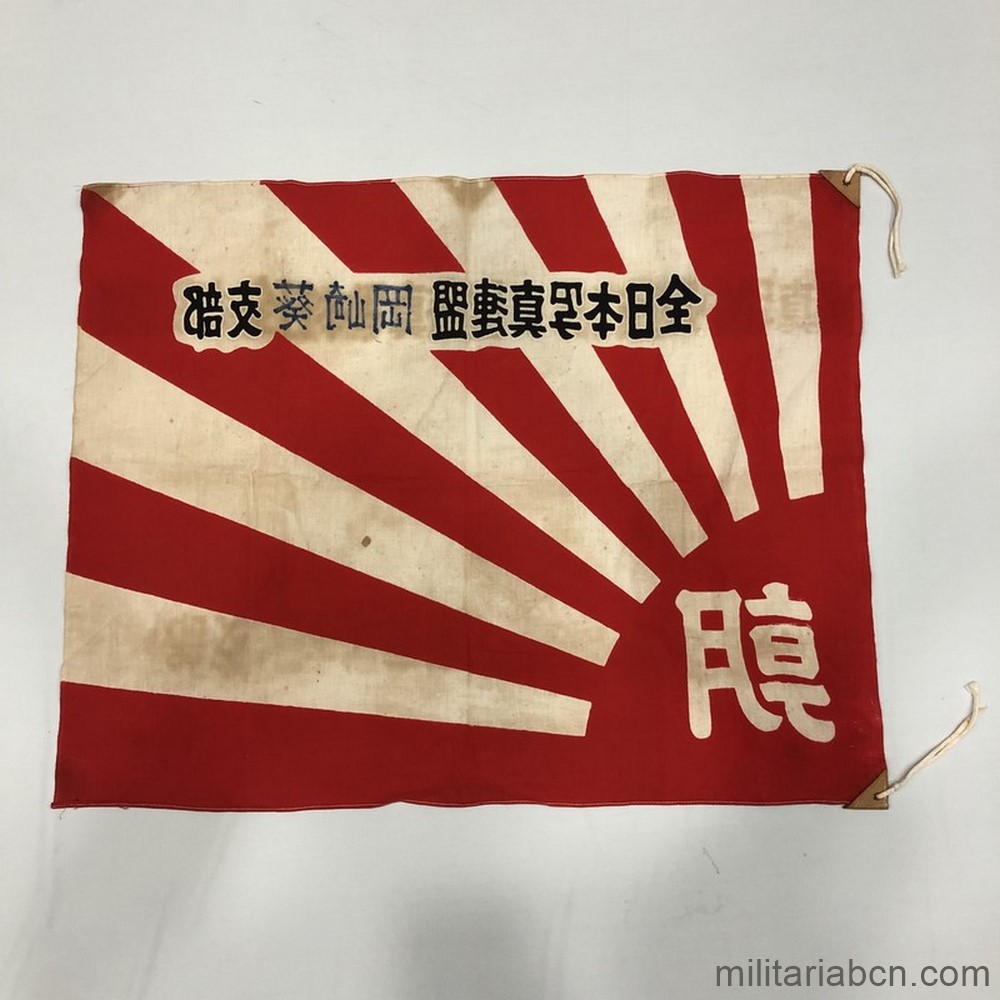
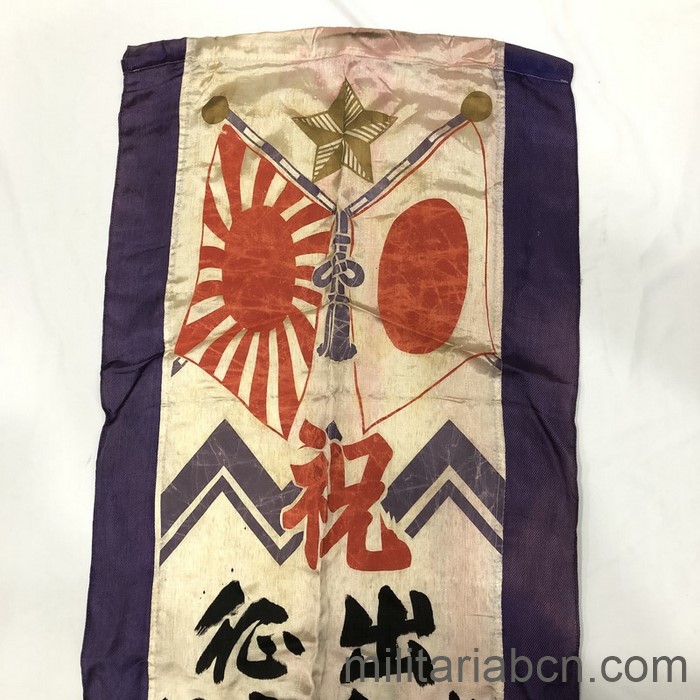
Japan. Send-Off Banner or Hinomaru Shussei Nobori, World War II
When Japanese men departed for military service, community organizations such as the local branch of the Imperial Reservists Association (Teikoku Zaigo Gunjinkai) and the Great Japan National Defense Women’s Association (Dai Nippon Kokubo Fujinkai) organized various celebrations culminating in Send-Off parades to wish the troops well as they marched to train stations or local ports. These Send-Off ceremonies were called Sokokai. Participants in the parades carried banners with the names of the recruits. The Japanese term for banner is Nobori.
This type of Hinomaru Shussei Nobori is rare to find. It has some holes.
At the top in red is “shuku,” translated as “congratulations.” The two side kanji are “nyu” and “dan,” together forming shuku nyudan, meaning “congratulations on your enlistment.” The flag is an Army flag, the Rising Sun flag. The letters in the center of the blue section correspond to the name of the person going to the front, and the side letters indicate the person or group giving congratulations.
Original Japanese banner or standard from World War II.
Size 84 x 69 cm