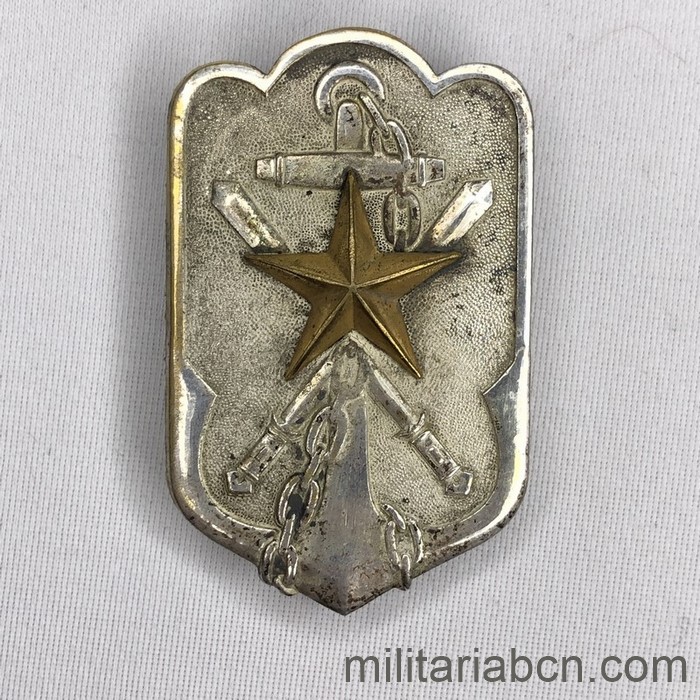
Japan. Identification Tag or Dog Tag of a Soldier from the 1st Company, 6th Artillery Regiment, number 28.
The Japanese Dog Tag from the Second World War, known as Shōjōhyō (認識票), was the Japanese equivalent of the dog tag used by other armies. Its function was to identify soldiers of the Imperial Japanese Army in case of death or disappearance in combat, although its design and system differed significantly from Western models.
These tags were usually made of metal (brass, aluminum, or steel) and had a rectangular or oval shape, with one or two holes for wearing around the neck or attaching to the uniform. Unlike American or British models, they did not include the soldier’s name, but only the identification number, unit, and sometimes the recruitment group or prefecture of origin. This anonymity served to protect the soldier’s identity in case of capture. Many bore engraved or stamped inscriptions in Japanese.