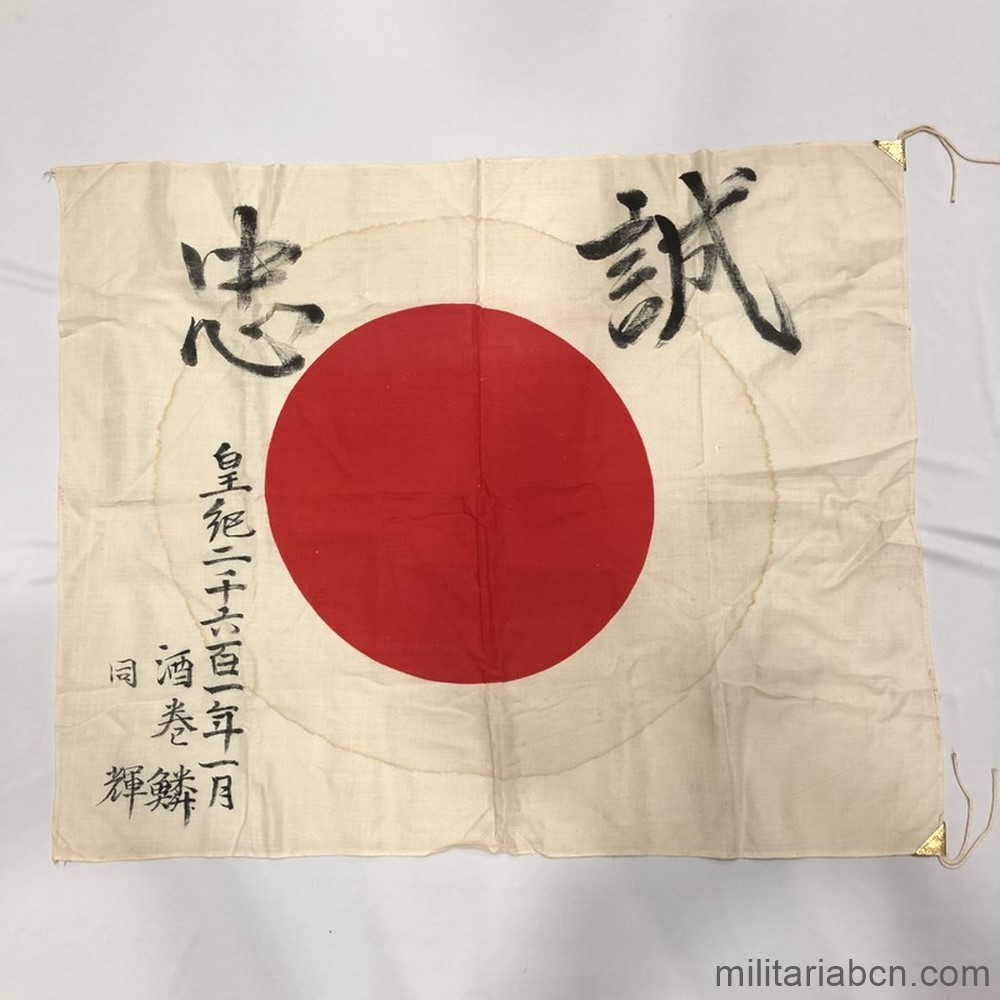
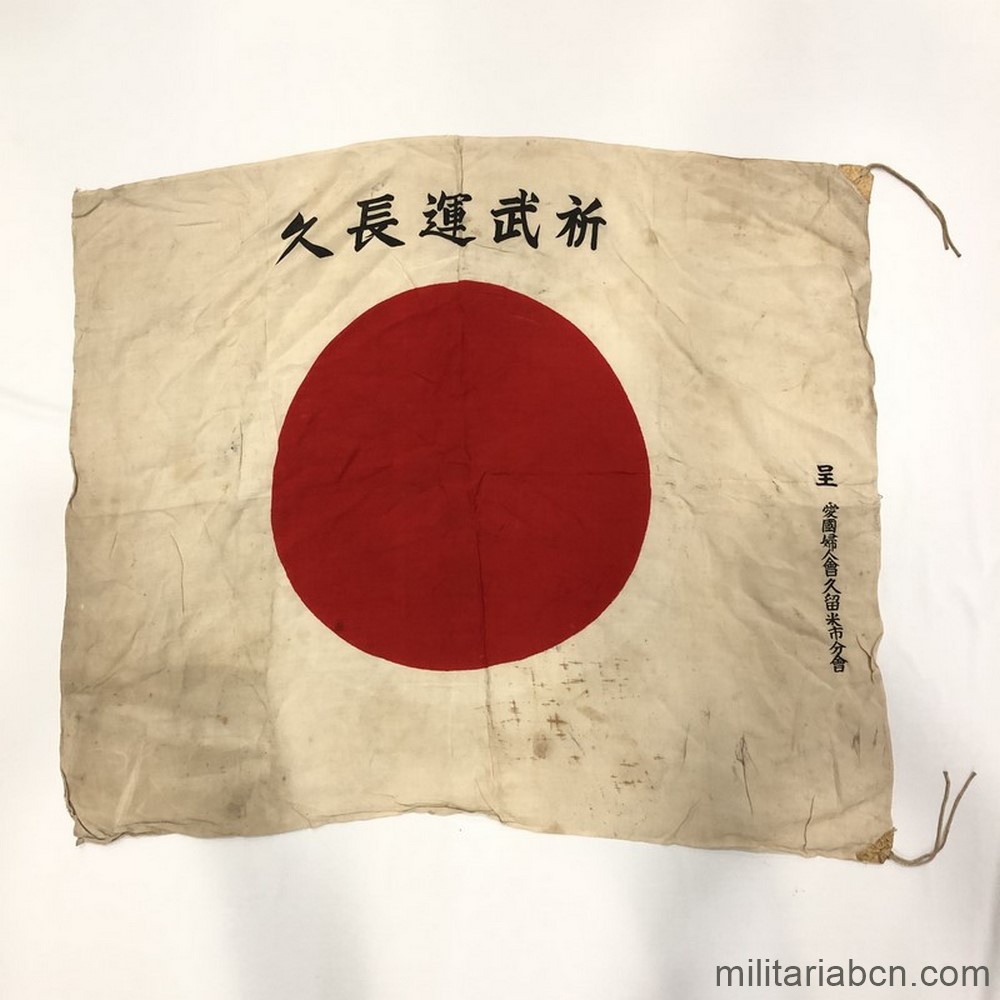
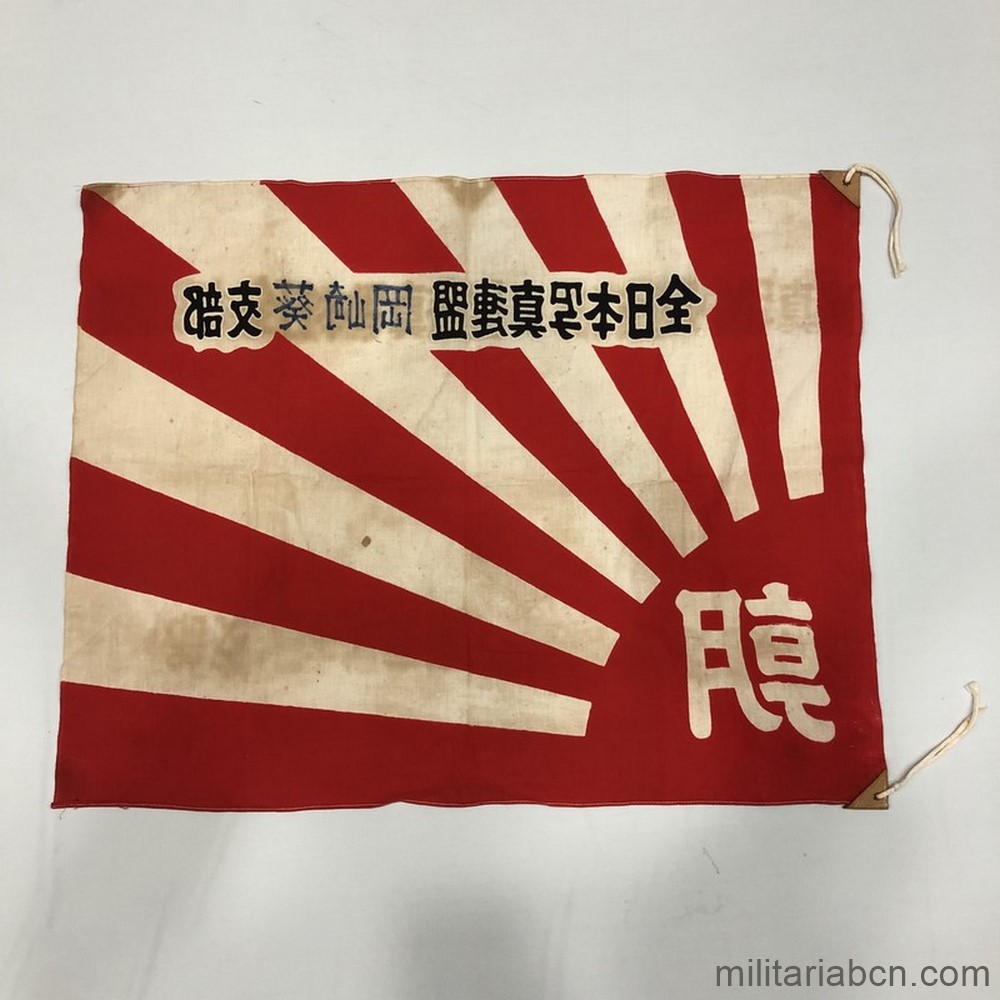
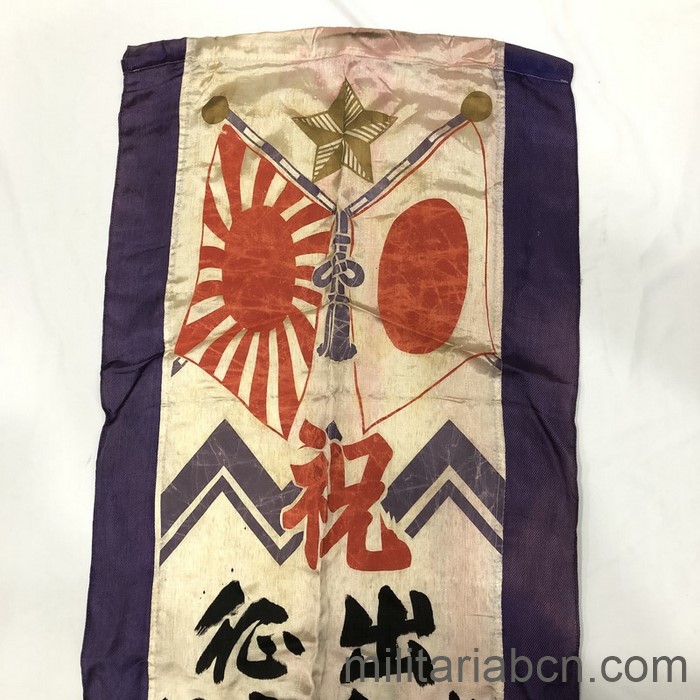
Japan. Hinomaru Yosegaki or Good Luck Flag, World War II, 104 x 69
The Hinomaru Yosegaki (日の丸寄せ書き), known in English as the Good Luck Flag, was a very common practice during the first half of the 20th century and particularly during World War II. It consisted of a Japanese national flag (Hinomaru) on which family, friends, schoolmates, or community members wrote messages of encouragement, good wishes, and prayers before a soldier departed for the front.
The central red disc, representing the sun, was usually left blank or with a main dedication, while the messages were written around it in the white space. These texts included words of encouragement, exhortations to bravery, religious invocations, short poems, and signatures of those who wished to convey their spiritual and moral support.
The Hinomaru Yosegaki thus acquired a deeply symbolic and personal dimension: it was not only a patriotic object but also a protective talisman that the soldier carried as a reminder of his community and the national cause. For this reason, these flags were treasured and in many cases accompanied the combatant even in death, becoming relics of great emotional weight.
In the postwar period, many Yosegaki were collected from battlefields or taken as souvenirs by Allied soldiers.
This Good Luck Flag is made of cotton and retains the gold corner reinforcements. It has some small holes.
Original signed Japanese World War II flag.
Size 104 x 69 cm