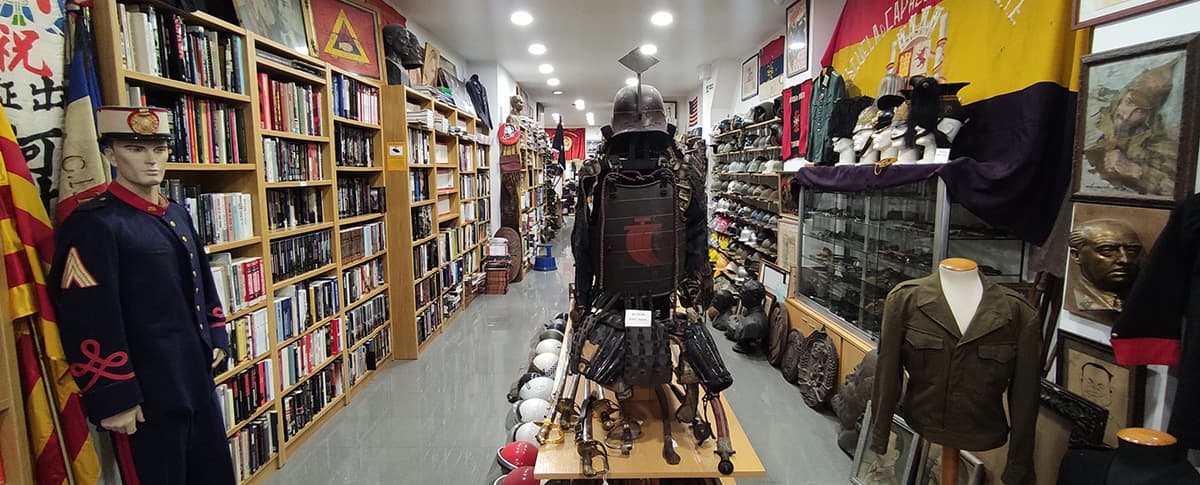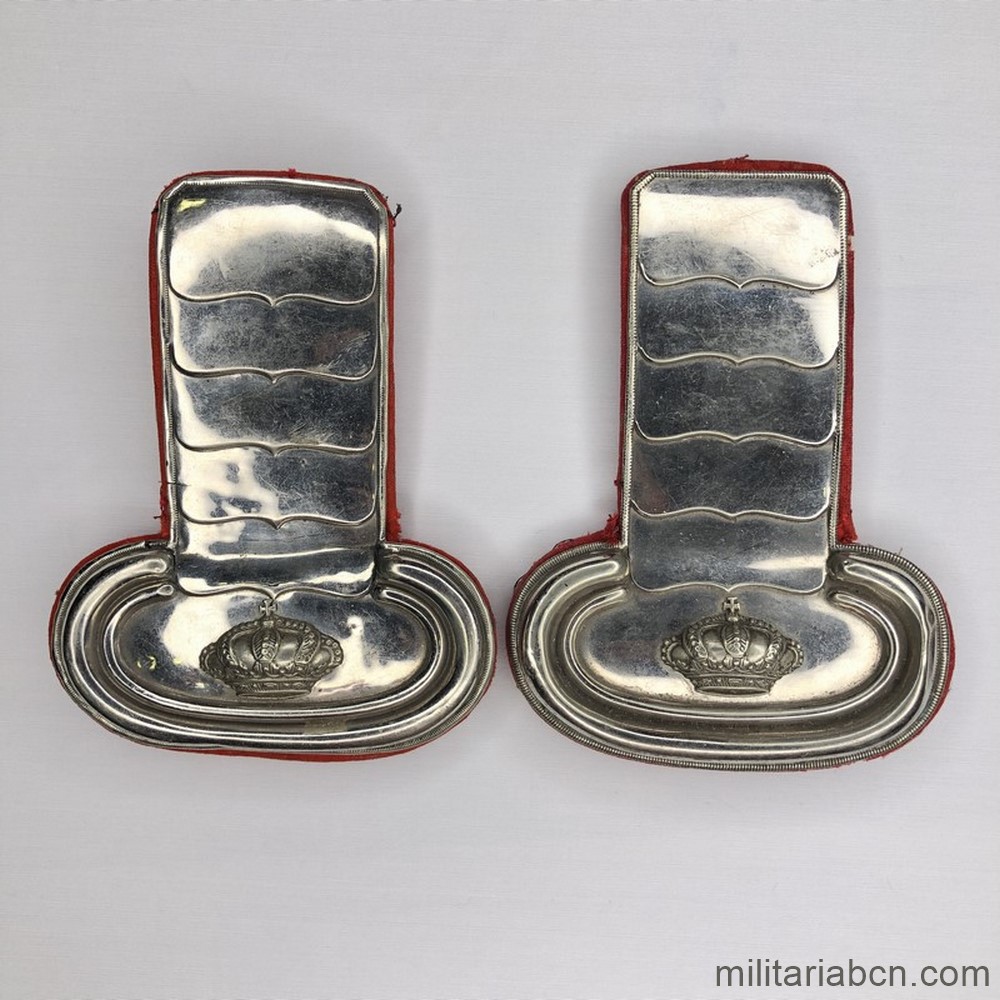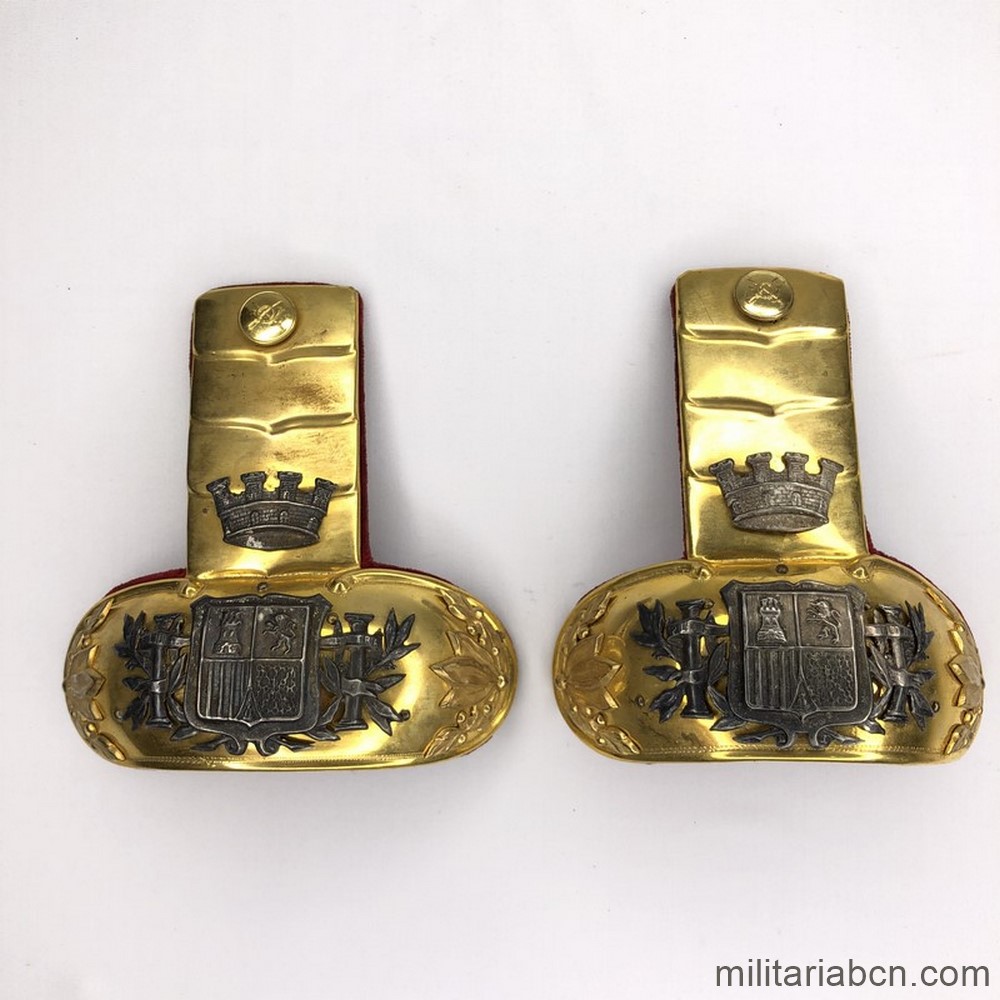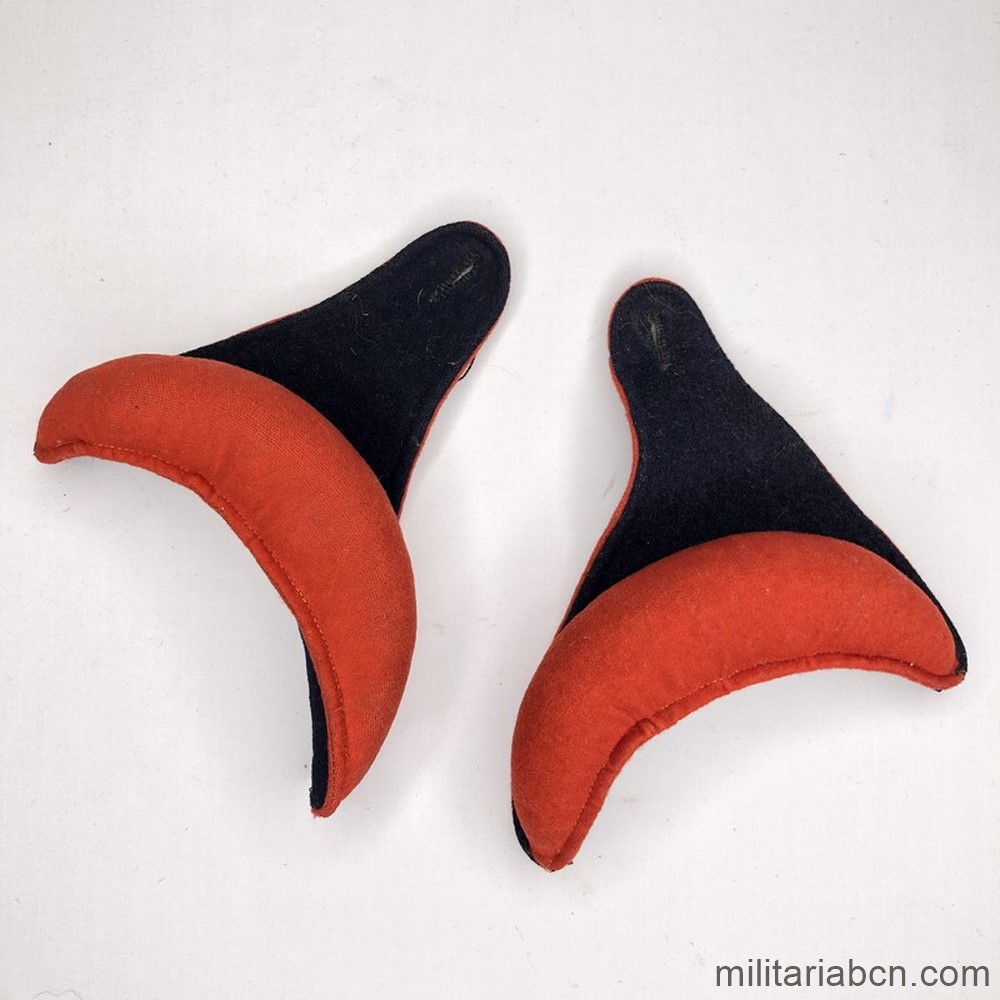

Officer’s belt and straps. Spanish Civil War. Sam Brown model. Used by officers of the National Army and the People’s Army of the Republic.
The Sam Browne belt is a very interesting item both from a historical and functional perspective. Its origin in the 19th century and its connection with the personal experience of General Sir Samuel James Browne give it great symbolic weight. The fact that it was created as a solution to a practical problem faced by an injured officer highlights its original purpose: to make carrying weapons and equipment more accessible in limited conditions.
During the Spanish Civil War, both the National Army and the People’s Army of the Republic adopted versions of this belt, with some variations, as it was a piece that not only served a practical function but also had an aesthetic purpose, as it gave officers a more imposing and professional appearance.
Characteristics of the Sam Browne belt:
-
Additional strap: The main feature is the diagonal strap that crosses the chest and shoulder, distinguishing it from other traditional uniform belts.
-
Material: They are typically made of leather, which provides durability, though there are also versions made with combinations of other materials.
-
Functionality: It allowed for the comfortable and secure carrying of a sword, pistol, and other frequently used accessories. During the Spanish Civil War, not only military officers but also the police used it as a symbol of status and authority.
In the context of the Spanish Civil War, the versions of the Sam Browne belt varied between the two sides:
-
National Army: Under Franco’s command, officers used more rigid and formal versions of this belt, which complemented the traditional military aesthetic. These belts, usually in dark colors like black or brown, were part of the officer’s full uniform, along with the cape and traditional-style helmet.
-
People’s Army of the Republic: Although more focused on functionality than aesthetics, they also used versions of the Sam Browne belt. Republican officers were inspired not only by the style of the Soviet army but also adopted these belts as part of their uniform.
It’s fascinating how a simple everyday object like a belt came to symbolize power, distinction, and functionality, while also reflecting the different approaches of both sides during the war.
Let me know if you’d like further details!