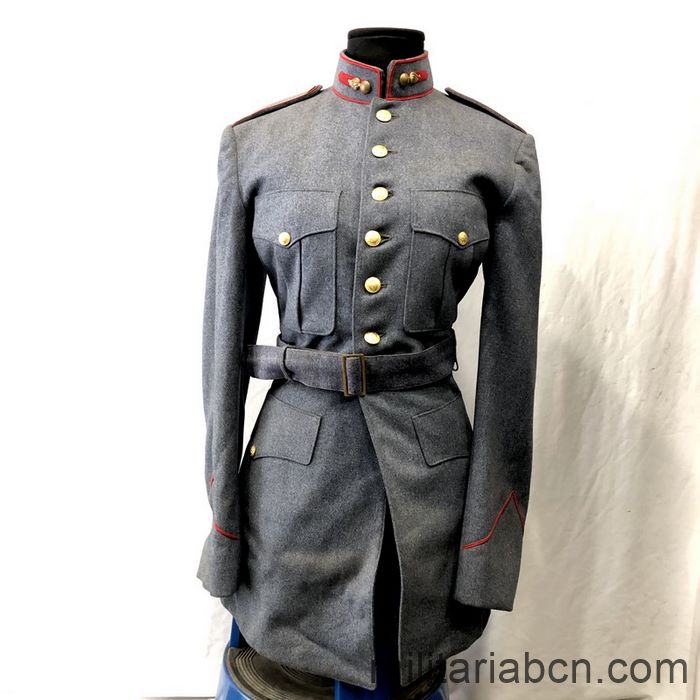
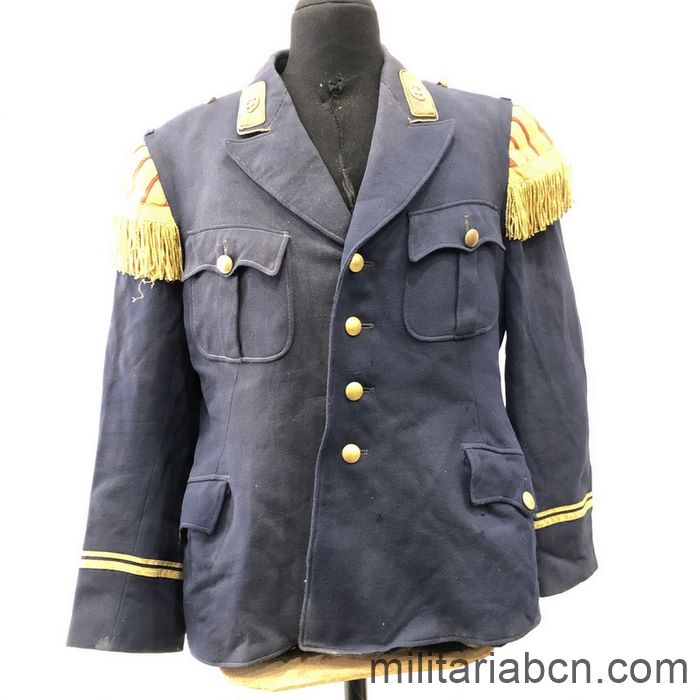
Soviet Union, USSR. Colonel’s Militia or Police Uniform from the Victory Parade, 1980s
The set consists of a long overcoat with the dress collar badges and dress shoulder boards of a Militia Colonel, a ceremonial cap for a Militia Colonel (interestingly, the cap badge for colonels were simpler than those used for lower officer ranks), and a ceremonial Officer’s belt.
The Militia of the Soviet Union was the state body responsible for maintaining public order, preventing crime, and enforcing the law within the USSR from its creation in 1917 until its dissolution in 1991. Established by decree of the Bolshevik government after the October Revolution, it replaced the former tsarist police and became part of the People’s Commissariat for Internal Affairs (NKVD), and later the Ministry of Internal Affairs (MVD). Its functions included conventional police duties, patrolling, criminal investigation, traffic control, community security, and administrative supervision of internal passports and residence registration—central elements of the Soviet system of citizen identification.
The Militia took part in the annual Victory Parades held to commemorate the triumph in the Great Patriotic War (Second World War), as it was considered the institutional successor of the NKVD.