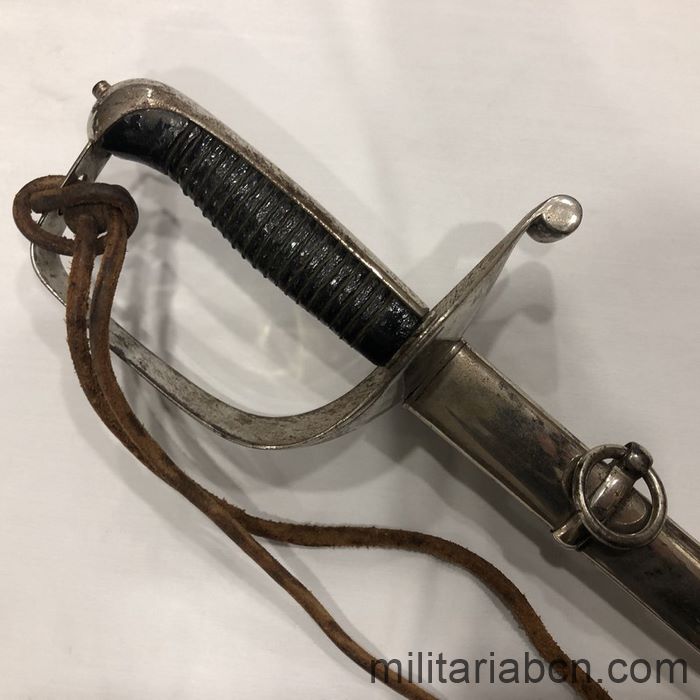
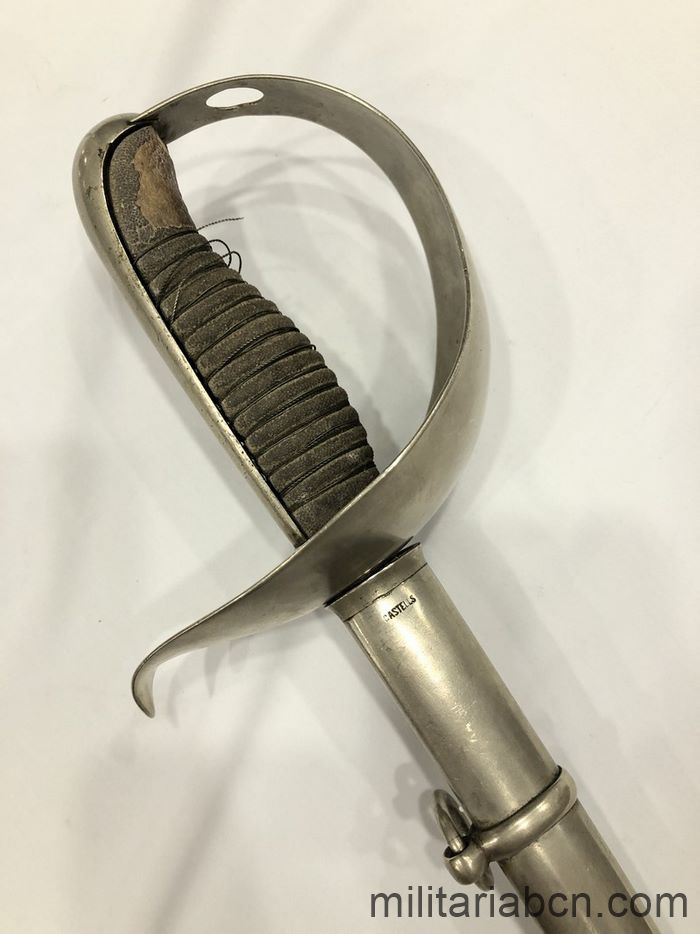
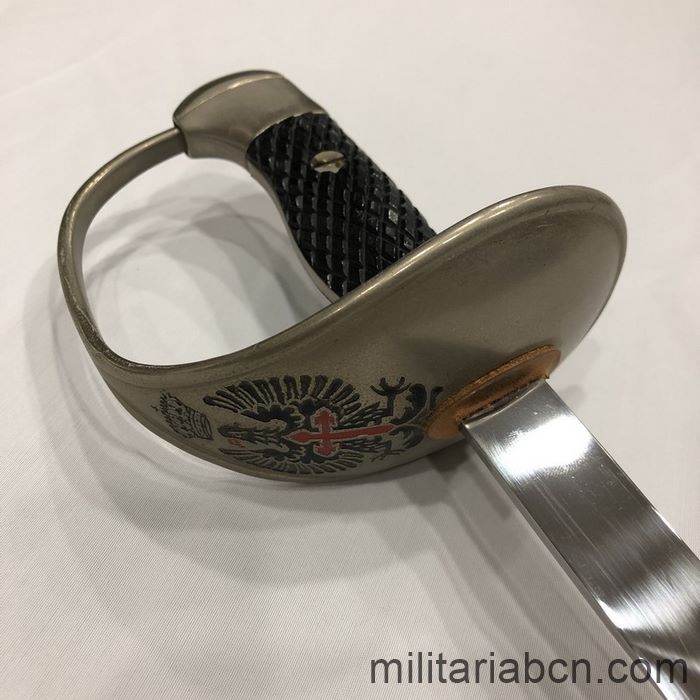
Spain. Carlist Officer’s Sabre from the Third Carlist War, 1872–1876
Sabre belonging to a Carlist officer during the Third Carlist War (1872–1876). According to the family provenance accompanying the piece, the sabre formed part of a group of Carlist-related militaria preserved by the same family.
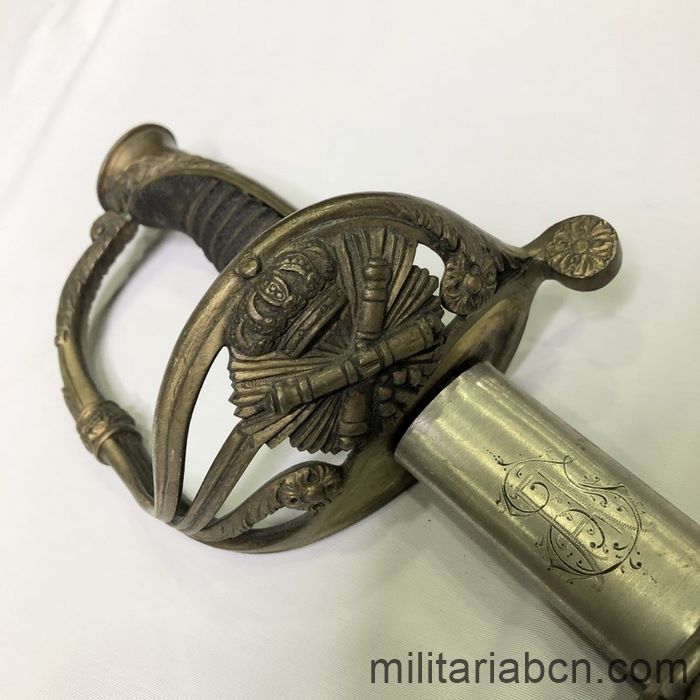
The weapon is assembled around a regulation French Light Cavalry sabre blade, Model 1822, reused and adapted for Carlist service. The hilt was recast to incorporate the crowned monogram «C7», referring to Carlos VII, the Carlist claimant to the Spanish throne from 1868 to 1909. The integration of the emblem into the guard indicates that it is not simply a later addition, but rather an adaptation of the original hilt.
The blade spine bears the inscription «F. Escoffier Entrepr de la Manuf re d’Armes de St. Etienne», referring to Félix Escoffier, contractor of the Saint-Étienne Arms Manufacture between 1852 and 1873. Escoffier marketed blades sourced from other French manufactures, including Châtellerault, adding his own commercial marking. The presence of Châtellerault inspection marks alongside this inscription is consistent with this practice.
The blade bears two «B» inspection marks attributed to inspectors and controllers of the Châtellerault Arms Manufacture:
- Right-hand mark: a «B» with a small star above it, enclosed in an oval, attributed to Joseph Ambroise Bisch, first-class controller and subsequently chief controller.
- Left-hand mark: a «B» inside a shield-shaped cartouche, attributed to François Antoine Bisch, who served as a reviser and subsequently as a second-class controller.
The periods of service of both officials place the manufacture and inspection of the blade approximately between 1854 and 1860. The French blade therefore predates the adaptation of the Carlist hilt, which was carried out for use during the Third Carlist War.
Original Carlist officer’s sabre, assembled using a French Model 1822 blade and a hilt bearing the monogram of Carlos VII.