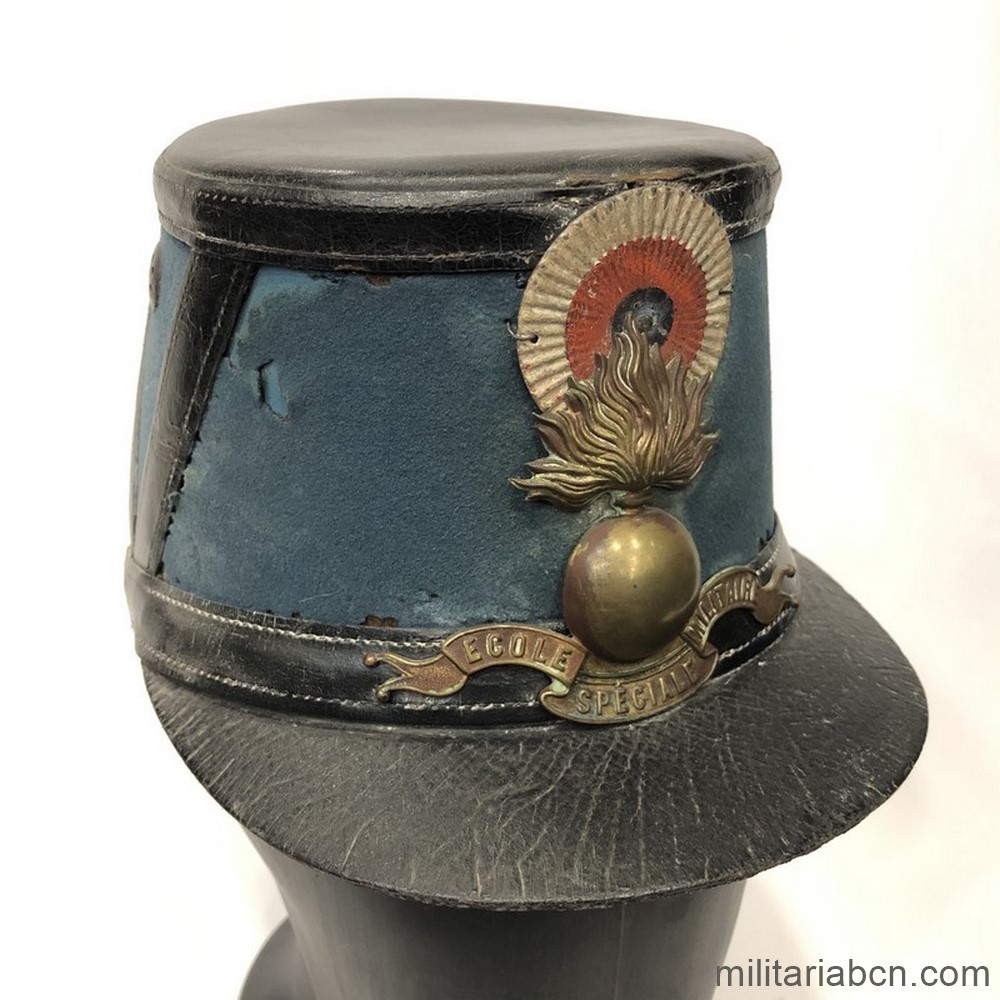
Spain. National Militia Shako, 1868-1874
The National Militia was an armed civilian institution organised into locally based units, whose principal functions included maintaining public order and defending the constitutional regime. Its institutional origins can be traced to the Cádiz Cortes and the Constitution of 1812. It was abolished in 1814 following Ferdinand VII’s restoration of absolutism and reinstated during the Liberal Triennium (1820-1823). It disappeared again with the return of absolutism and was revived at various points during the reign of Isabella II, becoming one of the main sources of disagreement between the Moderate and Progressive parties. The establishment of the Civil Guard in 1844 was, among other factors, intended to provide a professional nationwide security force.
Following the Revolution of 1868, the civilian militia reappeared under the name Fuerza Ciudadana de los Voluntarios de la Libertad (Citizens’ Force of the Volunteers of Liberty). With the proclamation of the First Spanish Republic in 1873, it was renamed Voluntarios de la República (Volunteers of the Republic). In 1874, the formal designation National Militia was restored. The institution was finally dissolved in 1876.
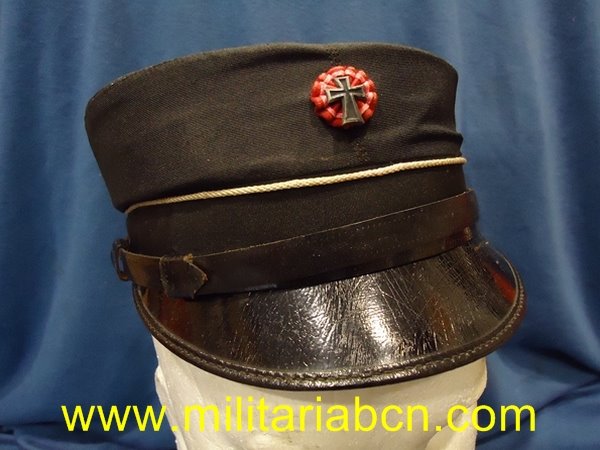
The shako is a cylindrical military headdress used throughout the nineteenth century, before other military headgear models, such as the ros, became widespread. This example dates from the period of the Democratic Sexennium and features the initials «M. N.» of the National Militia on the front, displayed in two sizes: a larger emblem in the centre and a smaller one above it. The red cockade remains in place, although heavily worn.
The interior retains its original manufacturer’s label, bearing the inscription: «Ramon Falco / Sillero guarnicionero y de Articulos Militares / Calle del Conde del Asalto, nº 7 / BARCELONA». The 1863 Barcelona commercial directory lists «Falco, Ramón. Guarnicionero, c. Conde del Asalto, 6». The difference between street numbers 6 and 7 may indicate a change of workshop premises or a renumbering of the street, although this has not been independently documented.
Original nineteenth-century Spanish National Militia shako, retaining the label of a Barcelona-based manufacturer.