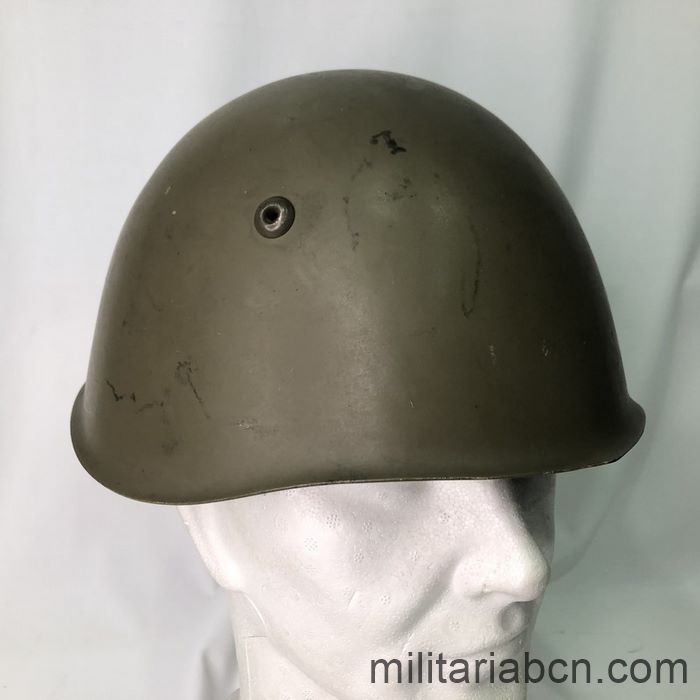
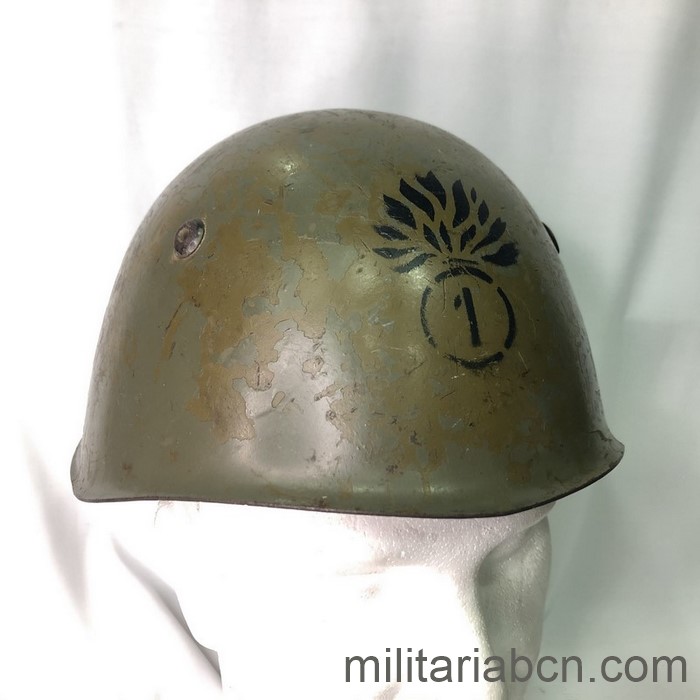
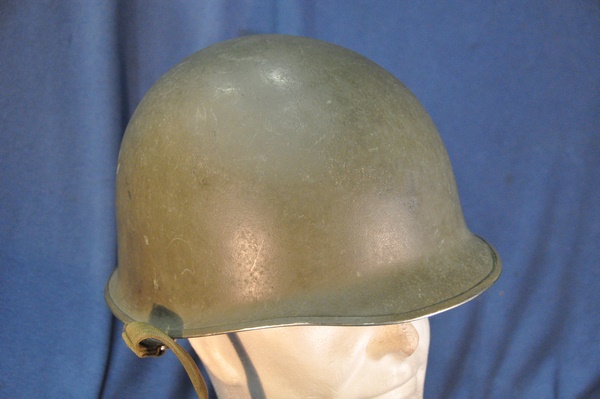
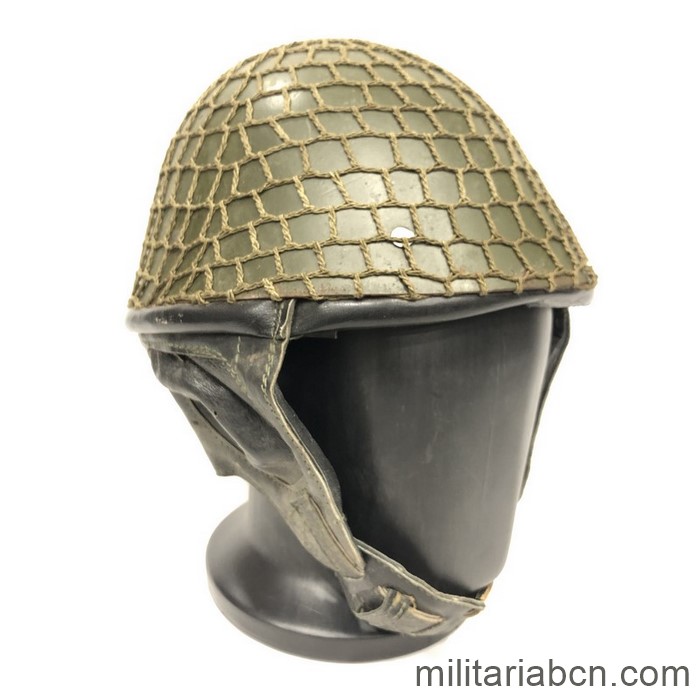
United Kingdom. Mk VI ballistic fibre helmet.
By the late 1970s, steel helmets were increasingly regarded as obsolete due to their limitations in weight and protective capability, prompting the United Kingdom to develop a new generation of helmets made from composite materials.
The project was led by the Storage and Combat Research and Development Establishment (SCRDE), based in Colchester. Its objective was to design a lighter, stronger, and more effective helmet than the Mark V then in service, while retaining the distinctive silhouette of the Mark III helmet introduced in 1943.
Between 1975 and 1978, several prototypes were developed and evaluated by infantry units. Following these trials, a final design fitted with a polycarbonate visor was selected in 1978 and became the basis for the production model.
In 1981, an experimental batch of 1,500 helmets was manufactured for operational trials. The results proved highly satisfactory, and in November 1982 the helmet was officially adopted under the designation Helmet, Combat, GS (General Service) Mark VI.
The new helmet underwent further evaluation during the «Lionheart» exercises held in the autumn of 1984, during which approximately 6,000 examples were used by the 5th Airborne Brigade. Although it had not been specifically designed for airborne troops, who already had a specialised helmet, the trials confirmed the suitability of the new design under operational conditions.
British military helmet.